
10 Pesos Banknote (1866): Value & Rarity Guide
Familia ANT · algodón
Period: Antecedentes del papel moneda
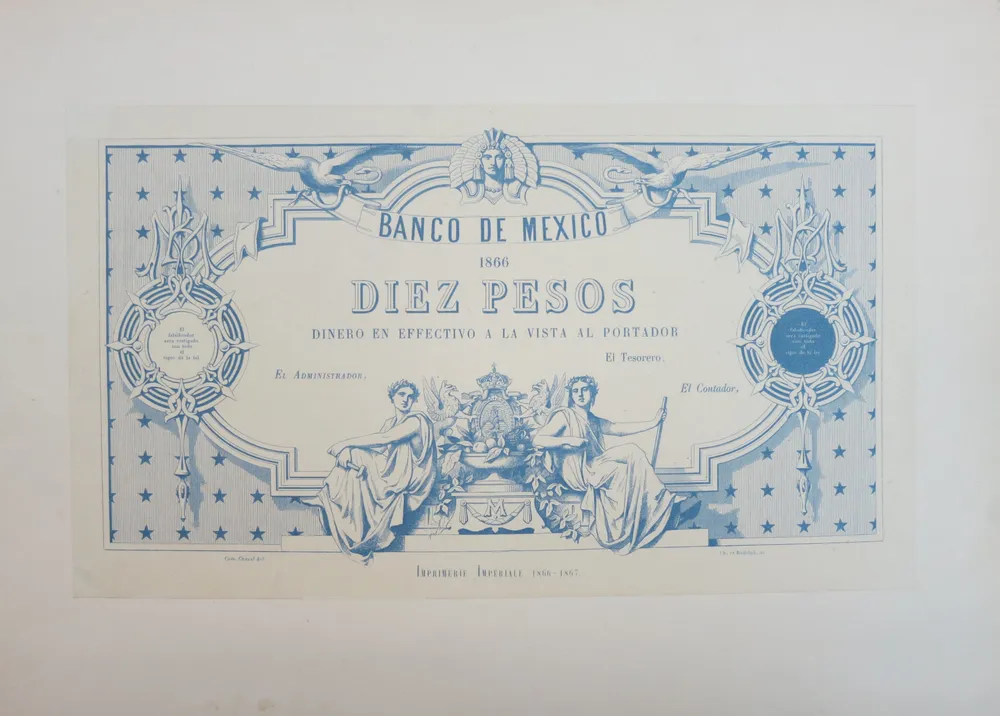
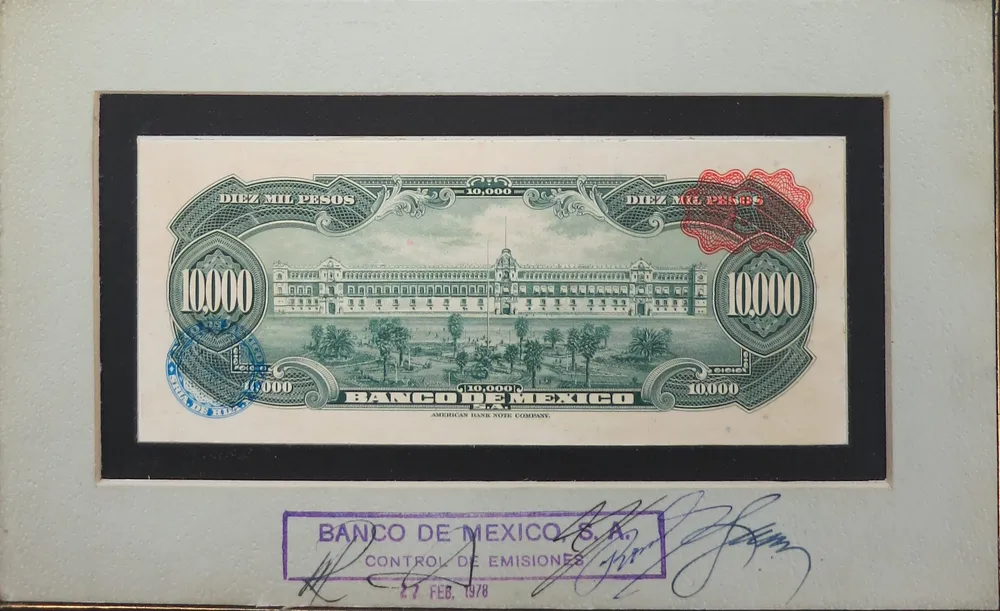
Design
Banxico
Obverse
Banco de México (1866)
Typographic and allegorical design of a 19th-century banknote
Reverse
Ornamental motifs of the period
About this banknote
If you have found a Mexican 10 pesos note dated 1866, you may be holding one of the rarest pieces in all of Mexican paper money. This is not a common inherited banknote worth a few dollars. It is a mid-19th-century issue tied to the Second Mexican Empire, and most of the few examples that survive are bank proofs or specimens. When one appears at a serious auction, it sells in the thousands of US dollars, not the tens.
The caution up front: because this note is so scarce and so valuable, it is also a target for reproductions and misidentification. Before you get excited or sell anything, you need to confirm what you actually have.
What the 1866 10 Pesos Actually Is
This note comes from an early Banco de México issue during the era of the Second Empire (the period of Emperor Maximilian I in the 1860s). It is a typographic, allegorical banknote in the style of 19th-century bank paper: engraved vignettes, ornamental borders, and formal script rather than the modern security features you see on notes today.
A key point for value: many of the surviving 1866 examples known to collectors are proofs or specimens, not notes that ever circulated. A proof is a trial printing used to check the design. A specimen is a sample note, often marked or perforated, produced for reference rather than spending. Both are collectible in their own right, and both change how a piece is priced. An issued, circulated example (if genuine and confirmed) is even rarer.
How Much Is It Worth
There is no single sticker price for this note, and any site that gives you one exact figure is guessing. Value here depends on three things:
- Type: issued note vs. proof vs. specimen. Each is priced differently, and the market for each is thin because so few exist.
- Grade and preservation: as with all paper money, condition drives price. Folds, tears, stains, and repairs all pull value down. A crisp, well-preserved example commands a large premium.
- The venue and the moment: with pieces this rare, the auction house, the catalog it appears in, and who is bidding that day matter enormously.
Realistically, a genuine 1866 Banco de México note (proof, specimen, or issued) is a four-figure item in US dollars and can go higher for a strong example in a major sale. This is not pocket change and it is not a note you sell to the first buyer who offers cash.
| Item | Year | Type | Realistic value range (USD) |
|---|---|---|---|
| 10 Pesos Banco de México | 1866 | Proof / specimen | Thousands, varies by grade and sale |
| 10 Pesos Banco de México | 1866 | Issued (confirmed genuine) | Higher; extremely rare |
Why no precise number? Because so few examples trade that each appearance sets its own price. An honest range beats a fake exact figure. Before you sell, have it examined and, ideally, authenticated.
The Trap: Reproductions and Misidentification
Most people who think they have an 1866 note actually have one of two things: a modern reproduction or souvenir print, or a later, more common Mexican note they have misdated. Genuine 19th-century bank paper has specific paper stock, ink behavior, and print characteristics. Reproductions tend to have smooth modern paper, flat colors, and printing that looks photographic rather than engraved.
If your "1866" note is bright, crisp in a plasticky way, and printed on paper that feels like a modern flyer, treat it as a reproduction until proven otherwise. Real examples of this issue are so scarce that finding one in a random box is unusual, which is exactly why confirmation matters before you celebrate or sell.
How to Check What Yours Is Worth
- Photograph both sides in flat, even light, high resolution, with a ruler for scale.
- Compare against reference images of genuine Banco de México 1866 issues. Match the vignettes, borders, and text exactly.
- Check the paper and printing for engraving depth and 19th-century characteristics rather than modern flat printing.
- Note any markings: "SPECIMEN," punch holes, or overprints tell you which type you have.
- Do not clean, iron, or trim it. Any of those actions destroys value on a rare note.
For a piece this significant, professional authentication and grading (through a recognized paper-money grading service) is worth the cost before any sale. On a four-figure note, certification pays for itself by proving the note is genuine to serious buyers.
Where to Sell It
Because of the value at stake, avoid quick sales to the first offer online. The safest routes are a verified numismatic dealer who can examine and appraise the note in person, and a collector-to-collector marketplace where knowledgeable buyers compete. For a note that may reach four figures, a specialist world-paper-money auction house is often the best way to reach the buyers who pay the most.
Have you come across an 1866 Mexican note, or are you trying to tell a genuine early Banco de México issue from a reproduction? Post clear photos of both sides in the Pesoteca forum and let collectors who know this issue weigh in before you make a move.
Historical context
This 10-peso piece dated 1866 belongs to the antecedents of paper money in Mexico, long before the current Banco de México, founded only in 1925, existed. It corresponds to the issues associated with the name Banco de México that arose during the Second Empire of Maximilian of Habsburg.
In that project, promoted in 1864 by European bankers, a private bank was to issue notes of voluntary acceptance, a novel formula in a country where paper money had failed in previous attempts. That entity soon evolved into the Banco de Londres, México y Sudamérica.
Its design is thoroughly nineteenth-century, typographic and allegorical in style, with fine engravings typical of the foreign printing houses of the era. These early pieces are testimony to the still-fragile beginnings of the note's circulation in the country.
Frequently asked questions
How much is the 1866 Mexican 10 pesos banknote worth?
A genuine 1866 Banco de México 10 pesos is a rare mid-19th-century piece, typically a four-figure item in US dollars and higher for a strong example at a major auction. There is no single price: value depends on whether it is an issued note, a proof, or a specimen, plus grade and the venue where it sells. Most people who think they have one actually hold a reproduction, so confirm authenticity first.
Is the 1866 10 pesos banknote rare?
Yes, it is one of the rarest issues in Mexican paper money. It dates to the Second Empire era, and most surviving examples known to collectors are bank proofs or specimens rather than circulated notes. Finding a genuine one is unusual, which is exactly why professional authentication matters before you sell or celebrate.
Where can I sell an 1866 Mexican 10 pesos note?
Use a verified numismatic dealer who can appraise it in person, a collector-to-collector marketplace like the [Pesoteca buy-sell forum](/foro/compra-venta), or a specialist world-paper-money auction house for a note this rare. Photograph both sides clearly and, given the potential four-figure value, get it authenticated before selling. Do not accept the first cash offer online.
How do I tell if my 1866 note is genuine or a reproduction?
Compare it to official reference images of the genuine Banco de México 1866 issue: match the vignettes, borders, and text exactly. Genuine 19th-century bank paper has period-correct paper stock and engraved printing, while reproductions have smooth modern paper and flat, photographic-looking color. Any "SPECIMEN" mark, punch holes, or overprint identifies the type. When in doubt, post photos in the [Pesoteca forum](/foro) for expert review.
Características Banxico
Prueba del anverso, sobre base de cartón.
Familia ANT
This banknote belongs to the BIL-ANT family within the Sistema PSM . Explore all the banknotes that share origin, era and design with this piece.
Ver todos los billetes de la familia ANT →