
Mexico 20 Pesos Banknote (1866): Value & Rarity
Familia ANT · algodón
Period: Antecedentes del papel moneda
Design
Banxico
Obverse
Banco de México (1866)
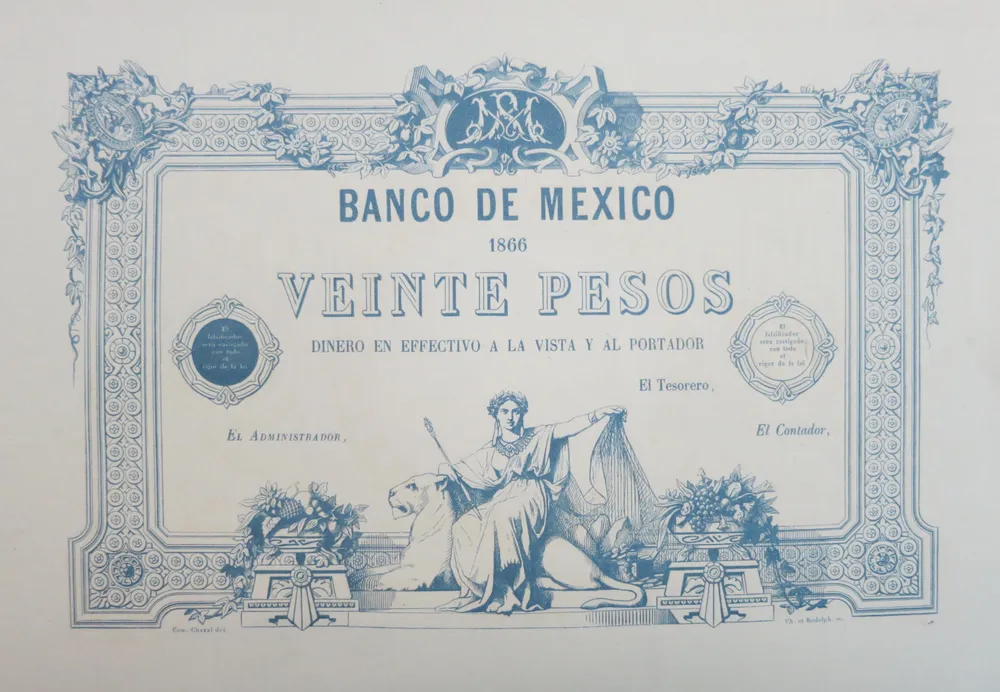
Female allegories, an eagle, and fine engraved ornaments
Reverse
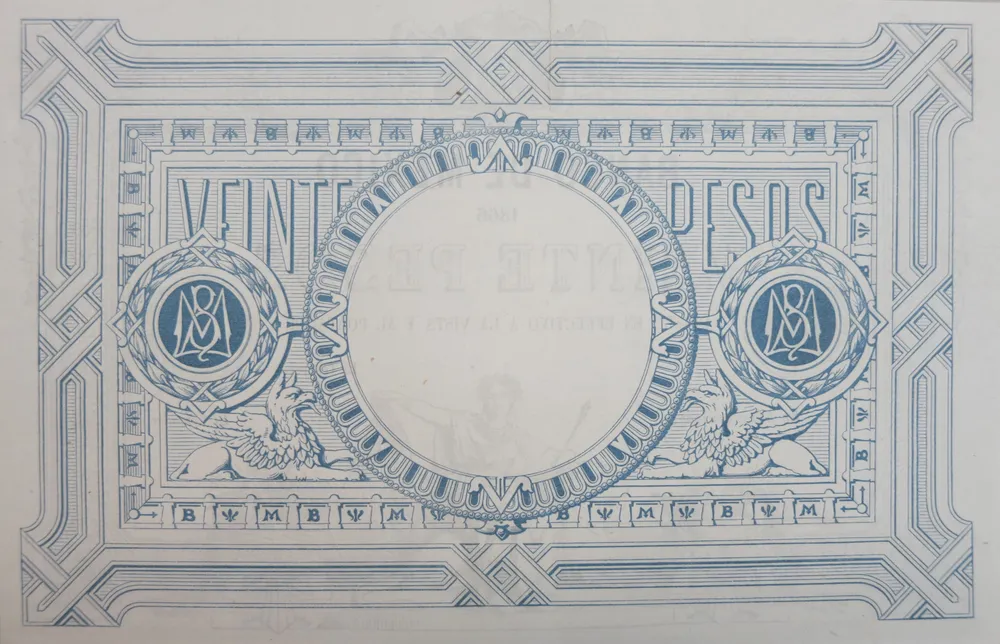
Ornamental design with the denomination in a decorated frame
About this banknote
Most Mexican banknotes people inherit are worth face value or a few dollars. The 1866 20 pesos is a different animal. This is a Second Empire (Segundo Imperio) issue, one of the oldest pieces of Mexican paper money in existence, and surviving examples are scarce enough that value is measured in the hundreds or thousands of USD, not cents. If you actually have a genuine one, read carefully before you let it go.
What the 1866 20 Pesos Is
This note dates to 1866, the era of the Second Mexican Empire under Maximilian. It predates the modern Banco de México (founded 1925) by decades, which is why you should treat any "Banco de México" attribution for an 1866 note with caution: the paper money of this period came from a very different banking landscape, and the exact issuer matters enormously for value.
The design carries the visual language of mid-19th-century engraving: female allegorical figures, an eagle, and fine ornamental borders on the face (anverso). The back (reverso) shows an ornamental design with the denomination set inside a decorated frame. The engraving quality is a giveaway of the period, and it is one of the first things a specialist checks.
What It's Worth in 2026
There is no single sticker price for an 1866 20 pesos, and anyone who quotes you one flat figure is guessing. Value swings on four things:
- Whether it is an issued note, a proof, or a specimen. Many surviving examples from this era are bank proofs or specimens (test prints, not notes that circulated). Proofs and specimens are often the only examples that exist in collectible condition, and they trade in their own market.
- Condition. A crisp, uncirculated piece can be worth many multiples of a worn, folded, or repaired one. Tears, stains, and restoration all pull the price down hard.
- The specific issuer and variety. Two notes that look alike to a beginner can differ by hundreds or thousands of dollars in the eyes of a cataloguer.
- Where you sell it. A specialist world-paper-money auction (Heritage, Stack's Bowers, and similar houses run dedicated banknote sessions) will reach buyers who understand what they are looking at. A local flea market will not.
Because of that spread, an honest range for a genuine, collectible 1866 20 pesos runs from the low hundreds of USD for a modest circulated example into the low thousands for a superb proof or specimen. Exceptional pieces have exceeded that. The right move is to get it identified and graded before you assume anything.
| Detail | Information |
|---|---|
| Denomination | 20 pesos |
| Date | 1866 (Second Empire era) |
| Face design | Female allegories, eagle, engraved ornament |
| Back design | Ornamental frame with denomination |
| Typical form found | Issued note, proof, or specimen |
| Realistic value range | Low hundreds to low thousands USD, condition and type dependent |
The Myth: "It's Old, So It's Worth a Fortune"
Age alone does not make a banknote valuable, and the internet is full of listings claiming any 19th-century Mexican note is a jackpot. What actually drives the 1866 20 pesos is genuine scarcity plus the fact that so few survive in collectible grade. That is real, but it also means fakes and reproductions are common. A cheap reproduction of an 1866 note is worth nothing, and plenty of them float around framed as "antiques." Confirm authenticity before you celebrate.
How to Check What Yours Is Worth
- Photograph both sides in good, even light. No flash glare. Front and back, plus a close-up of any serial number or signature.
- Judge condition honestly. Look for folds, tears, thinning, stains, and any sign of trimming or repair. Original, untouched paper matters.
- Check the paper and printing. Genuine period notes have engraved detail with real depth and texture. Reproductions tend to have flat, smooth paper and printed (not engraved) detail. Compare against reference images from a specialist catalogue of Mexican paper money.
- Look for proof or specimen markings. Words like "specimen," punch cancellations, or blank serial fields point to a proof or specimen, which changes the whole valuation.
- Get it graded. For a note in this value bracket, third-party grading (PMG is the standard for world paper money) protects you and the buyer, and it usually raises the price a serious collector will pay.
Where to Sell It
Do not dump a note like this into a general online marketplace at the first offer. The buyers who pay real money for an 1866 issue are specialists. Your best channels:
- A verified numismatic dealer from the Pesoteca directory, who can appraise it in person.
- The Pesoteca buy-and-sell forum, where collectors of Mexican paper money will actually recognize what you have.
- For a top-tier proof or specimen, a specialist world-paper-money auction will reach the widest pool of serious bidders.
Always compare the serial number, condition, and clear front-and-back photos before agreeing to any price. If you want a second opinion before you sell, post it in the forum and let the community weigh in.
Historical context
A 20-peso note from 1866, among the antecedents of Mexican paper money, tied to the issues bearing the name Banco de México that arose during the Empire of Maximilian, unrelated to the current central institute created in 1925.
The obverse displays female allegories, an eagle, and finely engraved ornaments, a visual language inherited from the European traditions of steel engraving that dominated the printing of securities in the nineteenth century.
In those years, the printing of these higher denominations was in the hands of firms such as Perkins Bacon and Company and, later, the American Bank Note Company. The piece reflects the moment when the note, of voluntary acceptance, was beginning to gain ground over metal coinage in certain commercial circles of the country.
Frequently asked questions
How much is the 1866 Mexican 20 pesos banknote worth?
There is no single price. As a genuine collector item, values run from the low hundreds of USD for a modest circulated example into the low thousands for a superb proof or specimen, with exceptional pieces going higher. Condition, whether it is an issued note or a proof, and the exact issuer all move the figure. Get it graded before you sell.
Is the 1866 20 pesos note rare?
Yes. It is a Second Empire era issue and one of the oldest pieces of Mexican paper money, and few survive in collectible condition. Many known examples are bank proofs or specimens rather than notes that circulated, which adds to the scarcity. Be aware that reproductions of old Mexican notes are common, so authenticity must be confirmed first.
How can I tell if my 1866 20 pesos note is genuine?
Check the paper and printing: real period notes show engraved detail with depth and texture, while reproductions have flat, smooth paper and printed detail. Look for proof or specimen markings, punch cancellations, or blank serial fields. Compare against a specialist catalogue of Mexican paper money, and for anything valuable get it authenticated by a grader like PMG. If unsure, post photos in the [forum](/foro).
Where can I sell an 1866 20 pesos banknote?
Use specialists, not general marketplaces. A verified dealer from the [Pesoteca directory](/tiendas) can appraise it in person, the [Pesoteca buy-and-sell forum](/foro/compra-venta) connects you with collectors who recognize it, and a top proof or specimen belongs in a specialist world-paper-money auction. Photograph both sides in good light and confirm condition before agreeing on any price.
Características Banxico
Prueba del anverso. Unifaz. Cam. Chazal del./Ch. et Rodolph, sc.
Familia ANT
This banknote belongs to the BIL-ANT family within the Sistema PSM . Explore all the banknotes that share origin, era and design with this piece.
Ver todos los billetes de la familia ANT →