
Mexico 20 Pesos 1994 (Benito Juárez): Value & How to Sell
Familia AA · algodón
Period: México Contemporáneo
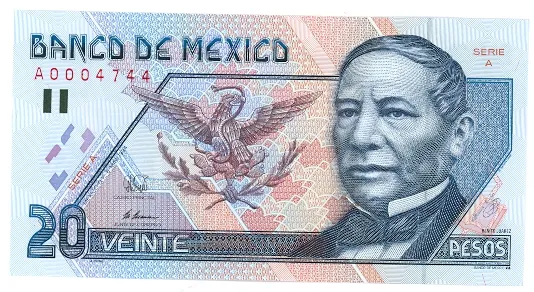
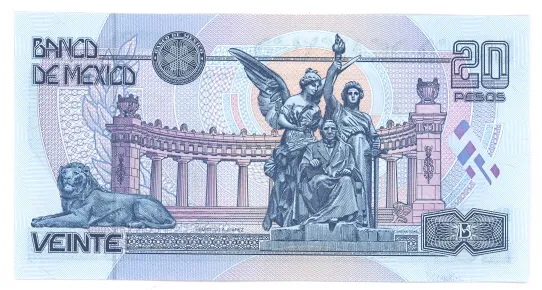
Design
Banxico
Obverse
Benito Juárez
Portrait of Benito Juárez and the National Coat of Arms
Reverse
The Hemiciclo a Juárez monument at the Alameda Central
About this banknote
Most 1994 Mexican 20 peso notes are worth about 1 to 5 US dollars, only a little over their face value once converted. The version collectors actually pay a premium for is an uncirculated note with a low serial number, a radar (palindrome) serial, or a genuine printing error. Here is what your note really is and how to check it.
This is the 20 pesos featuring Benito Juárez, the president who led Mexico's Reform era and the defense of the Republic against Emperor Maximilian. The front shows his portrait alongside the national coat of arms. The back depicts the Hemiciclo a Juárez, the white marble monument in Mexico City's Alameda Central park.
It belongs to Banco de México's Family AA, the series identified by a double-letter prefix in the serial number. This paper note is the direct predecessor of the well-known blue polymer 20 peso note that replaced it.
How much is it worth in 2026?
This note is no longer in circulation in Mexico, so its worth is collector value, not spending value. For a US buyer, the numbers break down like this:
- Circulated (folds, soft corners, light soiling): roughly 1 to 3 USD. Common, and worn examples are easy to find.
- Uncirculated (crisp, no folds, sharp corners, no stains): typically 4 to 12 USD depending on the buyer.
- Low serial number, radar/palindrome serial, or an early prefix: can reach 20 to 60 USD or more among specialist collectors.
- Genuine printing error (misalignment, ink smear, foldover, miscut): the wild card. A single strong error note can sell for several times the figures above, sometimes into the low hundreds of dollars.
Condition is the single biggest driver. Ignore the inflated "worth thousands" listings you see on marketplace sites; those are asking prices, not sale prices. A plain circulated Juárez 20 is a couple of dollars, full stop.
| Note | Series | Grade | Realistic value (USD) |
|---|---|---|---|
| 20 pesos Benito Juárez | Family AA | Circulated | 1 to 3 |
| 20 pesos Benito Juárez | Family AA | Uncirculated | 4 to 12 |
| 20 pesos Benito Juárez | Family AA, low/radar serial | Uncirculated | 20 to 60+ |
| 20 pesos Benito Juárez | Family AA, printing error | Any | 50 to a few hundred |
What makes one worth more
Three things turn a common note into one collectors chase:
- Condition. Uncirculated means no folds, no stains, full crisp paper, and sharp corners. Handle it as little as possible.
- The serial number. Low numbers (many leading zeros), radar serials (reads the same forward and backward), and early prefixes command premiums.
- Printing errors. Miscuts, misaligned printing, ink runs, and factory foldovers are genuine rarities. Note the difference: normal wear or damage from use is not a factory error and adds nothing.
How to tell if yours is genuine
Check the built-in security features against official Banco de México images: the watermark visible when held to light, the embedded security thread, microprinting, and slight raised relief you can feel with a fingertip. Reproductions usually give themselves away with smooth, flat paper and dull, flat colors. Compare the portrait, the signatures, and the paper feel to a reference photo. If anything looks off, post clear scans of both sides in the Pesoteca forum for a second opinion.
Where to sell it
For a US or international seller, the best channels are specialist world-paper-money dealers and collector communities, not a quick flip to the first buyer on social media. You can also list it in the Pesoteca buy/sell forum, where collectors know exactly what a Family AA Juárez note is worth. Photograph both faces in good light, and flag the serial number and any error, since those are what move the price.
If you want to gauge the wider market first, it helps to know Mexico's most counterfeited banknotes and how the polymer 20 peso note that replaced this one is priced today.
Got a Juárez 20 with an unusual serial or in factory-fresh condition? Post it in the forum and let the community weigh in before you sell.
Historical context
A 20-peso note from Family AA, the series that inaugurated the new pesos after the 1993 monetary reform. That reform cut three zeros from the national currency and imposed the N$ symbol, present on these pieces to distinguish them from the old pesos that still coexisted in the market.
The obverse features Benito Juárez alongside the National Coat of Arms, in tribute to the president who defended the Republic against the Second Empire and led the Reform Laws.
The reverse reproduces the Hemiciclo a Juárez of the Alameda Central, a marble monument inaugurated in 1910 in Mexico City. Thus, this piece links the figure with the sculptural tribute the capital dedicated to him, within the first generation of notes of the new monetary unit.
Frequently asked questions
How much is the 1994 Mexico 20 peso note worth?
A circulated example is worth about 1 to 3 US dollars, just above face value. An uncirculated note runs 4 to 12 USD, and one with a low serial number, a radar serial, or a genuine printing error can bring 20 to a few hundred dollars. Condition and rarity decide the price.
Is the 1994 20 peso Benito Juárez note rare?
No, the standard note is common and easy to find in circulated grades. What is scarce is a genuinely uncirculated example, a note with a special serial number (low number or palindrome), or one with a factory printing error. Those are the versions collectors actively hunt for.
Where can I sell my 1994 Mexico 20 peso note?
Sell it to a specialist world-paper-money dealer or through a collector community like the [Pesoteca buy/sell forum](/foro/compra-venta), where buyers know Family AA notes. Photograph both sides clearly and highlight the serial number and any error. Avoid dumping it to the first offer on a general marketplace.
How do I tell if my 20 peso note is genuine?
Check the watermark when held to light, the embedded security thread, microprinting, and the slightly raised relief you can feel. Compare the portrait, signatures, and paper to official Banco de México images. Reproductions usually have smooth flat paper and dull colors. When in doubt, ask in the [Pesoteca forum](/foro).
Familia AA
This banknote belongs to the BIL-AA family within the Sistema PSM . Explore all the banknotes that share origin, era and design with this piece.
Ver todos los billetes de la familia AA →