
Mexico 5 Pesos Banknote (Carranza, 1915): Value Guide
Familia REV · cartón
Period: Revolución Mexicana
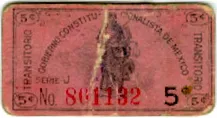
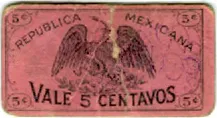
Design
Banxico
Obverse
Gobierno Constitucionalista
An engraved historical portrait in the center (Miguel Hidalgo) with the legend República Mexicana
Reverse
The Sun Stone or Aztec Calendar
About this banknote
Most 1915 Mexican 5 pesos notes from the Carranza era are worth a few dollars, not a fortune. Value comes down to condition, the issuing entity, and whether the note is a scarce variety. A common, worn example trades for pocket money. A crisp, uncirculated note from a rare bank can be worth several times more. Here is how to tell which one you have.
This is a Gobierno Constitucionalista note, issued under Venustiano Carranza per the 1915 decree, during the Mexican Revolution. If you inherited one or found it in a family box, it is over a century old, which sounds impressive but does not automatically make it valuable. Age is not rarity. Millions of these revolutionary notes were printed to finance the fight against Huerta, and many survive.
What it is
When Carranza led the Constitutionalist faction, he issued his own paper money to fund the war and impose order on the monetary chaos of the Revolution. These República Mexicana notes were meant to give his government legitimacy against the rival issues of Villa, Zapata, and other factions. The patriotic imagery reinforced the message of a unified nation.
- Obverse: an engraved historical portrait at center (Miguel Hidalgo, the priest who launched Mexico's independence movement in 1810) with the legend República Mexicana.
- Reverse: the Piedra del Sol, the Aztec Sun Stone (often called the Aztec Calendar).
- Denomination: 5 pesos.
- Period: issued under the 1915 decree of the Constitutionalist Government.
Note that the term "5 pesos" from this era covers several distinct issuers and printings. Revolutionary Mexico saw notes from the federal Constitutionalist government, from private banks of the Porfiriato period, and from local vales (regional scrip). Two notes with the same face value can differ wildly in price depending on who printed them and how many survive.
How much is it worth
This is historical paper money, so its value is purely collector value (notaphily), driven by condition and the rarity of the issuing entity. Common Constitutionalist 5 pesos notes in circulated condition trade in the low single digits to low tens of dollars. Scarce issuers, rare signature combinations, or high-grade uncirculated examples command more.
| Type / condition | Typical range (USD) | Notes |
|---|---|---|
| Common Constitutionalist 5 pesos, worn | 2 to 10 | Folds, soiling, common issuer |
| Same note, uncirculated (crisp, no folds) | 15 to 60+ | Condition premium |
| Scarce private-bank or regional issue | 40 to several hundred | Depends on surviving population |
| Note with a genuine printing error | Several times face | Cutting, ink, or numbering errors |
These are ranges, not guarantees. Revolutionary paper money is a specialist corner of the market, and prices swing with the specific catalog variety. Do not trust the first price you see online. Confirm the exact issuer and grade before you buy or sell.
What actually drives the value
For world paper money, four things matter more than age:
- Condition (grade). A note with no folds, full crisp paper, and bright color is worth many times a soft, creased one. Collectors grade from Poor up to Gem Uncirculated. Never flatten, iron, or tape a note; you will destroy its value.
- Issuer and variety. A common federal issue is cheap. A note from a bank or region that printed few survivors is the prize.
- Serial numbers. A low serial number (like 000001 to 000100) or a palindrome (a radar note, reading the same forwards and backwards) adds a premium.
- Printing errors. Genuine factory errors turn a common note into a rarity.
The ones people think are worth millions but aren't
Every revolutionary-era note gets tagged online as a hidden fortune. Reality: the vast majority are common survivors worth a few dollars. Being 100 years old, being "from the Revolution," or showing a famous portrait does not create rarity by itself. Value comes from a scarce issuer plus strong condition, or a verified error. A tattered, taped, or trimmed note is worth less than a clean one no matter how old it is.
Are printing errors worth money?
Yes, genuine factory errors can turn a common note into a rarity worth several times face. Watch for:
- Misaligned or off-center cutting.
- Ink smears or double impressions.
- Factory folds printed into the design.
- Repeated or misprinted serial numbers.
Be careful: normal wear, everyday folds, and use damage are not errors. If you think your note has a real factory error, post clear photos of both sides in the Pesoteca forum so experienced collectors can confirm before you sell.
How to tell if yours is genuine
Check the paper and printing against official Banco de México references. Period notes were printed on distinctive paper with fine engraved detail. Reproductions usually give themselves away with:
- Smooth, modern paper instead of period stock.
- Flat, printer-like colors with no engraved relief.
- Blurry portraits or fuzzy lettering under magnification.
- Serial numbers that look printed by an inkjet rather than a numbering press.
Compare the design, signatures, and layout with verified images. When in doubt, ask in the forum before you pay anything.
Where to sell it
To sell your 5 pesos note safely, use a verified dealer from the Pesoteca shop directory, who can appraise it on the spot, or the Pesoteca buy-and-sell forum among collectors. Photograph both sides in good light, note the serial number, and flag any low or palindrome serial or possible error, all of which raise the value. Avoid dumping it on the first social-media buyer.
Have a Carranza-era 5 pesos note and not sure which issuer you're holding? Post the serial number and clear photos of both sides in the Pesoteca forum and let the community pin down exactly what you have.
Historical context
This 5-peso note of the Constitutionalist Government of Mexico is part of the paper money that the faction of Venustiano Carranza put into circulation during the Mexican Revolution. Faced with the lack of a stable national currency, the Constitutionalists printed their own issues to pay the army and sustain the government in the areas under their control.
The obverse features a portrait of Miguel Hidalgo, the priest of Dolores who launched Independence, alongside the legend República Mexicana. This was no accident: using a national hero sought to wrap the paper in historical authority and present it as legitimate money of the country, not of a warring faction. The reverse bears the Sun Stone, another symbol charged with national identity.
The backdrop is the monetary disorder of the period, when different factions issued notes at the same time and a distrustful public hid metal coins. That is why these Constitutionalist pieces are studied as testimony to how the Revolution was also fought on the terrain of money, not only on the battlefield.
Frequently asked questions
How much is the 1915 Mexican 5 pesos Carranza note worth?
Common Constitutionalist 5 pesos notes in worn condition sell for about 2 to 10 USD. A crisp uncirculated example can bring 15 to 60 USD or more, and scarce private-bank or regional issues, low serial numbers, or genuine printing errors can push the price into the hundreds. Condition and the specific issuer decide the figure.
Is the 5 pesos revolutionary note rare?
Most common federal Constitutionalist issues are not rare, since millions were printed to fund the Revolution. Rarity depends on the exact issuer. Some private-bank and regional (vale) notes survive in tiny numbers and are genuinely scarce. Age alone does not make a note rare; a scarce issuer plus strong condition does.
How do I tell if my 5 pesos note is genuine?
Compare the paper, colors, portrait, and signatures with official Banco de México references. Period notes have engraved relief and distinctive paper, while reproductions tend to show smooth modern paper, flat colors, and blurry lettering. If you are unsure, post clear photos of both sides in the Pesoteca forum before buying or selling.
Where can I sell my Mexican 5 pesos banknote?
Use a verified dealer from the Pesoteca shop directory for an on-the-spot appraisal, or the Pesoteca buy-and-sell forum to reach collectors directly. Photograph both sides in good light and note the serial number and any error, since low or palindrome serials and factory errors raise the value. Avoid selling to the first social-media buyer.
Familia REV
This banknote belongs to the BIL-REV family within the Sistema PSM . Explore all the banknotes that share origin, era and design with this piece.
Ver todos los billetes de la familia REV →