
En resumen
As of September 2021, 39.4 counterfeit notes circulated for every million genuine ones in Mexico. Here's what PPM measures, which denomination is faked most, and how to check the bills in your wallet.
If you handle Mexican pesos on a trip, in a border town, or from an inheritance of cash, here is the number to know: as of September 2021, for every million genuine banknotes circulating in Mexico there were 39.4 counterfeits passing hand to hand. That is the general figure from Banco de México (the country's central bank, known as Banxico). The average hides a lot, because not every denomination gets faked at the same rate, and one note carries a far higher counterfeit ratio than the rest.
Which Mexican banknote is faked most
The 200-peso note is the most counterfeited by a wide margin, with a PPM (counterfeit pieces per million) of 89.9. The 100-peso note follows at 16.9, and the 50-peso note sits at 7. If you want the short answer to "which one should I look at hardest," it is the 200.
What PPM measures and why it matters
The figure Banxico uses is PPM: counterfeit pieces removed from circulation for every million genuine pieces in circulation. It is a rate, not a raw count, which is exactly why it works for comparing denominations that circulate in very different volumes.
A higher PPM means more fakes per million legitimate notes. That is all it means. It does not tell you how many fakes exist in the country overall, or how much money they represent. It measures density. When another site tells you a certain bill is "the most counterfeited in history," ask for the source, because the official data is more sober and more useful: it reports the proportion detected and pulled from circulation, period by period.
The general PPM of 39.4 as of September 2021 is the baseline. From there, the denominations split apart.
The numbers by denomination
Using the accumulated figures from January to September 2021, here is how the board looked:
| Denomination | PPM (fakes per million) | Trend vs. prior period |
|---|---|---|
| 200 pesos | 89.9 | Down 18.9% |
| 100 pesos | 16.9 | Down 16% |
| 50 pesos | 7 | Up 27% |
| General (all notes) | 39.4 | Baseline |
A few things stand out. The 200 concentrates the highest ratio by far, though the good news is it was falling, an 18.9% decrease over the comparable period. The 100 comes in well below, also trending down at a 16% decrease. The 50, despite having the lowest density of the three, is the only one moving up, a 27% increase versus the same period the year before.
The 500-peso note is monitored in the same report, but we are not going to give you a figure here because the data was incomplete in the source, and we would rather not invent a number.
A PPM that grows 27% is not cause for panic when it starts at 7. But it is the kind of signal a central bank watches closely, because trends matter as much as levels.
Why counterfeiting drives new banknote families
Counterfeiting is the main reason a central bank decides to issue a new family of banknotes. It is not a design whim or the urge to put fresh faces on paper. It is a race against whoever is copying the currency.
And that race got harder. Advances in digital reproduction equipment (scanners, color copiers, high-resolution printers) lowered the barrier to producing illegal pieces. There are even inks and substrates marketed online for counterfeiting. Against that backdrop, a banknote design that stayed still for ten years is a vulnerable one, which is why Banxico renews.
The security features of the Familia G
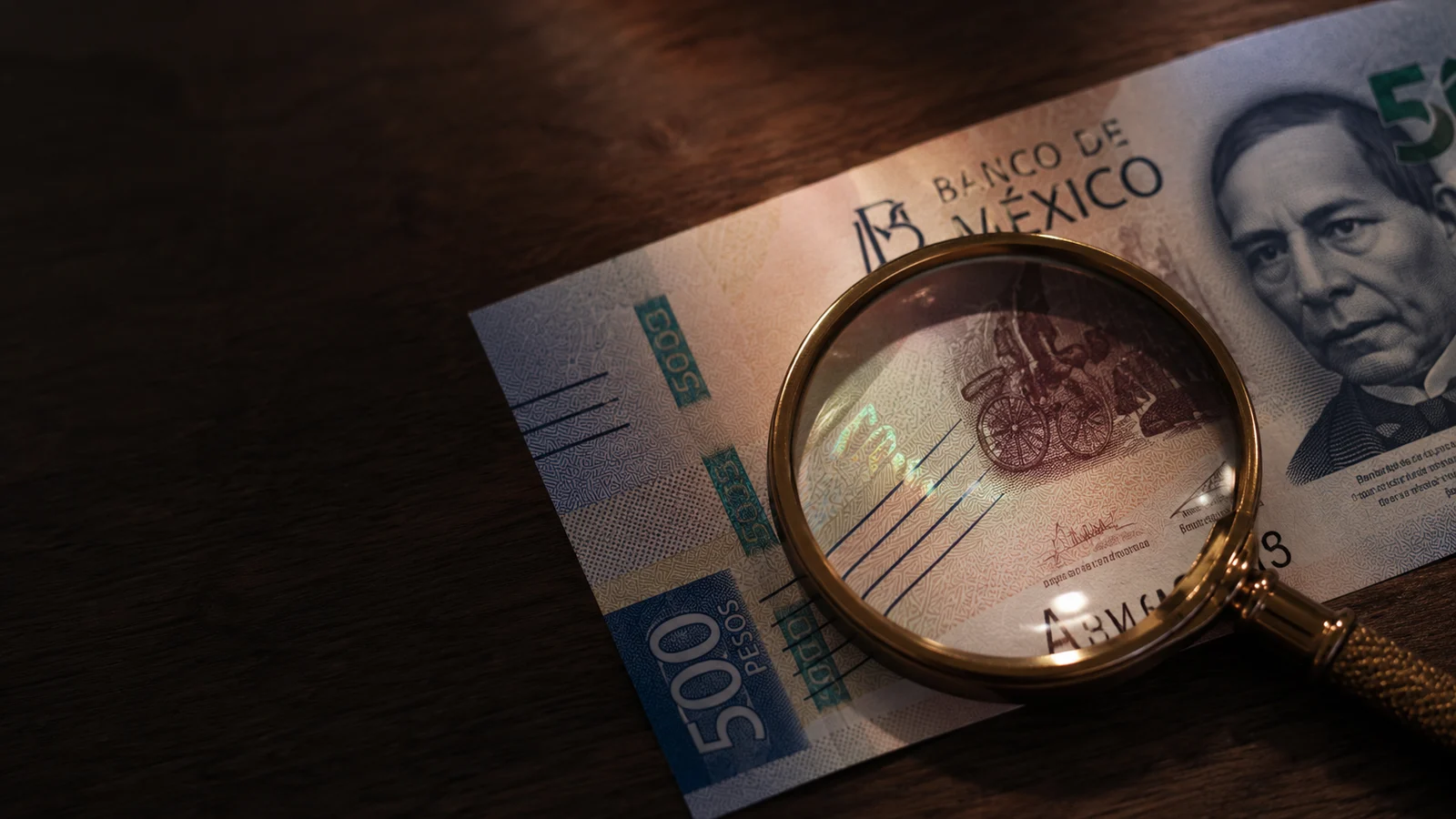
Banxico's current answer is the Familia G ("G Family"), the latest series of Mexican banknotes, built with modern security features. Two are worth knowing and checking with your hands and the light:
- Multicolor denomination: the value number shifts tone depending on how light hits it, very hard to reproduce with a home printer.
- Dynamic thread: present on the higher denominations (100, 200, 500, and 1000), an embedded thread that shows movement when you tilt the note.
These are the two features we can name with official backing. To see how they play out on specific notes, look at the 50-peso note with the axolotl from the Familia G and the odd case of the 2,000-peso note almost nobody has seen in the wild. Both show where Mexican security design is heading.
The 50-peso note has a history
The fact that the 50-peso note is now the one climbing fastest in PPM rhymes with the past. In 2013, Banxico updated that same note (the version known as F1) precisely because its counterfeiting was rising, adding new security elements at the time.
So the 50 already has a track record. It is not the denomination with the highest density of fakes, but it is the one that has forced Banxico to act early before, and the 27% increase through September 2021 suggests counterfeiters have not lost interest in it.
How to check a Mexican banknote
The practical part: when someone hands you a bill, do not rely on the feel of the paper alone. Tilt it under the light and watch the multicolor denomination change tone. On denominations of 100 and up, look for the dynamic thread and its movement as you turn the note. These features exist so that you, with no equipment, can tell a good bill from a bad one in seconds.
All the figures in this article (39.4 general, 200 at 89.9, 100 at 16.9, and 50 at 7, with their variations, as of September 2021) come from the public Banco de México document "Nueva familia de billetes."
Have you ever been handed a fake bill, and which denomination was it? Share it in the forum, so we can sharpen everyone's eye better than any national average can.

Loading comments…