
1 Centavo Maximiliano (1864-1867): Value & Prices
Prices updated: August 2026
Second Empire · Mexico City Mint
Second Empire · Mexico City Mint
How much is the 1 Centavo Maximiliano (1864-1867): Value & Prices worth?
The market value of the 1 Centavo Maximiliano (1864-1867): Value & Prices is not yet documented with enough data to give a firm range. Weigh and measure your piece, compare it against the specifications, and check the forum for a second opinion.
The real price depends on four factors: the grade of preservation (a circulated piece is worth the low end of the range; an uncirculated one, or one still in its official blister pack, the high end), the finish (satin vs mirror/proof), the rarity within the series based on the mintage, and the metal spot price on the day of the deal when the piece is silver or gold. Check the value-by-grade table above and compare with equivalent pieces before buying or selling.
Where to buy or sell this coin?
Browse the national directory of numismatic shops or the community forum to trade directly with other collectors.
Description
If you inherited a small copper coin with the profile of Emperor Maximiliano and the words "IMPERIO MEXICANO" on it, you have a piece of one of the shortest-lived empires in the Americas. In 2026, a circulated 1 centavo of Maximiliano is worth roughly 5 to 30 US dollars. A sharp, uncirculated example can reach several hundred. It is genuinely old and historically interesting, but it is not a fortune coin, and here is exactly why.
What this coin actually is
The 1 centavo Maximiliano was struck during the Second Mexican Empire (1864-1867), when Archduke Maximilian of Habsburg ruled Mexico as emperor under French backing. That regime collapsed in 1867 when Maximiliano was executed, which is why coins from his short reign carry historical weight for collectors.
Specifications you can verify on your own coin:
- Metal: copper
- Weight: 9.27 grams
- Diameter: 25.47 mm
- Edge: reeded (grooved)
- Mint: Mexico City (Ceca México)
- Series: part of the Mexican Centavos series
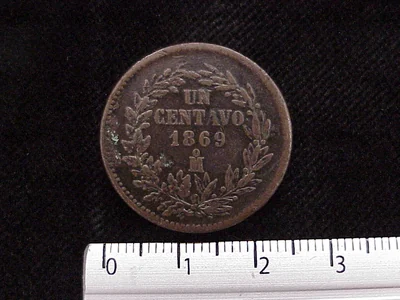
The obverse shows Maximiliano's profile with the legend around the rim. The reverse carries the imperial eagle and the denomination. Because copper corrodes and these coins circulated hard, most surviving examples show heavy wear, which caps their value.
What it's worth in 2026
Value for this coin is driven almost entirely by condition. Copper coins are unforgiving: any cleaning, corrosion, or spotting knocks the price down fast. Original, glossy red-brown surfaces are what command real money.
| Grade / Condition | Approximate value (USD) |
|---|---|
| Heavily worn (Good to Fine) | 5 to 15 dollars |
| Moderate wear (Very Fine) | 15 to 40 dollars |
| Light wear (Extremely Fine) | 40 to 120 dollars |
| Uncirculated (About Unc to MS-63) | 120 to 400 dollars |
| High-grade certified (MS-64 red-brown or better) | 400 dollars and up |
These are collector-market ranges for a genuine, correctly attributed piece. Certified examples in top grades are scarce because copper rarely survives with full original color. If yours is certified red or red-brown by NGC or PCGS in high grade, that is where the real money sits.
Unlike a silver or gold coin, this piece has no bullion floor. Copper is worth almost nothing by weight, so 100 percent of the value is numismatic. That means condition and authenticity are everything.
The myth to avoid
"It's from an emperor who was executed, so it must be worth thousands." That is the story people tell themselves, and it is usually wrong. Historical drama does not equal high price. What drives value is how many survived in good condition and how many collectors want them. Maximiliano centavos circulated widely and survive in reasonable numbers, so a worn example is common and cheap. The historical connection adds interest, not a premium, unless the grade backs it up.
How to tell if yours is genuine
Start with the physical checks. A real coin weighs 9.27 grams and measures 25.47 mm with a reeded edge. If your coin is noticeably lighter, off-diameter, or has a smooth edge, be suspicious.
- Weigh it on a gram scale. Fakes are often the wrong weight.
- Check the relief. Genuine strikes have crisp detail in Maximiliano's hair and the eagle's feathers. Cast counterfeits look soft, flat, or grainy.
- Look at the surfaces. Real copper ages to a natural brown or red-brown. Uniform, artificial-looking color or a sandy texture points to a cast copy.
- Get it certified if it looks high grade. Grading by NGC or PCGS is the only definitive proof of authenticity and condition, and it is worth the fee on any coin you think is worth more than 100 dollars.
Compare your piece against confirmed reference images before you trust a seller's claim. Our coin grading guide walks through what each condition level looks like.
Errors and varieties
Genuine mint errors (off-center strikes, die rotation, doubled dies) can multiply the value of a coin like this. But be realistic: most "errors" people spot are post-mint damage, corrosion, or dings, not factory mistakes. If you think you have a real error, post clear photos on the Pesoteca forum and let experienced collectors weigh in before you get excited.
Where to sell it
Your options depend on how much the coin is worth:
- Verified numismatic shops from the Pesoteca directory will appraise and buy on the spot, no middleman markup.
- Collector-to-collector through the Pesoteca buy-and-sell forum, where people who know the series set fair prices.
- Online marketplaces can work but attract fakes, so always demand photos of the edge and the exact weight from any seller, and offer the same when you sell.
Before you sell, photograph the obverse, reverse, and edge in good light, and compare your coin to the value ranges above. Do not dump it on the first lowball offer. A worn common example is a modest sale, but a clean high-grade piece deserves a proper appraisal first.
Have one of these sitting in a drawer? Post a photo on the Pesoteca forum and let the community tell you what grade it really is before you decide what to do with it.
Historical context
Edge: Reeded.
This piece belongs to the era
Segundo Imperio (Maximiliano) →Explore all the Mexican coins of this era, their historical context and how they connect to the monetary system of the period.
Value range of this piece
Value range without enough data for this piece.
See the full breakdown by grade (VG, F, VF, EF, AU, MS-60, MS-63, MS-65) for the whole series →
Same denomination, other years
1 centavo Cobre · Centavos Mexicanos
Frequently asked questions
How much is a 1 centavo Maximiliano coin worth?
It depends heavily on condition. Heavily worn examples run about 5 to 15 US dollars, moderate grades 15 to 40 dollars, and uncirculated pieces 120 to 400 dollars or more. High-grade certified coins with original red-brown copper color bring the most. Copper has no melt value here, so condition is everything.
Is the 1 centavo Maximiliano rare?
In worn condition it is common and inexpensive. What is scarce is a well-preserved example with original color, because copper rarely survives that way. The historical story of Maximiliano's short empire adds interest, but it does not create a premium unless the grade supports it.
How can I tell if my 1 centavo Maximiliano is genuine?
A real coin weighs 9.27 grams, measures 25.47 mm, and has a reeded edge. Fakes are often the wrong weight, have flat or grainy relief, or unnatural surface color. Weigh it, compare the detail against reference images, and for anything you think is high grade, get it certified by NGC or PCGS.
Where can I sell a 1 centavo Maximiliano?
Verified numismatic shops in the Pesoteca directory will appraise and buy it directly, and the Pesoteca buy-and-sell forum connects you with collectors who know the series. Online marketplaces work too, but demand edge photos and the exact weight to avoid fakes. Photograph both sides and the edge before selling.
Conversation
0 comments
Sources
Images for informational and educational purposes, attributed to their original source. Reference values; the real price depends on the grade, the specific variant and demand.
Loading comments…