
1 Peso Silver Coin (1870): Value & How to Sell
The 1 Peso Silver Coin : Value & How to Sell is worth between $744 and $1,959 MXN depending on its grade of preservation.
Prices updated: August 2026
The 1 Peso Silver Coin : Value & How to Sell is worth between $744 and $1,959 MXN depending on its grade of preservation.
Prices updated: August 2026
How much is the 1 Peso Silver Coin (1870): Value & How to Sell worth?
The estimated value of the 1 Peso Silver Coin (1870): Value & How to Sell ranges from $744 (circulated, XF) up to $1,959 (official blister pack), with $1,517 as a reference for an uncirculated (UNC) piece. The estimate is based on the official mintage and the historical behavior of the family.
The real price depends on four factors: the grade of preservation (a circulated piece is worth the low end of the range; an uncirculated one, or one still in its official blister pack, the high end), the finish (satin vs mirror/proof), the rarity within the series based on the mintage, and the metal spot price on the day of the deal when the piece is silver or gold. Check the value-by-grade table above and compare with equivalent pieces before buying or selling.
Where to buy or sell this coin?
Browse the national directory of numismatic shops or the community forum to trade directly with other collectors.
Description
If you inherited an 1870 Mexican 1 peso silver coin, here is the honest answer: it is worth real money because of its silver, and possibly a lot more depending on the mint mark and condition. A well-worn example sits close to its silver melt value (roughly 20 to 30 USD in 2026, tied to the spot price). Sharp, uncleaned examples from scarce mints can bring several hundred dollars.
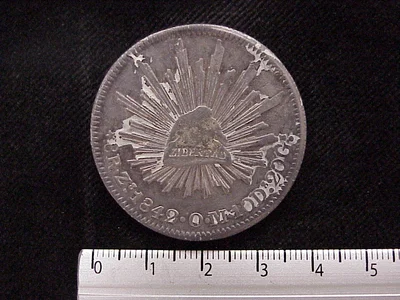
This is a large silver coin from Mexico's República Restaurada period. It weighs 27.05 grams, measures 37 millimeters across, and has a reeded (grooved) edge. That size and weight put it in the same family as the old Spanish colonial "pieces of eight," which is exactly why these coins were used all over the world in the 19th century.
What your 1870 peso is actually worth
Two things drive the price: the silver content and the collector premium.
Silver content (the floor). The coin is 0.9027 fine silver (about 90%), holding roughly 0.786 troy ounces of pure silver. That gives it a hard floor: even a beat-up, heavily circulated example is worth its metal. As of 2026, that is in the 20 to 30 USD range, moving with the silver market. No 1870 peso in solid condition should ever sell below its melt value.
Collector premium (the upside). Above melt, value depends on:
- Mint mark. Mexico struck coins at several mints in 1870 (Mexico City "Mo," Guanajuato "Go," Zacatecas "Zs," and others). Some mint-and-year combinations are common; others are genuinely scarce and command strong premiums.
- Assayer initials. Small letters on the coin identify the assayer (the official who guaranteed the silver purity). Certain assayer varieties are rarer than others for the same date and mint.
- Grade (condition). This is the single biggest multiplier. A worn coin brings melt-plus. A coin with original luster and sharp detail can bring many times that.
Price ranges by condition
| Condition | What it looks like | Typical value (USD) |
|---|---|---|
| Heavily circulated | Worn flat, low detail | 20 to 35 (melt-driven) |
| Moderately circulated | Readable detail, honest wear | 35 to 90 |
| Lightly circulated | Sharp, minimal wear | 90 to 250 |
| Uncirculated / original luster | Full detail, mint brilliance | 250 to 800+ (scarce mints higher) |
These are broad ranges. A rare mint-and-assayer combination in top grade can exceed these figures at auction. A common Mexico City example in worn shape sits at the bottom.
The myth: "It's over 150 years old, so it must be worth a fortune"
Age alone does not make a coin valuable. Millions of silver pesos were struck across the 1800s, and many survive. What separates a 30-dollar coin from a 500-dollar coin is rarity of the specific mint/assayer combination and, above all, condition. An 1870 peso that has been cleaned, polished, or scrubbed loses much of its collector premium, sometimes dropping back to melt value. If someone tells you any old Mexican silver peso is automatically worth thousands, be skeptical.
How to check what yours is worth
- Weigh it. Use a jewelry scale. A genuine coin weighs 27.05 grams. A significant deviation is a warning sign.
- Measure it. Diameter should be 37 millimeters. Check the edge is reeded, not smooth.
- Read the mint mark and assayer letters. These small letters, usually near the denomination or coat of arms, determine which variety you have. Photograph them clearly.
- Do not clean it. Cleaning destroys value. Leave the coin exactly as you found it.
- Get it graded or appraised. For a potentially valuable example, professional grading (NGC or PCGS) confirms authenticity and condition, and it raises resale confidence.
How to tell if it's genuine
Counterfeits of 19th-century Mexican silver exist. The quickest checks:
- Weight and diameter that miss the 27.05 g / 37 mm targets point to a fake or a replica.
- Flat, mushy relief or lettering that looks soft suggests a cast copy rather than a struck coin.
- Wrong color or a greasy sheen can indicate a base-metal coin plated to look like silver.
- A deal far below melt value is almost always a fake or a problem coin. Real silver has a floor; nobody sells it for less without a reason.
When in doubt, third-party grading settles the question.
Where to sell it
For a silver coin, always sell to someone who inspects the piece and weighs it in front of you. Good options:
- A verified coin dealer who will value it on the spot and pay fair market above melt.
- A collector marketplace or numismatic forum, where 19th-century Mexican silver has an active audience.
- Auction for a genuinely rare mint/assayer/grade combination, where competition drives the best price.
Photograph both sides and the edge, note the mint mark and assayer letters, and compare against the ranges above before you accept any offer. Do not dump it on a general resale app to the first bidder; you will likely leave money on the table.
Not sure which mint or assayer variety you have? Post clear photos of both sides on the Pesoteca forum and let collectors help you pin down exactly what your 1870 peso is and what it's worth.
Value range of this piece
Market estimate: $744 - $1,959 MXN depending on the grade of preservation (typical range between a circulated and an uncirculated piece).
See the full breakdown by grade (VG, F, VF, EF, AU, MS-60, MS-63, MS-65) for the whole series →
Same denomination, other years
1 peso Plata 0.900 · Misc 1 Pesos Plata República Mexic
Frequently asked questions
How much is an 1870 Mexican 1 peso silver coin worth?
It's worth at least its silver melt value, roughly 20 to 30 USD in {{AÑO}} depending on the silver market, since it contains about 0.786 troy ounces of 90% silver. Above that, value depends on mint mark, assayer variety, and condition. Sharp, uncleaned examples from scarce mints can bring several hundred dollars, and top-grade rarities go higher at auction.
Is the 1870 1 peso rare?
It depends on the mint. Mexico struck this coin at several mints in 1870 (Mexico City, Guanajuato, Zacatecas and others). Common mint-and-year combinations survive in decent numbers, while certain mint and assayer varieties are genuinely scarce and command strong premiums. Condition matters just as much: an uncirculated example of any mint is far rarer than a worn one. Read the small mint mark and assayer letters to identify exactly what you have.
Where can I sell my 1870 Mexican silver peso?
Sell to a verified coin dealer who weighs and inspects the piece and values it on the spot, or list it on a collector forum or numismatic marketplace where 19th-century Mexican silver has an active audience. For a rare mint or grade, auction usually gets the best price. Photograph both sides and the edge, note the mint mark and assayer letters, and check the value ranges before accepting any offer. Avoid selling to the first bidder on a general resale app.
How do I tell if my 1870 peso is genuine?
Weigh it (should be 27.05 grams) and measure it (37 millimeters, with a reeded edge) using a jewelry scale and calipers, then compare to those specs. Fakes often miss the weight or diameter, show flat or mushy relief, or have the wrong color from base-metal plating. Be very suspicious of any offer far below the silver melt value. For a potentially valuable coin, professional grading from NGC or PCGS confirms authenticity.
Conversation
0 comments
Loading comments…