
1 Peso Stainless Steel 1984: Value & How to Sell
Prices updated: August 2026
Struck at San Luis Potosí.
Struck at San Luis Potosí.
How much is the 1 Peso Stainless Steel 1984: Value & How to Sell worth?
The market value of the 1 Peso Stainless Steel 1984: Value & How to Sell is not yet documented with enough data to give a firm range. Weigh and measure your piece, compare it against the specifications, and check the forum for a second opinion.
The real price depends on four factors: the grade of preservation (a circulated piece is worth the low end of the range; an uncirculated one, or one still in its official blister pack, the high end), the finish (satin vs mirror/proof), the rarity within the series based on the mintage, and the metal spot price on the day of the deal when the piece is silver or gold. Check the value-by-grade table above and compare with equivalent pieces before buying or selling.
Where to buy or sell this coin?
Browse the national directory of numismatic shops or the community forum to trade directly with other collectors.
Description
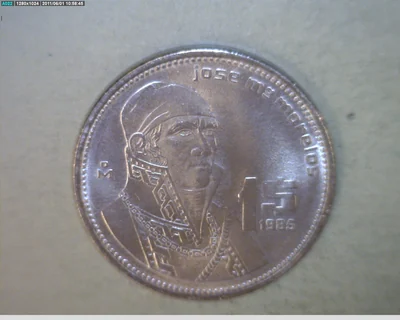
If you inherited or found a 1984 Mexican 1 Peso in stainless steel, here is the honest answer: in circulated condition it is worth a few cents to about a dollar. This is a common circulation coin, not a rarity. The value comes almost entirely from top-grade uncirculated examples, not age.
This is one of the most misunderstood Mexican coins in US collections. People see the year, assume "old means valuable," and expect hundreds of dollars. The reality: Mexico minted this piece by the millions, and worn examples trade for pocket change. Only pristine, uncirculated coins graded by a professional service command a real premium.
What this coin actually is
The 1 Peso stainless steel coin entered circulation in 1984, part of the old peso system that ran before the 1993 monetary reform introduced the "nuevo peso." That reform lopped three zeros off the currency, which is why these older pesos feel like play money today: 1,000 old pesos became 1 new peso.
Here are the exact specifications, useful for authentication:
- Metal: Stainless steel
- Weight: 6.1 g
- Diameter: 25.59 mm
- Edge: Plain (smooth, no reeding)
- Mint: Casa de Moneda de México, the mint that has operated continuously since the 16th century
- Catalog reference: KM# 496
The coin was struck at the San Luis Potosí facility. The peso has been Mexico's base monetary unit since independence, carrying the same core design identity through several currency reforms.
What it's worth in 2026
Because this is stainless steel and not silver, there is no bullion floor. A worn 1984 peso is worth its collector value only, which is minimal. Value climbs sharply only at the very top of the grading scale.
| Grade | Description | Approximate value (USD) |
|---|---|---|
| Circulated (VF-XF) | Everyday wear, scratches | 0.10 to 0.50 |
| About Uncirculated (AU) | Light wear on high points | 0.50 to 1.50 |
| Uncirculated (MS-63) | No wear, some marks | 1 to 3 |
| Gem Uncirculated (MS-65+) | Sharp, clean, well-struck | 5 to 15 |
The honest takeaway: unless your coin is genuinely uncirculated and you can prove it with a professional grade, treat it as a low-value common piece. A full roll of nice uncirculated examples might be worth more to a collector than the sum of individual worn coins.
The myth: "It's old, so it must be worth a fortune"
Age is not rarity. This coin was produced in enormous quantities for daily commerce, and most survivors are heavily circulated. What drives value on any coin is real scarcity (low mintage or few survivors), demand, condition, and metal content. This piece scores low on the first three and has zero silver or gold. That combination means modest value, period.
If a listing tells you a common 1984 peso is worth hundreds of dollars, it is either a rare mint error (verifiable, and unusual) or wishful pricing that will never sell.
Are mint errors worth anything?
Genuine striking errors can multiply value: off-center strikes, die rotation, double strikes, and documented die varieties. The catch is that most "errors" people spot are actually post-mint damage: dings, corrosion, or environmental wear, none of which add value. A true factory error has to be verified. If you think you have one, photograph both sides plus the edge and get a second opinion before you get excited.
How to check what yours is worth
- Confirm authenticity. Weigh the coin on a jewelry scale and measure the diameter with calipers. It should read 6.1 g and 25.59 mm. Fakes usually miss on weight or diameter, or show flat relief.
- Assess the grade. The gap between a worn coin and an uncirculated one is the whole game here. Look for wear on the highest design points under good light.
- Get it graded (only if pristine). For a common coin like this, professional grading through NGC or PCGS only makes sense if the coin looks flawless, since grading fees can exceed the coin's value.
Where to sell it
For a coin in this value range, keep it simple. A verified numismatic dealer from the Pesoteca directory can appraise it on the spot with no middleman markup. For collector-to-collector sales, the Pesoteca buy-and-sell forum reaches people who actually want these pieces. Photograph the obverse, reverse, and edge, and compare against the price range above before you sell. Avoid dumping it to the first bidder on a social media marketplace.
Have a full jar of old Mexican pesos and want to know which ones are actually worth pulling out? Post clear photos in the Pesoteca forum and let the community sort the keepers from the pocket change.
Historical context
Issued during the United Mexican States, the official name adopted starting with the Constitution of 1857. Banxico records a mintage of 1 piece for the year 1984. Referenced in the Harper catalog, North American Coins & Prices.
This piece belongs to the era
México Moderno (pre-1992) →Explore all the Mexican coins of this era, their historical context and how they connect to the monetary system of the period.
Value range of this piece
Value range without enough data for this piece.
See the full breakdown by grade (VG, F, VF, EF, AU, MS-60, MS-63, MS-65) for the whole series →
Same denomination, other years
1 peso Acero inoxidable · 1 Pesos Acero Inoxidable
Frequently asked questions
How much is the 1984 Mexican 1 Peso stainless steel coin worth?
In circulated condition, this coin is worth roughly 0.10 to 0.50 USD. Uncirculated examples reach 1 to 3 USD, and gem-quality graded pieces (MS-65 or higher) can hit 5 to 15 USD. It contains no silver or gold, so there is no bullion value; the price comes entirely from condition and collector demand.
Is the 1984 1 Peso rare?
No. Mexico struck this stainless steel peso (KM# 496) in large quantities for everyday circulation, so worn examples are extremely common and worth only cents. Real value appears only in top-grade uncirculated coins or in genuine, verifiable mint errors, which are the exception, not the rule.
Where can I sell my 1984 Mexican 1 Peso?
Your safest options are a verified dealer from the Pesoteca directory (/tiendas), who can value it in person, or the Pesoteca buy-and-sell forum (/foro/compra-venta) among collectors. Photograph the front, back, and edge, and check the price range for this coin before selling so you know what to expect.
How can I tell if my 1984 1 Peso is genuine?
Weigh it on a jewelry scale and measure it with calipers: a real one is 6.1 g and 25.59 mm in diameter with a plain (smooth) edge. Counterfeits typically have the wrong weight or diameter, flat relief, or poorly defined details. When in doubt, post photos to the Pesoteca forum for a second opinion.
Conversation
0 comments
Loading comments…