
Mexico 10 Pesos 1974 (Seven-Sided Coin): Value Guide
Prices updated: August 2026
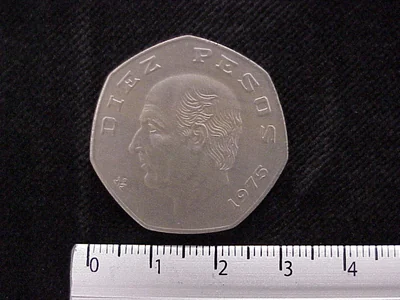
Heptagonal
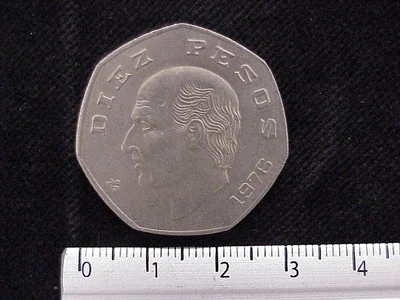
Heptagonal
How much is the Mexico 10 Pesos 1974 (Seven-Sided Coin): Value Guide worth?
The market value of the Mexico 10 Pesos 1974 (Seven-Sided Coin): Value Guide is not yet documented with enough data to give a firm range. Weigh and measure your piece, compare it against the specifications, and check the forum for a second opinion.
The real price depends on four factors: the grade of preservation (a circulated piece is worth the low end of the range; an uncirculated one, or one still in its official blister pack, the high end), the finish (satin vs mirror/proof), the rarity within the series based on the mintage, and the metal spot price on the day of the deal when the piece is silver or gold. Check the value-by-grade table above and compare with equivalent pieces before buying or selling.
Where to buy or sell this coin?
Browse the national directory of numismatic shops or the community forum to trade directly with other collectors.
Description
If you found a seven-sided Mexican coin marked 10 pesos and dated 1974, here is the straight answer: in circulated condition it is worth roughly 1 to 5 USD. It is not silver, it is not rare, and it is not a fortune. A pristine, uncirculated example is where the real money sits, and those are genuinely hard to find.
This is one of the most recognizable coins Mexico ever put in pockets, and the reason is obvious the moment you hold it: it has seven flat sides. That heptagonal shape is why so many people who inherit a box of coins pull this one out and assume it must be special. The shape is the whole point, but it does not make the coin valuable by itself.
What you actually have
The 1974 10 pesos is struck in cupronickel, a copper-nickel alloy with no precious metal content. Here are the exact specs so you can confirm yours is genuine:
| Feature | Specification |
|---|---|
| Denomination | 10 pesos |
| Year | 1974 (also struck 1976-1977 in this type) |
| Metal | Cupronickel (copper-nickel, no silver) |
| Weight | 9.71 g |
| Diameter | 30 mm |
| Shape | Heptagonal (seven sides) |
| Edge | Plain (smooth) |
| Mint | Casa de Moneda de México |
Because there is no silver or gold in it, this coin has no bullion floor. Its value is entirely collector-driven, and for a common circulated piece that means a couple of dollars at most.
Why it exists (and why it's shaped like that)
This coin belongs to the era when Mexico pulled silver out of everyday circulation. The older 10 pesos had been a large silver piece; once silver was removed, the mint needed a replacement that people could tell apart from other denominations by feel alone. The seven-sided design solved that. You can identify it in your pocket without looking, which was the practical goal.
Because it was a workhorse circulation coin, millions passed through millions of hands. That is exactly why finding one today feels familiar to anyone who grew up with them, and also why the vast majority that surface are worn.
What your coin is worth in 2026
Honest ranges based on condition:
- Heavily worn / circulated: about 1 to 3 USD. This is what most inherited examples grade out to.
- Lightly circulated, clean details: roughly 3 to 8 USD.
- Uncirculated (no wear, sharp relief, crisp corners): this is the tier that matters. Certified high-grade examples can run into the tens of dollars, and top-population pieces in an NGC or PCGS holder can bring more, precisely because they are hard to find.
The difference maker is the seven corners. On a circulated coin those edges get dinged and rounded first. A piece with all seven aristas sharp and undamaged is uncommon and is where collectors pay a premium. Grade is everything here.
The myth: "seven-sided means rare"
The unusual shape fools people into thinking the coin is scarce. It is not. It was minted in large numbers for general circulation, and worn examples are among the most common Mexican coins of the modern era. If a listing or a relative told you this is worth hundreds because it is heptagonal, that is not accurate for a normal circulated piece. Rarity here comes from condition, not from the shape.
How to tell if yours is genuine
Counterfeits of a low-value circulation coin are rare, but damage passed off as an error is common. To confirm authenticity:
- Weigh it on a jewelry scale. It should read 9.71 g. A meaningful deviation is a red flag.
- Measure the diameter with calipers. It should be 30 mm across the flats.
- Check the relief. Genuine coins have crisp, well-defined design. Flat, mushy detail or oddly distributed color suggests a fake or heavy wear.
About "error coins": genuine mint errors (off-center strikes, die rotation, double strikes) can multiply value if they are verifiable. Most of the "errors" people find are post-mint damage, meaning dents, corrosion, or scratches that happened after the coin left the mint. Those add nothing. If you think you have a real error, get a second opinion before you get excited.
Where to sell it
For a coin in this value range, you have a few honest options:
- A verified numismatic dealer from the Pesoteca shop directory, who can appraise it on the spot without inflating or lowballing.
- The Pesoteca buy-and-sell forum, where you deal directly with collectors.
- If you suspect an uncirculated grade or a real error, consider certification through NGC or PCGS before selling, since a graded holder is what unlocks the higher prices.
Photograph the obverse, reverse, and edge in good light before you list anything, and check the range on this page so you know what a fair offer looks like. Do not dump it on the first social-media buyer who messages you.
Got the seven-sided 10 pesos or a whole jar of old Mexican coins you inherited? Post clear photos on the Pesoteca forum and let the community tell you what's common and what's actually worth holding onto.
Historical context
Issued during the United Mexican States, the official name adopted from the Constitution of 1857. Banxico records a mintage of 10 pieces for the year 1974. Referenced in the Harper catalog, North American Coins & Prices.
This piece belongs to the era
México Moderno (pre-1992) →Explore all the Mexican coins of this era, their historical context and how they connect to the monetary system of the period.
Value range of this piece
Value range without enough data for this piece.
See the full breakdown by grade (VG, F, VF, EF, AU, MS-60, MS-63, MS-65) for the whole series →
Same denomination, other years
10 pesos Cuproníquel · 10 Pesos Cuproníquel
Frequently asked questions
How much is the 1974 Mexican 10 pesos heptagonal coin worth?
In circulated condition it is worth about 1 to 5 USD. It contains no silver, so there is no bullion value. A genuinely uncirculated example with sharp, undamaged corners is the exception and can bring tens of dollars, especially if certified by NGC or PCGS.
Is the seven-sided 1974 Mexican coin rare?
No. The unusual heptagonal shape makes people assume it is scarce, but it was minted in large numbers for everyday circulation and worn examples are very common. Rarity comes only from top condition, since coins with all seven corners crisp and undamaged are hard to find.
Where can I sell my 1974 Mexican 10 pesos coin?
The safest options are a verified dealer from the Pesoteca shop directory, who will appraise it in person, or the Pesoteca buy-and-sell forum where you deal directly with collectors. Photograph the front, back, and edge first, and check the value range on this page before accepting any offer.
How can I tell if my 1974 10 pesos coin is genuine?
Weigh it (it should be 9.71 g) and measure the diameter (30 mm) with a jewelry scale and calipers. Fakes usually have the wrong weight or diameter, flat relief, or poorly distributed color. Most so-called errors are actually post-mint damage, not valuable mint errors.
Conversation
0 comments
Loading comments…