
1976 Mexican 20 Centavos (Cupronickel Madero)
Prices updated: August 2026
Centavos cupronickel 1976.
Centavos cupronickel 1976.
Design
Banxico
Reverse
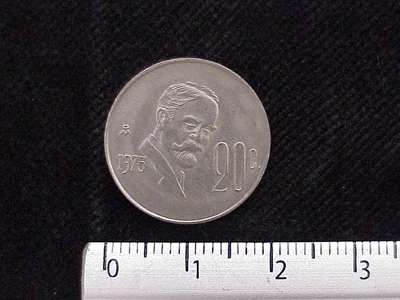
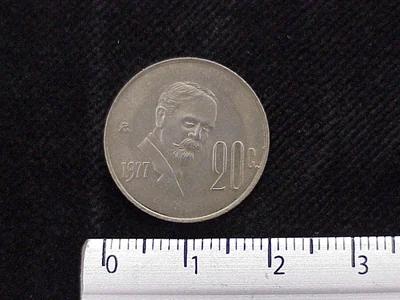
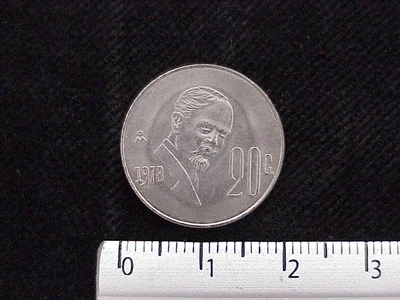
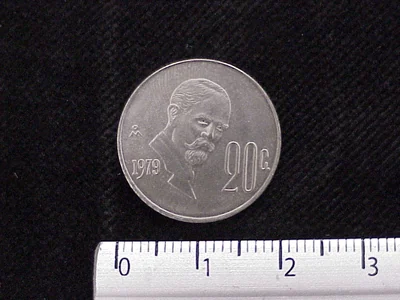
Bust of Francisco I. Madero facing right, with the mint mark "Mo" to one side, the denomination "20c" and the year 1976. This is the Madero type (KM#442), struck from 1974 to 1983.
Obverse
Obverse with the Mexican National Coat of Arms and the legend "ESTADOS UNIDOS MEXICANOS" per official convention. Struck by the Mexico City Mint under Banxico decree.
How much is the 1976 Mexican 20 Centavos (Cupronickel Madero) worth?
The market value of the 1976 Mexican 20 Centavos (Cupronickel Madero) is not yet documented with enough data to give a firm range. Weigh and measure your piece, compare it against the specifications, and check the forum for a second opinion.
The real price depends on four factors: the grade of preservation (a circulated piece is worth the low end of the range; an uncirculated one, or one still in its official blister pack, the high end), the finish (satin vs mirror/proof), the rarity within the series based on the mintage, and the metal spot price on the day of the deal when the piece is silver or gold. Check the value-by-grade table above and compare with equivalent pieces before buying or selling.
Where to buy or sell this coin?
Browse the national directory of numismatic shops or the community forum to trade directly with other collectors.
Description
Most 1976 Mexican 20 centavos coins are worth a few cents. In top uncirculated condition, catalog values top out around 0.25 to 0.50 USD. If you found a listing asking hundreds or thousands of dollars for one, it is either a different coin or bait. Here is the honest breakdown.
This is one of the most common Mexican coins in existence. Mexico struck 394 million of them in 1976 alone (source: Numista), and the type ran from 1974 to 1983. Common date, common metal, common survivors. There is no rarity story here, which is exactly why the inflated prices you see online do not hold up.
What is the 1976 20 Centavos?
It is a small circulation coin from the Casa de Moneda de México (the Mexican Mint), the coin that switched this denomination from bronze to cupronickel. The change came because bronze had gotten expensive and the mint was modernizing its everyday coinage. The silvery tone, different from the earlier copper-colored issues, makes it easy to identify at a glance.
The front (obverse) shows the Escudo Nacional, the Mexican national coat of arms with the eagle on a cactus. The back (reverse) shows the bust of Francisco I. Madero facing right, along with the Mo mint mark, the denomination 20c, and the year. Because of that portrait, collectors call it the "Madero 20 centavos."
Specifications
| Feature | Detail |
|---|---|
| Metal | Cupronickel (75% copper, 25% nickel) |
| Weight | 3 grams |
| Diameter | 20 mm |
| Edge | Reeded (milled) |
| Mint | Casa de Moneda de México (Mo) |
| Mintage (1976) | 394 million |
| Type years | 1974 to 1983 |
| Precious metal content | None |
A note on the edge: some catalogs list this coin with a plain edge, but Numista and standard numismatic references confirm the edge is reeded. Worth knowing if you are checking authenticity.
What is it actually worth?
In plain terms:
- Circulated (worn, been in a pocket or a drawer): a few cents. Real face value or slightly above to a collector filling a hole.
- Uncirculated with full original luster: roughly 0.25 to 0.50 USD per NGC and international catalogs, and only for genuinely clean, high-grade examples.
There is no metal value to speak of. Cupronickel is cheap, and 3 grams of it is worth essentially nothing at melt. So the only thing that moves the price is condition. Finding one in a high grade, with the original mint brightness intact and none of the typical spotting cupronickel gets when it is handled or cleaned, is harder than it sounds. That is where the small premium lives.
Check the relief on Madero's portrait and the detail in the coat of arms. Those are the first spots to wear down, so a coin with crisp detail there is worth more to a collector than a smooth, tired one.
The "worth 50,000 pesos" myth
You will find social media posts and marketplace listings claiming this coin is worth tens of thousands of pesos, or hundreds of dollars. It is not. Those figures either belong to completely different coins, or they are pure clickbait meant to get you to click or to make you overpay.
The Madero type is so common that only specific, well-documented mint errors carry any premium at all, and even then you need certification to prove it. A normal 1976 example, even a nice one, does not. Be skeptical of any listing asking serious money for an uncertified circulation coin.
How to check if yours is genuine and valuable
- Weigh it. It should be close to 3 grams.
- Measure it. 20 mm diameter.
- Check the edge. It should be reeded, not smooth.
- Magnet test. Cupronickel is not magnetic. If it sticks to a magnet, something is off.
- Look at the portrait. Madero facing right, Mo mint mark present.
If you believe you have a rare error variant and want to prove it, the only serious route is certification with a grading service like NGC or PCGS. For a plain 1976, that is not worth the cost.
Where to sell it
Because each coin is worth so little on its own, this denomination usually moves in lots or complete date sets rather than single pieces. A run of Madero 20 centavos across the type years (1974 to 1983) is easier to sell than one loose coin. Check the Pesoteca shop and buyer directory to find dealers who buy and sell Mexican centavos near you.
Got a full set, or think you spotted a genuine error? Post clear photos of both sides and the edge in the Pesoteca forum and let the community weigh in before you list it anywhere.
Historical context
Centavo coins form the base of the Mexican monetary system. Banxico has changed their diameters, materials and alloys several times over the past decades to optimize minting costs. The 20 centavos Cupronickel piece struck in 1976 belongs to the Banxico Coleccion Numismatica catalog documented on its official site.
For Mexican collectors, centavo pieces gain value when they capture a change of material, a die error or an unusually low mintage. Banxico has published annual mintages in CM10 since the year 2000. For earlier pieces the data may not be available. This listing follows the convention of the Sistema PSM, one ID per distinct physical piece, not per shared design.
This piece belongs to the era
México Moderno (pre-1992) →Explore all the Mexican coins of this era, their historical context and how they connect to the monetary system of the period.
Value range of this piece
Value range without enough data for this piece.
See the full breakdown by grade (VG, F, VF, EF, AU, MS-60, MS-63, MS-65) for the whole series →
Other denominations from 1976
Centavos Mexicanos · Cuproníquel
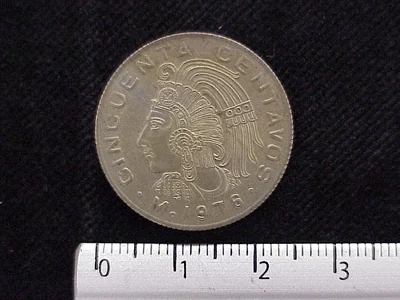
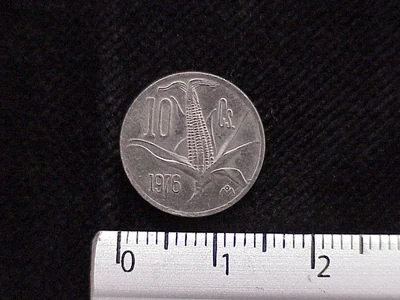
Same denomination, other years
20 centavos Cuproníquel · Centavos Mexicanos
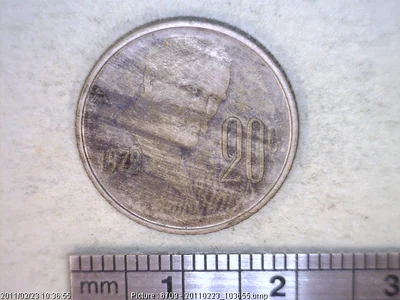
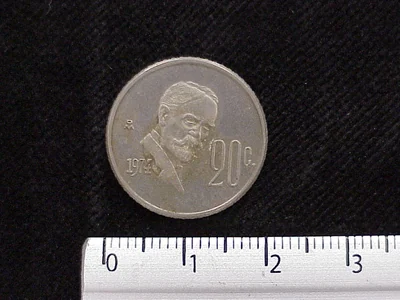
Frequently asked questions
How much is a 1976 Mexican 20 centavos worth?
Not much. It is common cupronickel with no metal value. Circulated, it is worth cents. Uncirculated, international catalogs (NGC) put it around 0.25 to 0.50 USD, and only in top condition. The 50,000-peso prices floating around online are for other coins or pure bait.
Is the 1976 Madero 20 centavos rare?
No. Mexico struck 394 million in 1976 alone according to Numista, and the type ran from 1974 to 1983. It is one of the most common Mexican coins that exists.
How do I tell if my 1976 20 centavos is genuine?
It should weigh about 3 grams, measure 20 mm, have a reeded edge, and show Madero's bust facing right with the Mo mint mark. It is cupronickel (75% copper, 25% nickel), so it is not magnetic. If you suspect a valuable error variant, the only serious check is certification with NGC or PCGS.
Where can I sell this coin?
Because the unit value is so low, these usually sell in lots or full date sets rather than singly. Check the Pesoteca buyer and shop directory at /tiendas to find someone who buys or sells Mexican centavos near you.
Conversation
0 comments
Sources
- Ejemplar de la Coleccion Numismatica Banco de Mexico . inv. 12148
- Ejemplar de la Coleccion Numismatica Banco de Mexico . inv. 12149
- Ejemplar de la Coleccion Numismatica Banco de Mexico . inv. 12150
- Ejemplar de la Coleccion Numismatica Banco de Mexico . inv. 17153
- Ejemplar de la Coleccion Numismatica Banco de Mexico . inv. 17333
Images for informational and educational purposes, attributed to their original source. Reference values; the real price depends on the grade, the specific variant and demand.
Loading comments…