
1993 Mexican 20 Centavos: Value & Facts
Prices updated: August 2026
Centavos aluminum bronze 1993.
Centavos aluminum bronze 1993.
Design
Banxico
Reverse
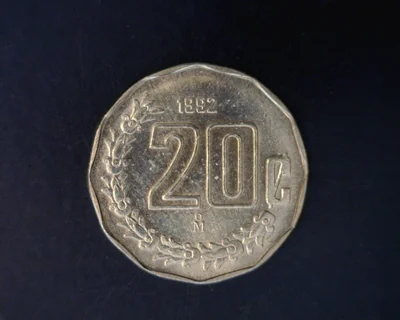
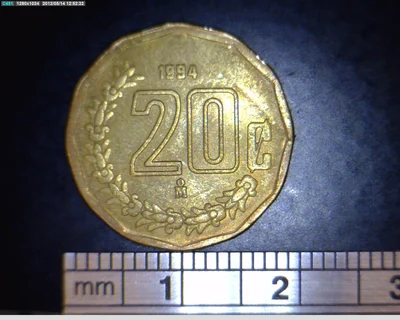
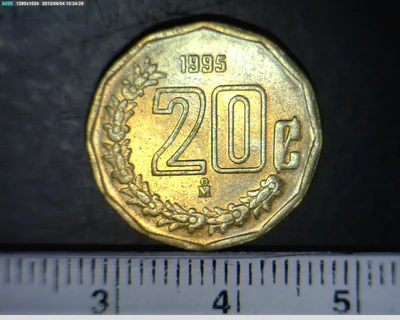
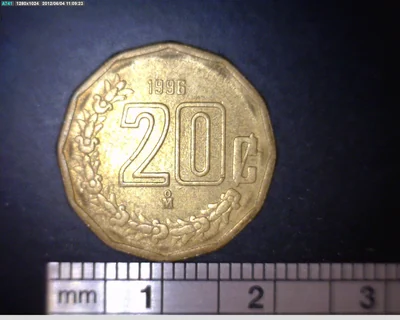
Stylization of the Acatl (the reed), the thirteenth day of the Sun Stone (Aztec Calendar), accompanied by the number 20 as the main motif, the centavos symbol, the year of minting, and the M mint mark of Mexico, D.F. It is not the full disc of the Aztec Calendar, but only that glyph. Verified on the official Banxico record and on Numista/worldcoinsinfo.
Obverse
Obverse with the Mexican National Coat of Arms and the legend "ESTADOS UNIDOS MEXICANOS" per official convention. Struck by the Mexico City Mint under Banxico decree.
How much is the 1993 Mexican 20 Centavos: Value & Facts worth?
The market value of the 1993 Mexican 20 Centavos: Value & Facts is not yet documented with enough data to give a firm range. Weigh and measure your piece, compare it against the specifications, and check the forum for a second opinion.
The real price depends on four factors: the grade of preservation (a circulated piece is worth the low end of the range; an uncirculated one, or one still in its official blister pack, the high end), the finish (satin vs mirror/proof), the rarity within the series based on the mintage, and the metal spot price on the day of the deal when the piece is silver or gold. Check the value-by-grade table above and compare with equivalent pieces before buying or selling.
Where to buy or sell this coin?
Browse the national directory of numismatic shops or the community forum to trade directly with other collectors.
Description
If you found a 1993 Mexican 20 centavos coin, here is the honest answer up front: it is worth about 20 to 30 US cents in uncirculated condition, and closer to face value if it is worn. It is one of the most common coins Mexico ever struck. The stories about it selling for thousands are online listings nobody pays, not real sales.
In 2026, this remains a coin people ask about constantly, usually because they saw a headline promising a fortune. Let's separate what it actually is from what the clickbait says.
What this coin is
The 1993 20 centavos is the first strike of the denomination after Mexico introduced the "nuevo peso" (new peso) that same year, a currency reform that dropped three zeros from the old money. That is why a coin marked in centavos carries the new-peso family design.
Here are the exact specifications, which matter if you want to confirm yours is genuine:
| Feature | Detail |
|---|---|
| Metal | Aluminum-bronze (copper, aluminum, nickel alloy) |
| Weight | 3.04 g |
| Diameter | 19.5 mm |
| Edge | Plain (smooth) |
| Mint mark | M (Mexico City) |
| Obverse | National Coat of Arms, "ESTADOS UNIDOS MEXICANOS" |
| Reverse | Acatl glyph, the number 20, centavos symbol, year 1993 |
What it's actually worth
This is the part most sites skip. The 1993 20 centavos circulated for decades and is still legal tender, so finding one in good shape costs almost nothing. International catalogs (uCoin, worldcoinsinfo) list an uncirculated example at roughly 0.20 to 0.30 US dollars. A normal, used example is worth basically its face value.
There is no silver and no gold in it. It is aluminum-bronze, so there is no bullion floor propping up its price the way there is with a silver coin. Nothing about the metal makes it valuable.
The "25,000-peso" myth
You have probably seen articles claiming this coin sells for 23,000 or 25,000 pesos (over 1,000 US dollars). Those are asking prices on online marketplaces, not closed sales. Anyone can list a common coin for any number they want. Press write-ups repeat those optimistic listings without a single verified sale behind them.
There is no documented, confirmed mint error for the 1993 20 centavos in numismatic sources. Real errors (a strong doubled die, a dramatic off-center strike, a wrong edge) are the only thing that would raise the price, and none has been catalogued for this date. Treat the fortune headlines as noise.
A common point of confusion: the 20 nuevos pesos coin featuring Miguel Hidalgo does contain a silver center and is worth far more. That is a completely different, larger coin. The 20 centavos described here is not that piece.
What the reverse design really is
Many owners assume the reverse shows the full Aztec Calendar. It does not. It is a stylized version of the Acatl (the reed), the thirteenth day sign of the Piedra del Sol (Sun Stone), which is part of the Aztec Calendar. The same glyph appears on the entire aluminum-bronze 20 centavos series through 2009. This is confirmed by Banxico's official coin sheet.
This coin belongs to the broader nuevos pesos era, which is why a centavos coin carries the reformed currency's markings.
How to tell if yours is genuine
Counterfeits of a centavos coin are rare, because there is no financial reason to fake something worth pennies. Still, if you want to verify:
- Weight should be 3.04 g.
- Diameter should be 19.5 mm.
- Edge is plain (no reeding).
- Mint mark M, National Coat of Arms on the obverse, Acatl glyph and the year 1993 on the reverse.
If the weight and measurements match and the relief looks clean and sharp, it is authentic.
Where to buy or sell one
Because it is so common, you can pick one up almost for free from collectors or in bulk lots of circulated coins. If you are hunting for an uncirculated example or want to sell a lot, check the Pesoteca store directory to find reputable coin dealers and buyers.
Have a 1993 20 centavos you think has a real error, an off-center strike or doubling? Post clear photos in the Pesoteca forum and we'll help you check it against reference images before you get your hopes up.
Historical context
Context of the twenty-centavo piece of 1993
This twenty-centavo coin (KM#548) was struck by the Mexico City Mint in 1993, under the presidency of Carlos Salinas de Gortari. It is part of the family of circulating pieces in a bronze and aluminum alloy with nickel that Banxico issued between 1992 and 2009, with a 19.5 mm diameter and 2.26 g weight.
The year in Mexico. It is the year the Nuevo Peso formally came into force, on January 1, 1993. That year Congress also approved the constitutional reform granting autonomy to the Banco de México, published in the DOF on August 20, 1993. That year, according to INEGI's INPC, annual inflation closed at 8.01% and the Banco de México FIX exchange rate closed the year at 3.12 pesos per dollar.
How it circulated. In 1993 the pieces coexisted with N$ banknotes and still with the last issues of the old peso being withdrawn. The abbreviation N$ appears on the coins until 1995. In informal commerce and public transport they were the most common change.
Numismatic note. The dies of this year correspond to the second batch of matrices of the Nuevo Peso project. The minimal engraving variations of the year are documented in the Banxico catalog and are almost invisible to the naked eye. The obverse design is Banxico's official National Coat of Arms and the reverse shows the face value along with the year of minting. From year to year the design stays identical and only the engraved date changes, so the visible difference is minimal. Internal die variations, when they exist, are documented in the Banco de México catalog.
This piece belongs to the era
Nuevos Pesos y actualidad →Explore all the Mexican coins of this era, their historical context and how they connect to the monetary system of the period.
Value range of this piece
Value range without enough data for this piece.
See the full breakdown by grade (VG, F, VF, EF, AU, MS-60, MS-63, MS-65) for the whole series →
Same denomination, other years
20 centavos Aluminio-bronce · 20 Centavos Bronce Aluminio
Frequently asked questions
How much is a 1993 Mexican 20 centavos worth?
Very little. It is an extremely common coin that circulated for decades. International catalogs (uCoin, worldcoinsinfo) list an uncirculated example at about 0.20 to 0.30 US dollars. A normal worn coin is worth roughly its face value. There is no premium unless it carries a real, verifiable mint error.
Is the 1993 20 centavos rare or made of silver?
No on both counts. It is aluminum-bronze (copper, aluminum and nickel) with no silver or gold, so it has no metal value. It is also one of the most common coins Mexico ever made. The silver confusion comes from the separate 20 nuevos pesos Hidalgo coin, which does have a silver center and is a different, larger piece.
Is it true a 1993 20 centavos sells for 25,000 pesos?
No. Those figures are online listing prices nobody actually pays, not closed sales. Press stories repeat optimistic marketplace asking prices with no verified sale and no documented error behind them. Treat those headlines as noise, not as the coin's real value.
How do I know if my 1993 20 centavos is genuine?
Check the official specs: weight 3.04 g, diameter 19.5 mm, plain edge, mint mark M, National Coat of Arms on the obverse, and the Acatl glyph with the year 1993 on the reverse. If the weight and measurements match and the relief is clean, it is authentic. Counterfeits of a centavos coin are rare because there is no reason to fake it.
Conversation
0 comments
Sources
- Ejemplar de la Coleccion Numismatica Banco de Mexico . inv. 18568
- Ejemplar de la Coleccion Numismatica Banco de Mexico . inv. 18570
- Ejemplar de la Coleccion Numismatica Banco de Mexico . inv. 18572
- Ejemplar de la Coleccion Numismatica Banco de Mexico . inv. 18569
- Ejemplar de la Coleccion Numismatica Banco de Mexico . inv. 18571
Images for informational and educational purposes, attributed to their original source. Reference values; the real price depends on the grade, the specific variant and demand.
Loading comments…