
Mexican 20 Centavos 2000: What It's Really Worth
Prices updated: August 2026
Centavos aluminum bronze 2000.
Centavos aluminum bronze 2000.
Design
Banxico
Reverse
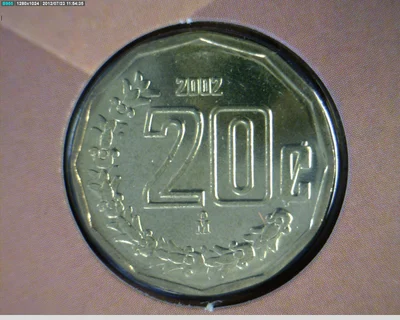
Reverse of the 20-centavo Aluminum Bronze 2000 piece. Detail of the die cataloged by Banxico in its Numismatic Collection.
Obverse
Obverse with the Mexican National Coat of Arms and the legend "ESTADOS UNIDOS MEXICANOS" per official convention. Struck by the Mexican Mint under Banxico decree.
How much is the Mexican 20 Centavos 2000: What It's Really Worth worth?
The market value of the Mexican 20 Centavos 2000: What It's Really Worth is not yet documented with enough data to give a firm range. Weigh and measure your piece, compare it against the specifications, and check the forum for a second opinion.
The real price depends on four factors: the grade of preservation (a circulated piece is worth the low end of the range; an uncirculated one, or one still in its official blister pack, the high end), the finish (satin vs mirror/proof), the rarity within the series based on the mintage, and the metal spot price on the day of the deal when the piece is silver or gold. Check the value-by-grade table above and compare with equivalent pieces before buying or selling.
Where to buy or sell this coin?
Browse the national directory of numismatic shops or the community forum to trade directly with other collectors.
Description
If you inherited or found a Mexican 20 centavos coin dated 2000, here's the honest answer: in circulated condition it's worth face value, essentially a few cents. This is a common circulation coin, not silver, not rare. The only versions collectors pay a small premium for are pristine uncirculated examples, and even those trade for a few dollars at most.
That doesn't mean it's worthless to look at closely. Certain mint errors can change the picture entirely. But let's start with what the standard coin actually is.
What this coin is
The 20 centavos of 2000 is a small denomination struck at the Casa de Moneda de México (the Mexican Mint) in aluminum-bronze, the gold-toned alloy used for the peso's fractional coins after Mexico's 1992 monetary reform. "Centavos" are the Mexican equivalent of cents: 100 centavos make one peso, so 20 centavos is a fifth of a peso.
Specifications, exactly as issued:
| Feature | Detail |
|---|---|
| Denomination | 20 centavos |
| Year | 2000 |
| Composition | Aluminum-bronze (no silver, no gold) |
| Weight | 3.04 g |
| Diameter | 19.5 mm |
| Edge | Smooth (plain) |
| Obverse | National Coat of Arms, legend "Estados Unidos Mexicanos" |
| Reverse | Face value and date |
| Mint | Casa de Moneda de México |
The design stayed consistent across the whole run of these coins, so what separates one example from another is basically the date and the condition.
Is it silver? No
This is the first thing most people who inherit a jar of Mexican coins want to know. The 20 centavos of 2000 contains no precious metal. It's an aluminum-bronze alloy, which is why it has that brassy gold color but weighs very little at 3.04 grams. There is no melt value floor here the way there is with genuine Mexican silver coins like the Onza Libertad (a one-ounce silver bullion coin) or the older Centenario gold pieces. Its value comes entirely from collector demand, and for a common date like 2000, that demand is low.
What it's actually worth in 2026
Be realistic about the numbers:
- Circulated, worn, with dings: face value. In practical terms, a few US cents.
- Nice condition but handled: still under a dollar to most buyers.
- True uncirculated (UNC), full original luster, no bag marks: typically a couple of dollars, sometimes a few, depending on eye appeal and whether it's certified.
Aluminum-bronze scratches and nicks easily as it circulates, so genuinely pristine examples are less common than the mintage alone would suggest. That's the whole reason a UNC coin carries any premium at all. If yours came out of Grandma's change jar with wear on the high points, it's a face-value coin.
The versions people think are worth a fortune (and aren't)
Social media is full of posts claiming ordinary Mexican centavos are worth hundreds or thousands of dollars. For the 20 centavos 2000, the standard coin is not. What people usually photograph and call an "error" is post-mint damage: corrosion, a coin that got struck by another object, or a rim ding from circulation. That's not a mint error and it adds nothing to value.
Genuine minting errors are a different story. Off-center strikes, die rotation, double strikes, and legitimate die varieties can multiply the value of a small coin like this if they're real and verifiable. The key word is verifiable. A real off-center strike or a documented variety gets attention from collectors; a scratched or bent coin does not. If you think yours has something unusual, get a second opinion before you assume it's rare.
How to check what yours is worth
- Confirm it's genuine and standard. Weigh it on a jewelry scale (should be 3.04 g) and measure the diameter with calipers (19.5 mm). Fakes and altered coins usually miss on weight, diameter, flat relief, or off color.
- Grade the condition honestly. Look at the high points of the Coat of Arms under good light. Full original luster with no wear means it might reach UNC territory. Any smoothing or dullness pulls it down to face value.
- Photograph both sides and the edge. Clear, well-lit shots of the obverse, reverse, and edge are what any buyer or appraiser needs.
- Check the date and any oddities. For a common date like 2000, the coin is only interesting if it's a top-grade example or a verified error.
Completing a full run of these fractional peso coins in high grade is an achievable, affordable way to start collecting modern Mexican coinage, which is exactly why the series is popular with beginners.
Where to sell it
For a coin in this value range, keep it simple and avoid overpaying anyone. A verified numismatic shop from the Pesoteca directory can appraise it on the spot with no middleman markup. For collector-to-collector deals, the Pesoteca buy-and-sell forum puts you in front of people who actually want the series. If you suspect an error, post clear photos to the Pesoteca forum and let the community weigh in before you list it anywhere. Don't dump it on a general marketplace to the first random offer.
Have a jar of these and want to know which dates and grades are worth setting aside? Post your photos in the forum and we'll help you sort the keepers from the face-value coins.
Historical context
Context of the twenty-centavo piece from the year 2000
This twenty-centavo coin (KM#548) was struck by the Mexican Mint in 2000, under the presidency of Ernesto Zedillo Ponce de León. It is part of the family of circulating pieces in bronze and aluminum with nickel alloy that Banxico issued between 1992 and 2009, with 19.5 mm diameter and 2.26 g weight.
The year in Mexico. It is the year of the change of party in Los Pinos. On July 2, 2000, Vicente Fox Quesada of the PAN won the presidential election and ended 71 years of PRI governments. The new president took office on December 1, although these pieces were struck under the Zedillo administration. That year, according to INEGI's INPC, annual inflation closed at 8.96% and the Bank of Mexico's FIX exchange rate closed the year at 9.57 pesos per dollar.
How it circulated. In 2000 these pieces circulated in a context of relative stability. Inflation closed in single digits for the first time since 1994. They served for tips, urban bus fare, and change at the market. The Metro ticket was still 2 pesos, four fifty-centavo pieces covered it.
Numismatic note. The 2000 die is the last mass minting of the Zedillo cycle. Circulated pieces are abundant in the market and are usually found in change boxes kept by individuals. The obverse design is the official Banxico National Coat of Arms and the reverse shows the face value alongside the year of minting. Between years the design remains identical and only the engraved date changes, so the visible difference is minimal. Internal die variations, when they exist, are documented in the Bank of Mexico's catalog.
This piece belongs to the era
Nuevos Pesos y actualidad →Explore all the Mexican coins of this era, their historical context and how they connect to the monetary system of the period.
Value range of this piece
Value range without enough data for this piece.
See the full breakdown by grade (VG, F, VF, EF, AU, MS-60, MS-63, MS-65) for the whole series →
Same denomination, other years
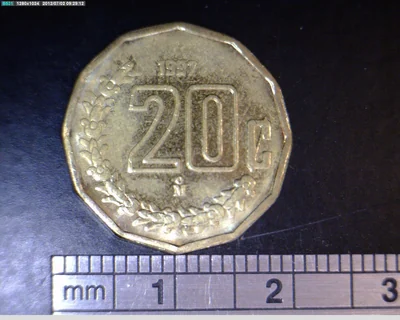
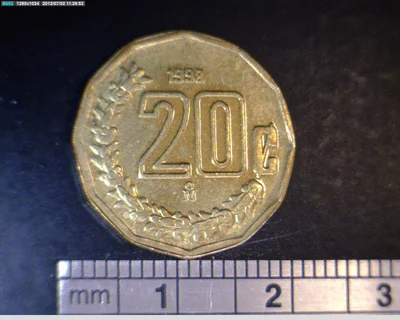
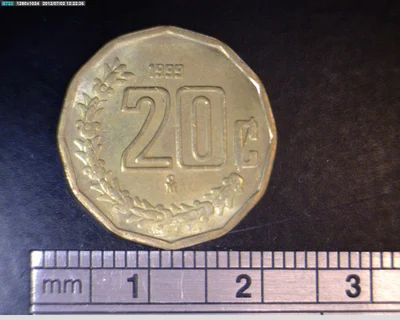
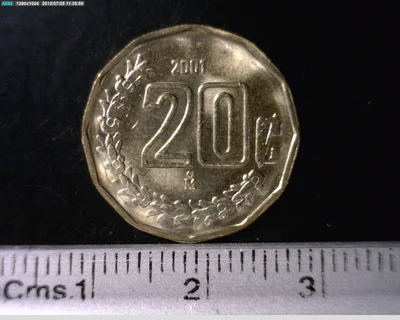
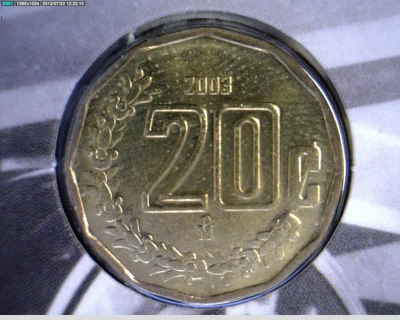
20 centavos Aluminio-bronce · 20 Centavos Bronce Aluminio
Frequently asked questions
How much is a Mexican 20 centavos 2000 coin worth?
In circulated condition it's worth face value, a few US cents. Only true uncirculated examples with full original luster carry a small premium, typically a couple of dollars, sometimes a few. It contains no silver or gold, so there's no melt value to fall back on.
Is the 20 centavos 2000 rare?
No. It's a common circulation coin from the Casa de Moneda de México with a large mintage. What's scarcer is a genuinely pristine, mark-free uncirculated example, since aluminum-bronze scratches easily, and that condition is the only thing that adds value to a standard date.
Where can I sell a Mexican 20 centavos 2000?
A verified numismatic shop from the [Pesoteca directory](/tiendas) will appraise it in person with no markup, or you can list it collector-to-collector on the [Pesoteca buy-and-sell forum](/foro/compra-venta). Photograph the obverse, reverse, and edge first, and check the value range on this page so you don't undersell it.
How do I tell if my 20 centavos 2000 is genuine?
Weigh it on a jewelry scale (it should be 3.04 grams) and measure the diameter with calipers (19.5 mm), then compare against the specs above. Fakes and altered coins usually show wrong weight or diameter, flat relief, or uneven color.
Conversation
0 comments
Loading comments…