
Mexican 20 Centavos 2009 (Stainless Steel): What It's Worth
Prices updated: August 2026
Centavos stainless steel 2009.
Centavos stainless steel 2009.
Design
Banxico
Reverse
Reverse of the 20 Stainless Steel 2009 piece. Detail of the die cataloged by Banxico in its Numismatic Collection.
Obverse
Obverse with the Mexican National Coat of Arms and legend "ESTADOS UNIDOS MEXICANOS" per official convention. Struck by the Mexico Mint under Banxico decree.
How much is the Mexican 20 Centavos 2009 (Stainless Steel): What It's Worth worth?
The market value of the Mexican 20 Centavos 2009 (Stainless Steel): What It's Worth is not yet documented with enough data to give a firm range. Weigh and measure your piece, compare it against the specifications, and check the forum for a second opinion.
The real price depends on four factors: the grade of preservation (a circulated piece is worth the low end of the range; an uncirculated one, or one still in its official blister pack, the high end), the finish (satin vs mirror/proof), the rarity within the series based on the mintage, and the metal spot price on the day of the deal when the piece is silver or gold. Check the value-by-grade table above and compare with equivalent pieces before buying or selling.
Where to buy or sell this coin?
Browse the national directory of numismatic shops or the community forum to trade directly with other collectors.
Description
If you found a Mexican 20 centavos coin dated 2009 in a jar of change, here's the honest answer: it's worth a few cents in circulated condition, and only a dollar or two if it's a flawless uncirculated example. This is a common modern coin, not a rarity. Below is exactly what drives the price and how to check yours in 2026.
Quick answer: is the 2009 20 centavos worth money?
No, not in any meaningful way for most people. This is a stainless steel circulating coin, the kind that spent years passing hand to hand in Mexico. Twenty centavos is one fifth of a Mexican peso, so the face value alone is roughly one US cent. Millions were struck, and worn examples trade for pennies.
The coin has value in two narrow cases: a top-grade uncirculated piece that a collector wants for a date set, or a genuine, verifiable mint error. Everything else is pocket change.
What this coin actually is
The 2009 20 centavos belongs to the stainless steel 20 centavos series with a satin finish, produced by the Casa de Moneda de México (the Mexican Mint) under Banco de México (Banxico) decree. "Centavo" is simply the Mexican cent, one hundredth of a peso.
Specifications, kept exactly as issued:
- Denomination: 20 centavos
- Weight: 2.258 grams
- Diameter: 15.3 mm
- Composition: stainless steel
- Edge: plain (smooth)
- Year: 2009
The obverse carries the Mexican National Coat of Arms (the eagle on a cactus with a serpent) and the legend "ESTADOS UNIDOS MEXICANOS," which is the official name of the country, United Mexican States. The reverse shows the denomination design cataloged by Banxico.
Because the coin is stainless steel and not silver or gold, there is no melt value to fall back on. A silver coin has a price floor tied to its metal. This one does not. Its worth is purely what a collector will pay, and for a common date like 2009, that is very little.
Value by condition
| Condition | What it means | Approximate value (USD) |
|---|---|---|
| Circulated (worn) | Everyday pocket change, scratches and dulling | A few cents (face value) |
| Uncirculated | No wear, full luster | 0.50 to 1 USD |
| Gem uncirculated, graded | Top grade, in a mint blister or slab | 1 to 3 USD |
A sealed Banxico blister pack (the original mint packaging) can add a small premium, but this remains a low-value modern coin. If someone offers you a lot of money for a plain 2009 20 centavos, be skeptical.
The "rare error worth thousands" myth
Social media loves to claim ordinary modern Mexican coins are worth thousands because of an "error." The reality: most of what people post as errors is post-mint damage, corrosion, dents, or wear, not a factory mistake.
Genuine mint errors do exist and can raise value: off-center strikes, die rotation, doubled strikes, and cataloged varieties. But they have to be real and verifiable. A genuine, dramatic error on this coin could be worth more than face value, sometimes noticeably so, but the vast majority of coins circulating are perfectly normal. Before you assume you have a winner, get a second opinion.
How to tell if yours is genuine
For a coin this common, counterfeits are rare because there is no profit in faking a coin worth pennies. Still, if you want to confirm:
- Weigh it. A jewelry scale should read close to 2.258 grams.
- Measure the diameter. It should be 15.3 mm with a caliper.
- Check the detail. Real coins have crisp relief and even surfaces. Flat, mushy, or oddly colored strikes are usually damage.
Compare against the specifications above. If weight and diameter are off, or the design looks wrong, something is off with the coin.
Where to sell it (and where not to)
Honest expectation first: for a single circulated example, no dealer will pay you a premium. It's worth selling only as part of a larger lot or if it's a high-grade uncirculated piece.
If you do want to sell or appraise:
- A verified numismatic shop in the Pesoteca directory can value it on the spot, by city, without markup pressure.
- The Pesoteca buy-and-sell forum connects you directly with collectors.
Photograph the obverse, reverse, and edge in good light before you show it to anyone. Check the grading ranges above and read the coin condition grading guide so you know what you actually have. Don't dump it on Facebook to the first offer.
If you think you've spotted a real error, post clear photos on the Pesoteca forum and let the community weigh in before you get your hopes up. What do you see on your 2009 20 centavos that made you look twice?
Historical context
This 2009 20-centavos piece belongs to Family C with a dodecagonal profile issued by Banxico. The 20 centavos is the change coin par excellence in Mexican retail. It serves to complete change in small shops, stalls, and public transport where the price ends in five or fifteen. They were introduced in 2009 as part of Family C.
The dodecagonal (twelve-sided) profile and stainless steel make them distinct to the touch compared with the 10 and 50 centavos. The polygonal shape is an accessibility signal for people with visual impairment.
In 2009 annual inflation closed at 3.6% according to INEGI and the average exchange rate was 13.51 pesos per dollar according to Banxico's FIX. Year of the AH1N1 influenza health emergency and of the worst GDP collapse since 1995 (-6.5%). Banxico introduced Family C with the new 20 and 50 centavos denominations in stainless steel with a dodecagonal profile. The country was under the Presidency of Felipe Calderón Hinojosa (PAN).
Catalog reference: KM#935. The piece is part of the official Banxico Numismatic Collection catalog and follows the convention of the PSM System, one ID per distinct physical piece, not per design shared with other years of the same series.
This piece belongs to the era
Nuevos Pesos y actualidad →Explore all the Mexican coins of this era, their historical context and how they connect to the monetary system of the period.
Value range of this piece
Value range without enough data for this piece.
See the full breakdown by grade (VG, F, VF, EF, AU, MS-60, MS-63, MS-65) for the whole series →
Same denomination, other years
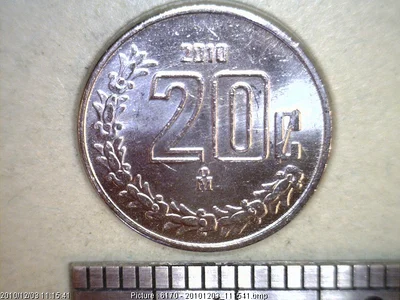
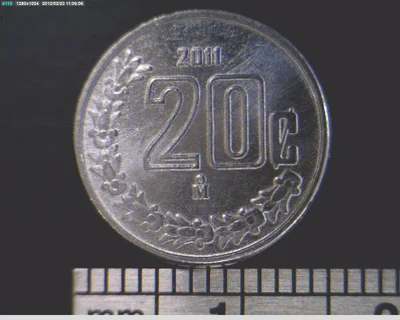
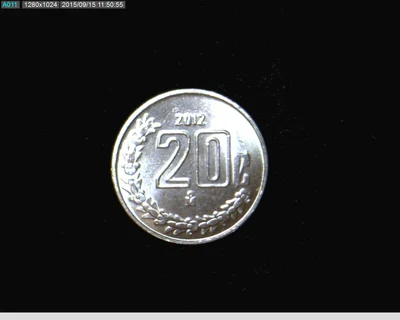
20 centavos Acero inoxidable · 20 Centavos Acero Inoxidable
Frequently asked questions
How much is the 2009 Mexican 20 centavos worth in US dollars?
In worn circulated condition it's worth a few cents, essentially its face value of about one US cent. A flawless uncirculated example, especially in original mint packaging or a graded slab, sells for roughly 0.50 to 3 USD. It is a common modern coin, not a rarity.
Is the 2009 20 centavos coin rare?
No. It's a stainless steel circulating coin produced in large numbers by the Casa de Moneda de México. Millions passed through everyday use in Mexico. The only versions worth a small premium are top-grade uncirculated pieces or genuine, verifiable mint errors.
Where can I sell my 2009 Mexican 20 centavos?
Try a verified numismatic shop in the Pesoteca directory, which can appraise it in person, or the Pesoteca buy-and-sell forum to reach collectors directly. Photograph the obverse, reverse, and edge first. For a single worn coin, expect little to no premium over face value.
How can I tell if my 2009 20 centavos is genuine?
Weigh it (should be about 2.258 grams) and measure the diameter (15.3 mm) with a jewelry scale and caliper, then compare to the official specs. Fakes usually have wrong weight or diameter, flat relief, or uneven surfaces. Counterfeits are rare on a coin this common.
Conversation
0 comments
Loading comments…