
Mexican 20 Centavos 2013 (Stainless Steel): Value Guide
Prices updated: August 2026
Centavos stainless steel 2013.
Centavos stainless steel 2013.
Design
Banxico
Reverse
Reverse of the 20 stainless steel 2013 piece. Die detail cataloged by Banxico in its Numismatic Collection.
Obverse
Obverse with the Mexican National Coat of Arms and the legend "ESTADOS UNIDOS MEXICANOS" per official convention. Struck by the Mexican Mint under Banxico decree.
How much is the Mexican 20 Centavos 2013 (Stainless Steel): Value Guide worth?
The market value of the Mexican 20 Centavos 2013 (Stainless Steel): Value Guide is not yet documented with enough data to give a firm range. Weigh and measure your piece, compare it against the specifications, and check the forum for a second opinion.
The real price depends on four factors: the grade of preservation (a circulated piece is worth the low end of the range; an uncirculated one, or one still in its official blister pack, the high end), the finish (satin vs mirror/proof), the rarity within the series based on the mintage, and the metal spot price on the day of the deal when the piece is silver or gold. Check the value-by-grade table above and compare with equivalent pieces before buying or selling.
Where to buy or sell this coin?
Browse the national directory of numismatic shops or the community forum to trade directly with other collectors.
Description
If you found a Mexican 20 centavos 2013 in a jar or an inherited coin box, here's the honest answer: it's worth face value, roughly one US cent, in circulated condition. It's a common stainless steel coin, not a rarity. A pristine uncirculated example might fetch a couple of dollars from a collector completing a set. That's the ceiling for 2026.
What this coin actually is
The 20 centavos (20 cents in the Mexican peso system) from 2013 is one of the smallest coins in modern Mexican circulation. It was struck by the Casa de Moneda de México (the Mexican Mint) in stainless steel. If you're wondering whether it's silver, it isn't. Stainless steel has no bullion value, so there's no metal floor propping up the price.
The technical specs, useful if you're checking authenticity:
| Feature | Detail |
|---|---|
| Denomination | 20 centavos |
| Year | 2013 |
| Metal | Stainless steel |
| Weight | 2.258 g |
| Diameter | 15.3 mm |
| Edge | Smooth (plain) |
| Mint | Casa de Moneda de México |
How much is it worth in USD?
Here's the reality most coin-value sites won't state plainly:
- Circulated (worn, dull, handled): face value only. Twenty centavos is a fraction of a peso, which puts this coin around one US cent. Dealers won't buy single circulated pieces.
- Uncirculated (never spent, full original steel shine): roughly 1 to 3 US dollars to a collector filling a date slot in a modern circulation set. Condition, not age, is what moves the needle here.
The 2013 date isn't scarce. Banxico kept the centavo denominations in circulation through the peso era that began in 1992, and the switch to stainless steel was a cost decision: cheaper metal for low-value coins where the material matters more than the design. Multiple years share the same composition, so supply is high.
Why old doesn't mean valuable here
A 2013 coin isn't old, and even if it were, age alone drives almost nothing in numismatics. Value comes from real rarity (low mintage or few survivors), demand, and grade. This coin checks none of those boxes. It was mass-produced for daily use, and millions were made. The only version worth more than pocket change is a genuine, verified mint error.
Errors: the one thing that could make yours worth more
Struck coins can carry genuine minting errors: off-center strikes, die rotation, double strikes, or documented varieties. A real, verified error can multiply the value of an otherwise common coin. The catch: most "errors" people post online are post-mint damage, meaning dents, scratches, or corrosion that happened after the coin left the mint. That's damage, not an error, and it lowers value rather than raising it.
If you think you have a true error, get a second opinion before you assume it's a payday.
How to tell if yours is genuine
Counterfeiting a one-cent coin makes no economic sense, so fakes are rare here. Still, if you want to verify:
- Weigh it on a jewelry scale. It should read 2.258 g.
- Measure the diameter with calipers. It should be 15.3 mm.
- Check the strike. Genuine coins have crisp relief. Flat, mushy detail or oddly distributed coloring points to a problem.
Fakes typically miss on weight, diameter, or strike quality.
Where to sell it
Be realistic: a single circulated 20 centavos isn't worth a special trip. Your options:
- A verified coin shop will appraise it on the spot, but likely won't buy one common circulated piece on its own.
- A collector forum is your best bet for an uncirculated example or a genuine error, where a buyer completing a set will pay a premium.
- If you have a full run of dates or a bulk lot of Mexican centavos, that's more sellable than any single coin.
Photograph the front (anverso), back (reverso), and edge before you reach out to a buyer. If you have Mexican coins from before 1992 (the old peso), or any silver pieces in the same box, those are far more likely to hold real value than this stainless steel piece.
Got a stainless steel 20 centavos with an unusual look, or a whole box of inherited Mexican coins you're not sure about? Post clear photos on the Pesoteca forum and let collectors tell you which ones are actually worth keeping.
Historical context
This 2013 20-centavo piece belongs to the C family with a dodecagonal profile issued by Banxico. The 20 centavos are the change coin par excellence in Mexican retail. They serve to complete change at corner stores, stalls, and public transport where the price ends in five or fifteen. They were introduced in 2009 as part of the C family.
The dodecagonal profile (twelve sides) and the stainless steel make them distinct to the touch compared with the 10- and 50-centavo pieces. The polygonal shape is an accessibility cue for people with visual impairment.
In 2013 annual inflation closed at 4.0% according to INEGI and the average exchange rate was 12.77 pesos per dollar according to Banxico's FIX. Year of the Pacto por México and the structural reforms: energy, telecommunications, education, and fiscal. Banxico cut the benchmark rate from 4.5% to 3.5%. The country was under the Presidency of Enrique Peña Nieto (PRI).
Catalog reference: Krause to be confirmed. The piece is part of the official Banxico Numismatic Collection catalog and follows the convention of the PSM System, one ID per distinct physical piece, not per design shared with other years of the same series.
This piece belongs to the era
Nuevos Pesos y actualidad →Explore all the Mexican coins of this era, their historical context and how they connect to the monetary system of the period.
Value range of this piece
Value range without enough data for this piece.
See the full breakdown by grade (VG, F, VF, EF, AU, MS-60, MS-63, MS-65) for the whole series →
Same denomination, other years
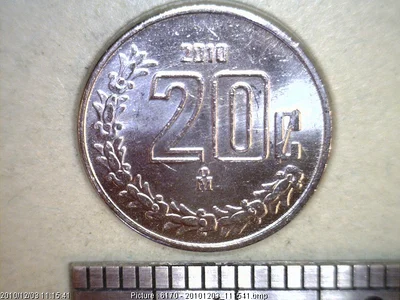
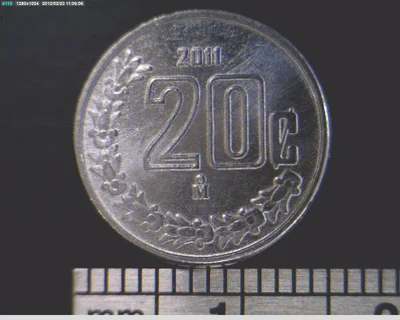
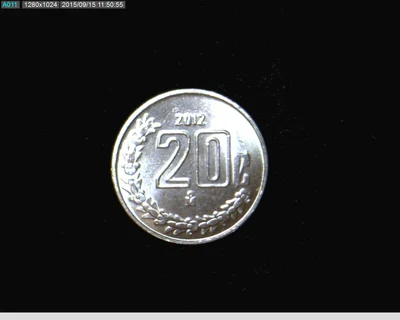
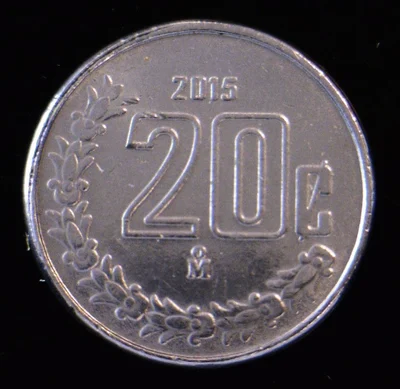
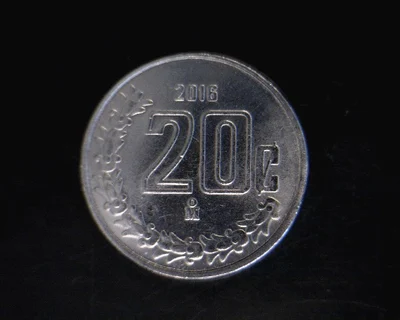
20 centavos Acero inoxidable · 20 Centavos Acero Inoxidable
Frequently asked questions
How much is a Mexican 20 centavos 2013 worth?
In circulated condition, face value only, roughly one US cent. A pristine uncirculated example with full original steel shine can bring about 1 to 3 US dollars from a collector completing a date set. It has no silver content, so there's no metal value floor.
Is the 2013 20 centavos rare?
No. It's a common stainless steel circulation coin struck by the Casa de Moneda de México, with high mintage and many surviving examples. The only versions worth more than pocket change are genuine, verified minting errors or top-grade uncirculated pieces.
Where can I sell a Mexican 20 centavos 2013?
A single circulated coin isn't worth much effort. For an uncirculated example or a genuine error, a collector [forum](/foro/compra-venta) or a verified [coin shop](/tiendas) is best. If you have a full set of dates or a bulk lot of Mexican centavos, that's far more sellable than one loose coin.
How do I know if my 20 centavos 2013 is genuine?
Weigh it (should be 2.258 g) and measure the diameter (15.3 mm) against the specs above. Genuine coins have crisp relief and a smooth edge. Wrong weight or diameter, flat detail, or odd coloring points to a fake, though counterfeits of a one-cent coin are rare.
Conversation
0 comments
Loading comments…