
50 Centavos 1966 (Cuauhtémoc): What It's Worth
Prices updated: August 2026
Centavos cupronickel 1966.
Centavos cupronickel 1966.
Design
Banxico
Reverse
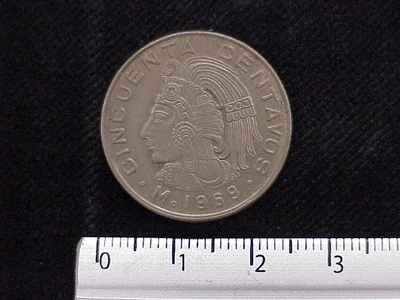
Reverse of the 50 Cupronickel 1966 piece. Detail of the die cataloged by Banxico in its Numismatic Collection.
Obverse
Obverse with the Mexican National Coat of Arms and the legend "ESTADOS UNIDOS MEXICANOS" per official convention. Struck by the Mexican Mint under Banxico decree.
How much is the 50 Centavos 1966 (Cuauhtémoc): What It's Worth worth?
The market value of the 50 Centavos 1966 (Cuauhtémoc): What It's Worth is not yet documented with enough data to give a firm range. Weigh and measure your piece, compare it against the specifications, and check the forum for a second opinion.
The real price depends on four factors: the grade of preservation (a circulated piece is worth the low end of the range; an uncirculated one, or one still in its official blister pack, the high end), the finish (satin vs mirror/proof), the rarity within the series based on the mintage, and the metal spot price on the day of the deal when the piece is silver or gold. Check the value-by-grade table above and compare with equivalent pieces before buying or selling.
Where to buy or sell this coin?
Browse the national directory of numismatic shops or the community forum to trade directly with other collectors.
Description
If you inherited or found a 1966 Mexican 50 centavos coin, here is the honest answer: in worn condition it is worth less than 1 USD, essentially face-value scrap. It is not silver, it is not rare, and it is not going to fund a vacation. But high-grade examples with full mint luster do sell for real money to collectors, and that is the only version worth flagging.
This is one of the most common Mexican coins from the mid-1900s. Millions circulated. The value depends almost entirely on condition, not age. An old coin is not automatically valuable, and this one is proof.
What the coin actually is
The 1966 50 centavos was struck at the Casa de Moneda de México (the Mexican Mint). Key specs, exactly as issued:
- Metal: cupronickel (a copper-nickel alloy, no silver, no gold)
- Weight: 6.5 grams
- Diameter: 25 mm
- Edge: plain (smooth)
- Obverse: the Mexican national coat of arms, an eagle devouring a serpent
- Reverse: the profile of Cuauhtémoc, the last Aztec (Mexica) emperor
Because it contains no precious metal, it has no melt value to speak of. That removes the bullion floor that props up silver and gold coins. Its worth is purely collector demand, and demand for a common circulated example is close to zero.
Why some people confuse it for silver
The coin has a bright, silvery-gray look. That fools a lot of people who inherit a jar of these and assume they found silver. They did not. The earlier 50 centavos with Cuauhtémoc (from the 1940s) were struck in bronze and have a copper tone. Around the mid-1960s the design moved to cupronickel, which gave it the silver-colored appearance. The 1966 belongs to that later cupronickel run. Silver-colored is not silver.
If you want to know which Mexican coins are actually silver, that is a different and more valuable list.
What it's worth in USD
| Condition | Description | Typical value (USD) |
|---|---|---|
| Circulated (worn) | Flat detail, scratches, dull surface | Under 1 USD |
| Fine to Extra Fine | Clear detail, light wear | 1 to 3 USD |
| Uncirculated / full luster | Sharp face of Cuauhtémoc, original mint shine | 5 to 20+ USD |
| Certified high grade (MS-64 and up) | Graded by NGC or PCGS, top surfaces | Higher, sold coin by coin to type collectors |
The jump happens with condition. Worn examples are everywhere. A piece with original brilliance and a crisp, unrubbed portrait of Cuauhtémoc is genuinely harder to find, and that is where a common coin turns into something a collector will pay for.
The mint-error exception
There are genuine striking errors on Mexican coins of this era: off-center strikes, die rotation, doubled strikes, and known varieties. A verified, authentic error can multiply the value of an otherwise ordinary coin.
Here is the reality check. Most "errors" people post online are not errors at all. They are post-mint damage: dings, corrosion, machine marks, and scratches that happened after the coin left the press. Those add nothing. If you think you have a real error, have it looked at before you get excited.
How to tell if yours is genuine
Counterfeiting a low-value coin like this is rare because there is no profit in it, but you can confirm authenticity in two minutes:
- Weigh it. A jeweler's scale should read 6.5 grams.
- Measure it. A caliper should read 25 mm across.
- Check the strike. Genuine coins have crisp relief and evenly distributed color. Fakes often show flat, mushy detail, wrong weight or diameter, or uneven coloring.
If the weight or size is off, treat it with suspicion.
Where to sell it
For a common coin, do not overpay for grading it costs more than the coin is worth unless it is clearly uncirculated. Your realistic options:
- A verified numismatic shop from the Pesoteca dealer directory, which can value it on the spot.
- The Pesoteca buy-and-sell forum, where collectors trade directly and you can complete a set.
- If you have a high-grade or possible-error piece, it is worth getting a second opinion before selling.
Photograph the obverse, reverse, and edge in good light before you list anything. Do not dump it to the first buyer on social media.
Got a jar of these or a suspected error? Post clear photos in the Pesoteca forum and let the community tell you whether you have a common one dollar coin or the high-grade example that actually sells.
Historical context
Centavo coins form the foundation of the Mexican monetary system. Banxico has changed their diameters, materials and alloys several times over the past few decades to optimize minting costs. The 50-centavo cupronickel piece struck in 1966 belongs to the Banxico Numismatic Collection catalog documented on its official site.
For Mexican collectors, centavo pieces gain value when they capture a change of material, a die error or an unusually low mintage. Banxico has published annual mintages in CM10 since the year 2000. For earlier pieces the data may not be available. This entry follows the convention of the PSM System, one ID per distinct physical piece, not per shared design.
This piece belongs to the era
México Moderno (pre-1992) →Explore all the Mexican coins of this era, their historical context and how they connect to the monetary system of the period.
Value range of this piece
Value range without enough data for this piece.
See the full breakdown by grade (VG, F, VF, EF, AU, MS-60, MS-63, MS-65) for the whole series →
Same denomination, other years
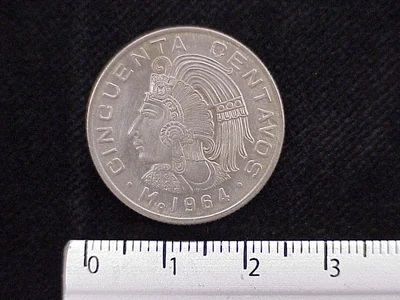
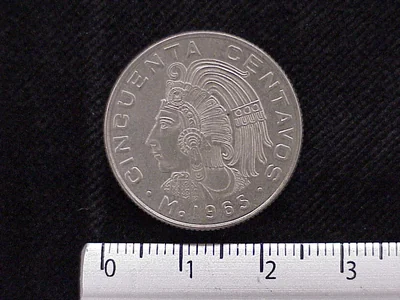
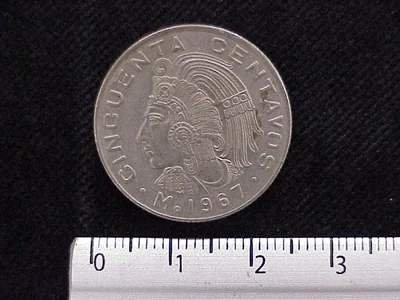
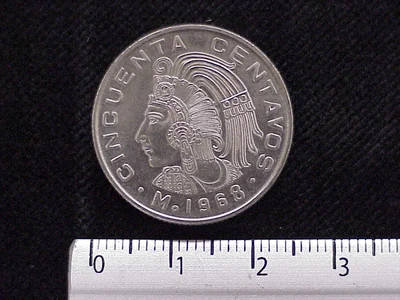
50 centavos Cuproníquel · Centavos Mexicanos
Frequently asked questions
How much is a 1966 Mexican 50 centavos coin worth?
In circulated condition it is worth under 1 USD, since it is common cupronickel with no silver content. Examples with original mint luster and a sharp portrait of Cuauhtémoc can bring 5 to 20 USD or more to collectors, and certified high grades sell for more. Condition, not age, drives the price.
Is the 1966 50 centavos rare or made of silver?
No on both counts. It was struck by the millions and contains no silver. It is cupronickel, a copper-nickel alloy that only looks silvery. That silver color fools many people, but the coin has no precious-metal melt value. Only high-grade uncirculated pieces or verified mint errors are worth a premium.
Where can I sell a 1966 Mexican 50 centavos?
The safest routes are a verified shop from the [Pesoteca dealer directory](/tiendas), which values it in person, or the [Pesoteca buy-and-sell forum](/foro/compra-venta) among collectors. Photograph the obverse, reverse, and edge, and check the value range above before selling. Avoid dumping it to the first social-media buyer.
How do I tell if my 1966 50 centavos is genuine?
Weigh it on a jeweler's scale (it should be 6.5 grams) and measure it with a caliper (25 mm). Genuine coins have crisp relief and even coloring. Fakes usually show incorrect weight or diameter, flat mushy detail, or uneven color.
Conversation
0 comments
Sources
- Ejemplar de la Coleccion Numismatica Banco de Mexico . inv. 11900
- Ejemplar de la Coleccion Numismatica Banco de Mexico . inv. 11901
- Ejemplar de la Coleccion Numismatica Banco de Mexico . inv. 11903
- Ejemplar de la Coleccion Numismatica Banco de Mexico . inv. 11902
Images for informational and educational purposes, attributed to their original source. Reference values; the real price depends on the grade, the specific variant and demand.
Loading comments…