
50 Centavos 1983 (Stainless Steel): Value & Facts
Prices updated: August 2026
How much is the 50 Centavos 1983 (Stainless Steel): Value & Facts worth?
The market value of the 50 Centavos 1983 (Stainless Steel): Value & Facts is not yet documented with enough data to give a firm range. Weigh and measure your piece, compare it against the specifications, and check the forum for a second opinion.
The real price depends on four factors: the grade of preservation (a circulated piece is worth the low end of the range; an uncirculated one, or one still in its official blister pack, the high end), the finish (satin vs mirror/proof), the rarity within the series based on the mintage, and the metal spot price on the day of the deal when the piece is silver or gold. Check the value-by-grade table above and compare with equivalent pieces before buying or selling.
Where to buy or sell this coin?
Browse the national directory of numismatic shops or the community forum to trade directly with other collectors.
Description
If you inherited or found a Mexican 50 centavos coin from 1983, here is the honest answer: in circulated condition it is worth a few cents, not a fortune. Only a pristine, uncirculated example carries any real premium, and even then we are talking about a couple of dollars, not hundreds. This is a common circulation coin, not a rarity.
What this coin is
This is a 50 centavos piece from 1983, part of the old peso system used before Mexico's 1993 currency reform (when the "nuevo peso" replaced the old one at 1,000 to 1). "Centavos" are simply cents: fractional coinage for everyday use.
It was struck at the Casa de Moneda de México (the Mexican Mint), the oldest mint in the Americas, in continuous production since the 16th century. In catalogs it is listed as KM# 492.
| Feature | Detail |
|---|---|
| Denomination | 50 centavos |
| Year | 1983 |
| Metal | Stainless steel |
| Weight | 4.15 g |
| Diameter | 22 mm |
| Edge | Plain (smooth) |
| Catalog | KM# 492 |
How much is it actually worth?
Stainless steel has no bullion value, so this coin has no melt floor the way a silver piece would. Its worth is purely collector demand, and demand for a common early-1980s circulation coin is low.
- Worn / circulated: a few cents. Effectively face value to a collector.
- Nice, lightly circulated: up to roughly 1 US dollar.
- Uncirculated (never spent, full mint luster): typically 1 to 3 US dollars, more if professionally graded high by NGC or PCGS.
The jump in value comes almost entirely from condition, not age. A 1983 date is recent in numismatic terms and millions were made, so "old" does not mean "valuable" here.
The myth to kill
Many people assume any pre-reform Mexican coin, or anything with "centavos" and an old date, is worth serious money. It usually is not. Social media posts claiming a common 50 centavos is worth thousands are clickbait. The only versions that command a real premium are:
- True mint errors (off-center strikes, die rotation, double strikes) that are genuine and verifiable.
- Top-grade certified examples in slabs.
Be careful: most "errors" circulating online are actually post-mint damage (corrosion, dents, scratches), not factory errors. Damage lowers value; it does not raise it.
How to tell if yours is genuine
Counterfeiting a low-value steel coin is rare, but you can confirm authenticity fast:
- Weigh it on a jewelry scale. It should be 4.15 g.
- Measure the diameter with calipers. It should be 22 mm.
- Check the edge: it should be plain and smooth, with no reeding.
- Look for flat relief, wrong color, or off measurements, which are red flags.
If the weight or diameter is off, treat the piece with suspicion.
Where to sell it
For a coin in this price range, keep it simple and avoid getting undercut:
- A verified coin dealer from the Pesoteca shop directory can appraise it on the spot.
- The Pesoteca buy-and-sell forum connects you with collectors directly.
- Before selling, photograph the front (anverso), back (reverso), and edge, and compare against the price range above.
Don't dump it on Facebook to the first offer. For a common coin the difference is small, but for anything you suspect might be an error or a top-grade piece, get a second opinion first.
Think you have a mint error or an unusually sharp example? Post clear photos in the Pesoteca forum and let the community weigh in before you sell.
Historical context
This 50 centavos piece from 1983 corresponds to the last generation of the monetary system prior to the Nuevos Pesos reform. It was struck in bronze-aluminum-nickel and not in stainless steel, a material that would be adopted a decade later. The year 1983 was the second of Miguel de la Madrid's six-year term, with annual inflation closing near 81% and the peso losing value week by week. In that context the 50 centavos already bought nothing in everyday commerce, and the coin passed from hand to hand almost as a symbol of the inflationary crisis. Ten years later, on January 1, 1993, the Nuevo Peso would take effect, cutting three zeros from the nominal value and opening the stainless steel family that endures to this day. The piece is cataloged as Krause KM#492 and is part of the final inventory of fractional coinage of the previous regime. For the Mexican collector it is a transitional piece that documents the monetary collapse before the reform.
This piece belongs to the era
México Moderno (pre-1992) →Explore all the Mexican coins of this era, their historical context and how they connect to the monetary system of the period.
Value range of this piece
Value range without enough data for this piece.
See the full breakdown by grade (VG, F, VF, EF, AU, MS-60, MS-63, MS-65) for the whole series →
Same denomination, other years
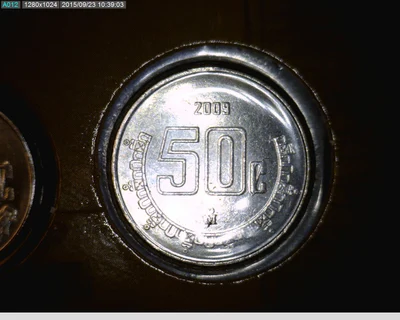
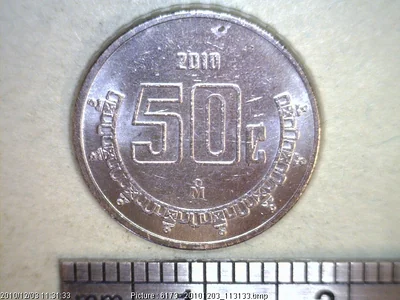
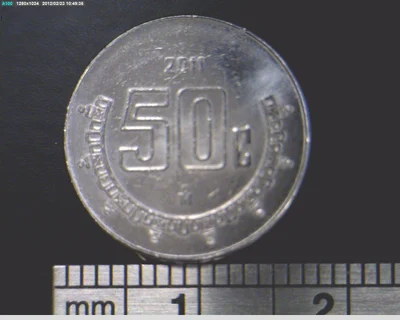
50 centavos Acero inoxidable · 50 Centavos Acero Inoxidable
Frequently asked questions
How much is a 1983 Mexican 50 centavos worth?
In circulated condition, only a few cents. A lightly worn example runs up to about 1 US dollar, and a true uncirculated coin with full mint luster is usually worth 1 to 3 US dollars. It is a common circulation coin, so age alone does not make it valuable.
Is the 1983 50 centavos coin rare?
No. It was struck in large numbers at the Casa de Moneda de México for everyday use. The only versions with real premium are genuine, verifiable mint errors or high-grade examples certified by NGC or PCGS.
Where can I sell my 1983 50 centavos coin?
A verified dealer from the Pesoteca shop directory can value it in person, or you can list it on the Pesoteca buy-and-sell forum among collectors. Photograph the front, back, and edge and check the price range on this page before selling. Avoid rushing a sale to the first online offer.
How do I know if my 1983 50 centavos is genuine?
Weigh it (it should be 4.15 g) and measure the diameter (22 mm) with jewelry tools, then compare to the specs above. The edge should be plain and smooth. Counterfeits often show incorrect weight or diameter, flat relief, or wrong coloring.
Conversation
0 comments
Sources
Images for informational and educational purposes, attributed to their original source. Reference values; the real price depends on the grade, the specific variant and demand.
Loading comments…