
Mexican 50 Centavos 2016 (Stainless Steel): What It's Worth
Prices updated: August 2026
Centavos stainless steel 2016.
Centavos stainless steel 2016.
Design
Banxico
Reverse
Reverse of the 50-centavo stainless steel 2016 piece. Die detail cataloged by Banxico in its Numismatic Collection.
Obverse
Obverse with the Mexican National Coat of Arms and the legend "ESTADOS UNIDOS MEXICANOS" per official convention. Struck by the Mexico City Mint under Banxico decree.
How much is the Mexican 50 Centavos 2016 (Stainless Steel): What It's Worth worth?
The market value of the Mexican 50 Centavos 2016 (Stainless Steel): What It's Worth is not yet documented with enough data to give a firm range. Weigh and measure your piece, compare it against the specifications, and check the forum for a second opinion.
The real price depends on four factors: the grade of preservation (a circulated piece is worth the low end of the range; an uncirculated one, or one still in its official blister pack, the high end), the finish (satin vs mirror/proof), the rarity within the series based on the mintage, and the metal spot price on the day of the deal when the piece is silver or gold. Check the value-by-grade table above and compare with equivalent pieces before buying or selling.
Where to buy or sell this coin?
Browse the national directory of numismatic shops or the community forum to trade directly with other collectors.
Description
If you inherited or found a 2016 Mexican 50 centavos coin, here is the honest answer: in circulated condition it is worth its face value, a few US cents. This is a modern circulation coin made of stainless steel, not silver, not gold, and it was struck in the millions. The value only climbs for pristine uncirculated examples or genuine mint errors.
Quick answer: is it worth money?
The 2016 stainless steel 50 centavos is one of Mexico's everyday coins, part of the 50 Centavos Stainless Steel series. It contains no precious metal, so there is no bullion floor to prop up its value. A worn coin pulled from a change jar is worth face value, which is half a Mexican peso (roughly 3 US cents at current exchange rates).
Where it gets interesting: a high-grade uncirculated coin, ideally still sealed in an original Banxico blister pack, can carry a small premium among collectors who complete date sets. And a verified mint error can be worth far more. More on both below.
The specs (keep these exact)
| Feature | Detail |
|---|---|
| Denomination | 50 centavos |
| Year | 2016 |
| Metal | Stainless steel |
| Weight | 3.103 grams |
| Diameter | 17 mm |
| Edge | Plain (smooth) |
| Finish | Satin |
| Mint | Casa de Moneda de México |
| Series | 50 Centavos Stainless Steel |
The obverse (front) shows the Mexican national coat of arms with the legend "ESTADOS UNIDOS MEXICANOS," the official name of the country (United Mexican States). The reverse (back) carries the denomination as cataloged by Banxico, Mexico's central bank, in its numismatic collection.
Value by condition
Condition, called grade, is what separates a 3-cent coin from one a collector will actually pay for.
- Circulated (worn, from change): face value only. A few US cents.
- Uncirculated (no wear, mint luster): a modest premium, typically well under 5 US dollars.
- Sealed in original Banxico blister: the packaging itself adds appeal to set collectors, but this is still a low-dollar coin, not a rarity.
- Verified mint error: this is the only path to real money on a coin like this.
Use the coin grading guide to figure out where your piece lands before you assume it is worth more than face.
The error angle (where the money actually is)
Genuine minting errors, off-center strikes, die rotation, doubled dies, and known die varieties, can multiply the value of a common coin like this many times over. The catch: most of the "errors" people post online are not errors at all. They are post-mint damage: dents, scratches, corrosion, or acid etching that happened after the coin left the mint. That kind of damage lowers value, it does not raise it.
A real error is present at the moment of striking and is consistent with how the die failed. If you think you have one, photograph it clearly and get a second opinion before spending money on certification.
How to tell if yours is genuine
Counterfeiting a low-value modern circulation coin is rare, but a quick check settles it:
- Weigh it on a jewelry scale. It should read very close to 3.103 grams.
- Measure the diameter with calipers. It should be 17 mm.
- Check the strike. Fakes and damaged coins often show flat, mushy relief or uneven surfaces.
If weight and diameter match and the detail is sharp, you have a normal, genuine coin.
Where to sell it
For a coin in this value range, do not overthink it. Options that make sense:
- A verified shop from the Pesoteca dealer directory, which can appraise it on the spot without a middleman markup.
- The Pesoteca buy-and-sell forum, where collectors trade directly, useful if you have an uncirculated set or a possible error.
Photograph the obverse, reverse, and edge before listing anything. If you suspect an error, post it in the forum first so the community can confirm it is genuine, not just damage. That single step is the difference between selling a 3-cent coin as a 3-cent coin and misjudging a real find.
Have a 2016 50 centavos with something odd about the strike? Post clear photos in the Pesoteca forum and let collectors weigh in before you sell.
Historical context
This 50-centavo piece from 2016 belongs to family C with the dodecagonal profile issued by Banxico. The 50 centavos is the link between the fractions and the whole peso. In low-cost urban transit, markets, and tortilla shops it is the typical change coin. It turns exact payment into a quick act at the register.
Renewed in 2009 with stainless steel and a dodecagonal profile as part of family C. The previous issue (KM#549, golden brass) circulated from 1992 until the material change.
In 2016 annual inflation closed at 3.4% according to INEGI and the average exchange rate was 18.66 pesos per dollar according to Banxico's FIX. It was the year of the fuel-price hike announced in December and of Donald Trump's election in the United States. The peso came close to brushing 22 per dollar after the U.S. election result, and Banxico began raising its reference rate aggressively. The country was under the presidency of Enrique Peña Nieto (PRI).
Catalog reference: Krause to be confirmed. The piece is part of the official Banxico Numismatic Collection catalog and follows the convention of the PSM System, one ID per distinct physical piece, not per design shared with other years of the same series.
This piece belongs to the era
Nuevos Pesos y actualidad →Explore all the Mexican coins of this era, their historical context and how they connect to the monetary system of the period.
Value range of this piece
Value range without enough data for this piece.
See the full breakdown by grade (VG, F, VF, EF, AU, MS-60, MS-63, MS-65) for the whole series →
Same denomination, other years
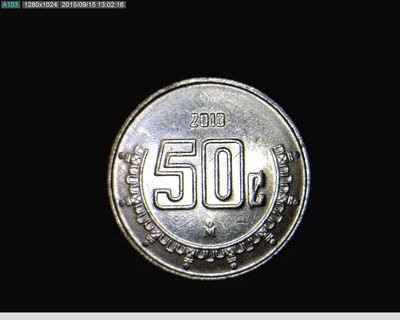
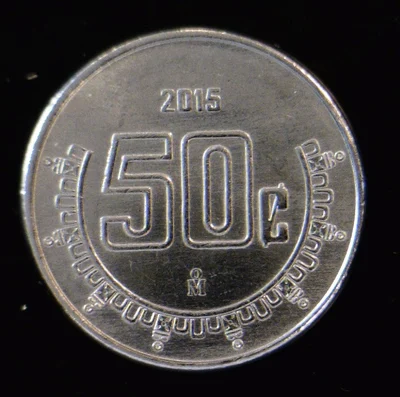
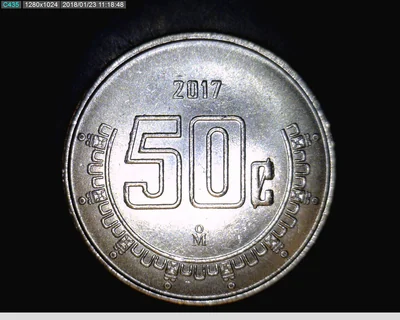
50 centavos Acero inoxidable · 50 Centavos Acero Inoxidable
Frequently asked questions
How much is a 2016 Mexican 50 centavos coin worth?
In circulated condition it is worth face value, half a Mexican peso, roughly 3 US cents. It contains no silver or gold. An uncirculated example carries a small collector premium, usually under 5 US dollars, and only a verified mint error would push it significantly higher.
Is the 2016 50 centavos coin rare?
No. It is a modern circulation coin struck in large numbers by the Casa de Moneda de México. Common dates like this are easy to find. The only versions worth real money are top-grade uncirculated coins or genuine, verifiable minting errors.
Where can I sell my 2016 50 centavos coin?
For the best result, use a verified shop from the [Pesoteca dealer directory](/tiendas) for an on-the-spot appraisal, or the [buy-and-sell forum](/foro/compra-venta) to trade with collectors. Photograph the front, back, and edge first, and check the grade before selling. Avoid dumping it to the first buyer on social media.
How do I know if my 2016 50 centavos is genuine?
Weigh it on a jewelry scale (it should be about 3.103 grams) and measure the diameter with calipers (17 mm). Compare against the specs above. Fakes and damaged coins usually show wrong weight, wrong size, flat relief, or uneven surfaces.
Conversation
0 comments
Loading comments…