
50 Nuevos Pesos 1993 (Bimetallic): Value Guide
Prices updated: August 2026
Family B (New Pesos) 1993, satin finish.
Family B (New Pesos) 1993, satin finish.
Design
Banxico
Reverse
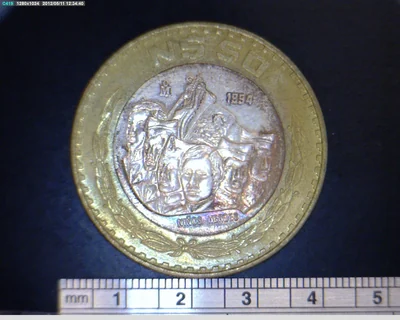
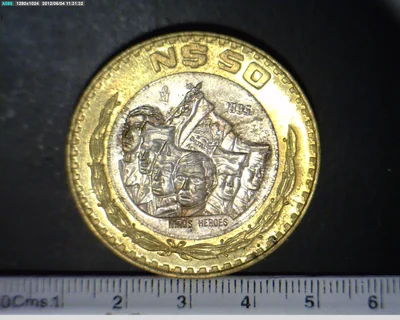
Reverse of the 50 Bimetallic 1993 piece. Die detail cataloged by Banxico in its Colección Numismática.
Obverse
Obverse with the Mexican National Coat of Arms and the legend "ESTADOS UNIDOS MEXICANOS" per official convention. Minted by the Mexican Mint under Banxico decree.
How much is the 50 Nuevos Pesos 1993 (Bimetallic): Value Guide worth?
The market value of the 50 Nuevos Pesos 1993 (Bimetallic): Value Guide is not yet documented with enough data to give a firm range. Weigh and measure your piece, compare it against the specifications, and check the forum for a second opinion.
The real price depends on four factors: the grade of preservation (a circulated piece is worth the low end of the range; an uncirculated one, or one still in its official blister pack, the high end), the finish (satin vs mirror/proof), the rarity within the series based on the mintage, and the metal spot price on the day of the deal when the piece is silver or gold. Check the value-by-grade table above and compare with equivalent pieces before buying or selling.
Where to buy or sell this coin?
Browse the national directory of numismatic shops or the community forum to trade directly with other collectors.
Description
If you inherited or found a 1993 Mexican 50 Nuevos Pesos, here is the honest answer up front: in circulated condition it is worth a few dollars over face value, roughly 5 to 25 USD. The real money only shows up in top uncirculated grades or with a verified mint error. This is a common modern coin, not a hidden fortune.
This is the two-tone (bimetallic) 50 Nuevos Pesos from the Nuevos Pesos 1992-1995 series. "Nuevos Pesos" translates to "New Pesos," the currency Mexico introduced in 1993 when it knocked three zeros off the old peso. A coin marked "N$50" from this era equals 50 new pesos, not the old inflated ones. That currency reset is why you see the word "Nuevos" on the coin.
What it is worth in 2026
The value comes down to condition and whether the coin sits in its original Banxico blister pack. Here is what these actually trade for.
| Grade / Condition | Typical Value (USD) |
|---|---|
| Circulated, worn | 5 to 15 |
| Uncirculated (UNC), loose | 15 to 40 |
| Original Banxico blister / mint set | 30 to 60 |
| Certified MS-65 or higher (NGC/PCGS) | 60 to 200+ |
These are collector-market figures. A worn coin passed hand to hand for years is worth little more than the novelty. A pristine, never-circulated example with full luster and sharp relief is where a buyer will pay a premium. Certification by NGC or PCGS is what pushes a common coin into the higher end, because it removes any doubt about grade and authenticity.
The specs (memorize these to spot a fake)
Exact specifications matter here, because counterfeits almost never nail all of them at once.
- Weight: 33.967 grams
- Diameter: 39 millimeters
- Composition: bimetallic (two-tone, an outer ring and a center core of different alloys)
- Edge: interrupted reeding (segments of ridges broken by smooth gaps)
- Mint: Casa de Moneda de México (the Mexican Mint), issued under Banxico (Bank of Mexico) decree
- Year: 1993, single year of issue
The obverse carries the Mexican national coat of arms (the eagle on a cactus devouring a serpent) with the legend "ESTADOS UNIDOS MEXICANOS," the official name of the country. The reverse shows the denomination and design cataloged by Banxico.
One honest note: the exact mintage for this issue is not officially published. When a mint does not release a figure, it usually means the coin came out in limited numismatic sets or a short run. Collector forums throw around numbers, but none are confirmed, so treat any specific mintage claim you see online with skepticism.
Is it rare?
No, not in the way "rare" gets thrown around. This is a modern circulating coin from a well-documented series. What creates value is not age (33 years old is nothing in numismatics) but condition and error status. A flawless certified example is genuinely scarce because most people spent these coins. A worn one from your change jar is not.
About those "error coins"
Genuine mint errors, off-center strikes, die rotation, double strikes, can multiply the value of a piece if they are real and verifiable. Here is the catch: most "errors" people post online are post-mint damage. Scratches, corrosion, and dings that happened after the coin left the mint are not errors and add nothing. A true die rotation or off-center strike is a factory event, and only a grading service or an experienced collector can confirm it. If you think you have one, post clear photos of the obverse, reverse, and edge in the Pesoteca forum before you get excited.
How to tell if yours is genuine
- Weigh it. It must be 33.967 grams. A digital jewelry scale settles most fakes instantly.
- Measure it. 39 millimeters across. Off by more than a fraction and it is suspect.
- Check the edge. Interrupted reeding, ridges broken by smooth gaps, is hard to fake cleanly.
- Compare the relief. Counterfeits tend to have flat, mushy detail. Line yours up against official Banxico images and look at the sharpness of the eagle and the lettering.
- When in doubt, certify. For any piece you believe is worth real money, NGC or PCGS grading is the final word. It costs money but it is the only guarantee a serious buyer trusts.
Where to sell it
Your best options, in order of safety:
- A verified numismatic dealer from the Pesoteca directory, who can appraise it on the spot without the markup of a middleman.
- The Pesoteca buy-and-sell forum, where you deal directly with collectors who know the coin.
- Coin shows and reputable collector groups.
Before you sell, photograph the coin from all three angles (obverse, reverse, edge) and check the value ranges in this guide so you know what a fair offer looks like. Do not dump it on the first bidder in a Facebook group. And if a listing shows a mystery seller with no edge or weight photos, walk away; that is where most fakes hide.
Have a 1993 50 Nuevos Pesos sitting in a drawer and not sure which grade it falls into? Post your photos in the Pesoteca forum and let the community weigh in before you sell.
Historical context
The Nuevos Pesos family was born from the decree of June 22, 1992 published in the Diario Oficial de la Federación, which reordered the Mexican currency by removing three zeros from the current peso. The transition took effect on January 1, 1993 and lasted three years. The pieces showed the N$ prefix to distinguish them from the previous peso, until in 1996 Banxico removed the prefix and it circulated again simply as the Mexican peso.
This N$50 Bimetallic piece minted in 1993 is part of the peso transition. Banxico documented the annual mintages in its Monetary Circular CM10, though for some years the coverage is uneven. For the specific piece it is advisable to verify the exact mintage against the official Banxico catalog before appraising it. Pesoteca catalogs each piece by minting year rather than grouping them by design, following the convention of the PSM System.
This piece belongs to the era
Nuevos Pesos y actualidad →Explore all the Mexican coins of this era, their historical context and how they connect to the monetary system of the period.
Value range of this piece
Value range without enough data for this piece.
See the full breakdown by grade (VG, F, VF, EF, AU, MS-60, MS-63, MS-65) for the whole series →
Other denominations from 1993
Nuevos Pesos 1992-1995 · Bimetálica
Same denomination, other years
50 pesos Bimetálica · Nuevos Pesos 1992-1995
Frequently asked questions
How much is a 1993 50 Nuevos Pesos worth?
In circulated condition, roughly 5 to 15 USD. Uncirculated examples run 15 to 40 USD, an original Banxico blister pack 30 to 60 USD, and a certified MS-65 or higher can reach 60 to 200 USD or more. Condition drives nearly all the value, since this is a common modern coin.
Is the 1993 50 Nuevos Pesos rare?
No, not in circulated grades. It is a modern coin from a well-documented series, and age alone gives it little premium. What is genuinely scarce is a flawless certified example, because most of these coins were spent and worn. The exact mintage was never officially published.
How do I know if my 1993 50 Nuevos Pesos is genuine?
It must weigh 33.967 grams and measure 39 millimeters across, with interrupted reeding on the edge. Counterfeits usually miss one of these and show flat, soft detail. Compare the relief to official Banxico images, and for any valuable piece, NGC or PCGS certification is the definitive check.
Where can I sell a 1993 50 Nuevos Pesos?
The safest routes are a verified dealer from the Pesoteca directory, who appraises it in person, or the Pesoteca buy-and-sell forum among collectors. Photograph the obverse, reverse, and edge, and know the value range before selling. Avoid selling to the first bidder in a Facebook group, where most fakes circulate.
Conversation
0 comments
Sources
- Ejemplar de la Coleccion Numismatica Banco de Mexico . inv. 18533
- Ejemplar de la Coleccion Numismatica Banco de Mexico . inv. 18534
- Ejemplar de la Coleccion Numismatica Banco de Mexico . inv. 18535
- Ejemplar de la Coleccion Numismatica Banco de Mexico . inv. 18536
- Ejemplar de la Coleccion Numismatica Banco de Mexico . inv. 18537
Images for informational and educational purposes, attributed to their original source. Reference values; the real price depends on the grade, the specific variant and demand.
Loading comments…