
8 Escudos Carlos III 1762 Gold Coin: Value & Prices
The 8 Escudos Carlos III 1762 Gold Coin: Value & Prices is worth between $51,403 and $86,574 MXN depending on its grade of preservation.
Prices updated: August 2026
Viceroyalty · Mexico City Mint · Assayer MM
Viceroyalty · Mexico City Mint · Assayer MM
The 8 Escudos Carlos III 1762 Gold Coin: Value & Prices is worth between $51,403 and $86,574 MXN depending on its grade of preservation.
Prices updated: August 2026
How much is the 8 Escudos Carlos III 1762 Gold Coin: Value & Prices worth?
The estimated value of the 8 Escudos Carlos III 1762 Gold Coin: Value & Prices ranges from $51,403 (circulated, XF) up to $86,574 (official blister pack), with $73,785 as a reference for an uncirculated (UNC) piece. The estimate is based on the official mintage and the historical behavior of the family.
The real price depends on four factors: the grade of preservation (a circulated piece is worth the low end of the range; an uncirculated one, or one still in its official blister pack, the high end), the finish (satin vs mirror/proof), the rarity within the series based on the mintage, and the metal spot price on the day of the deal when the piece is silver or gold. Check the value-by-grade table above and compare with equivalent pieces before buying or selling.
Where to buy or sell this coin?
Browse the national directory of numismatic shops or the community forum to trade directly with other collectors.
Description
If you inherited an 8 Escudos gold coin dated 1762, here is the short answer: it holds about 0.76 troy ounces of gold, which alone puts its floor near USD 1,900 to 2,000 at current metal prices. Genuine, well-preserved examples of this early Mexico City strike sell for far more, sometimes into five figures at auction. This is one of the few old Mexican coins that is worth real money for both its gold content and its rarity.
One important correction before anything else: this denomination was struck under Carlos III (Charles III), the Bourbon king who took the throne in 1759, not Carlos II. Any listing pairing "Carlos III" with the Habsburg dynasty has it wrong. That distinction matters, because catalog collectors buy by ruler and date, and getting it right protects you when you sell.
What you actually have
The 8 Escudos was the largest gold coin of the Spanish colonial system, the piece English speakers later called the "doubloon." Yours was minted at the Casa de Moneda de México (Mexico City Mint), the oldest mint in the Americas.
| Spec | Detail |
|---|---|
| Denomination | 8 Escudos (gold) |
| Year | 1762 |
| Ruler | Carlos III (Bourbon) |
| Gold fineness | 0.875 (21 karat) |
| Weight | 27.03 g |
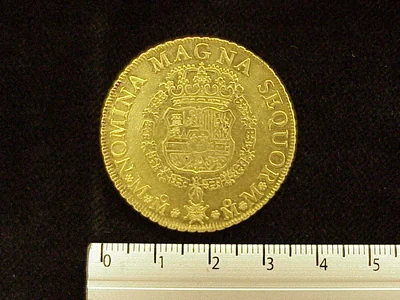
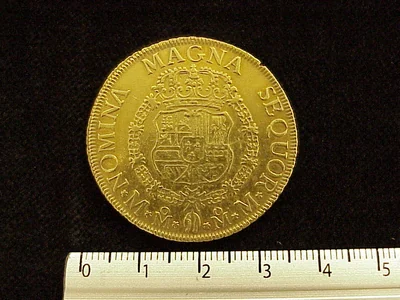
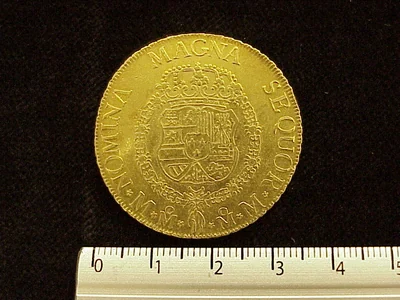
| Diameter | 36 mm |
| Gold content | approx. 0.76 troy oz pure gold |
| Mint | Mexico City (Mo) |
| Assayer | MM |
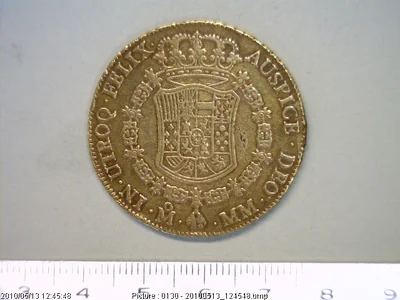
| Edge | chain / cordoned |
The 0.76 ounces of actual gold is the number that matters most for a quick valuation. At a gold spot price around USD 2,500 per ounce, the melt value alone sits near USD 1,900. That is your hard floor. No genuine 1762 8 Escudos is worth less than its gold, and most are worth more.
What it's really worth
Value splits into two layers: the gold, and the numismatic premium on top.
Melt floor. Any authentic example is worth its gold content, roughly USD 1,900 to 2,000, and always finds a buyer. Gold is liquid.
Numismatic premium. This is where 1762 gets interesting. Early Bourbon 8 Escudos from Mexico City, especially the "pillar" and early bust types of the 1760s, are collected worldwide. Circulated examples with real wear typically trade in the USD 2,500 to 5,000 range, above melt because of age, type, and mint. Well-struck examples with clear detail, and anything certified by NGC or PCGS in About Uncirculated or Mint State, climb into five figures. Heritage Auctions and Stack's Bowers have sold choice colonial 8 Escudos from this era for USD 8,000 to well over 20,000 depending on grade, strike quality, and eye appeal.
What drives the premium: grade first, then strike quality and originality. Two coins of the same date can be a decade apart in value if one is worn and cleaned and the other is sharp and original.
The mintage question
Colonial mint records for individual dates in this period are incomplete, so a precise 1762 mintage for the 8 Escudos is not firmly documented across catalogs. Do not treat vague "only a few were made" claims as fact. What is verifiable is that early Bourbon gold from Mexico City survives in modest numbers relative to demand, and that certified high-grade examples are genuinely scarce. Rarity here is real, but it lives in the grade, not in a headline mintage figure.
The myth to ignore
Social media loves to tag any old gold coin as "worth millions." A standard 1762 8 Escudos is not. It is a valuable coin, worth thousands in good condition, but not a museum piece by default. The coins that break records are extreme rarities: pattern strikes, unique assayer varieties, or pieces from shipwreck hoards with documented provenance. If someone quotes you a six-figure price on an ordinary circulated example, they are wrong or selling you something.
How to check if yours is genuine
Gold fakes almost always fail on the physics. Start there.
- Weigh it. A genuine coin weighs 27.03 g. Counterfeits, especially the gold-plated and low-purity fakes coming out of overseas workshops, rarely hit that weight while matching the 36 mm diameter. If the weight is off, stop.
- Measure the diameter. 36 mm. A coin that is the right weight but wrong size (or vice versa) is a red flag for a cast copy.
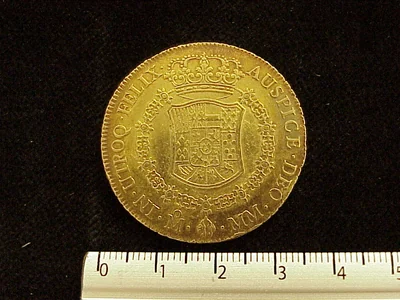
- Check the edge. This issue has a chain-pattern edge. Cast fakes often show a seam or a soft, mushy edge.
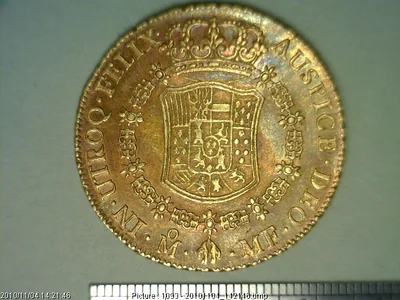
- Inspect the detail. Real dies produce crisp lettering and sharp devices. Casts look soft and grainy under magnification.
For anything you plan to buy or sell above roughly USD 300, get it authenticated. For a coin worth thousands, certified grading from NGC or PCGS is the definitive protection. It confirms authenticity, assigns a grade, and seals the coin in a tamper-evident holder that buyers trust. The grading fee is small against the value at stake.
Where to sell it
Because this is a precious-metal coin, sell only where the buyer can see the coin and verify its weight in front of you.
- A verified numismatic shop from the Pesoteca directory will appraise it on the spot and pay fairly for gold.
- The Pesoteca buy-and-sell forum connects you directly with collectors who understand colonial gold.
- Major auction houses (Heritage, Stack's Bowers) are the right venue for high-grade, certified examples, where competitive bidding tends to beat a flat dealer offer.
Photograph the obverse, reverse, and edge, and record the exact weight before you talk to anyone. Never sell a gold coin to the first online buyer without proof of what it is.
This piece belongs to the Colonial Escudos gold series and the broader Colonial / Viceroyalty era. You can also browse other Mexican 8 Escudos and more coins dated 1762.
Got one in a drawer and not sure what grade it is? Post clear photos of both sides and the edge in the Pesoteca forum and let collectors who handle colonial gold weigh in before you sell.
Historical context
Eight escudos Carlos III, 1762, Mexico City mint, assayer MM, Krause KM#155. Krause records the change from KM#153 to KM#155 in 1762 due to a die variation, probably in the crowned shield on the obverse. In August 1762 the English took Havana as part of the Seven Years' War, and Manila in October. Spain would lose Florida to the English the following year under the Treaty of Paris. It was the reign's year of greatest territorial defeat. In New Spain the Marquis of Cruillas reinforced coastal defenses and organized the Junta de Puebla. The ounce weighs 27.06 grams with .916 fineness. Produced by mill with a round planchet. The reverse retains the pillar design, the last period before the iconographic shift to busts that would come a decade later. MM signature of the assayers.
This piece belongs to the era
Colonial / Virreinato →Explore all the Mexican coins of this era, their historical context and how they connect to the monetary system of the period.
Value range of this piece
Market estimate: $51,403 - $86,574 MXN depending on the grade of preservation (typical range between a circulated and an uncirculated piece).
See the full breakdown by grade (VG, F, VF, EF, AU, MS-60, MS-63, MS-65) for the whole series →
Same denomination, other years
8 escudos Oro 0.875 (21k) · Escudos Coloniales (oro)
Frequently asked questions
How much is an 8 Escudos Carlos III 1762 worth?
Its gold content alone (about 0.76 troy ounces) sets a floor near USD 1,900 to 2,000 at current metal prices. Circulated genuine examples typically sell for USD 2,500 to 5,000, and certified high-grade coins reach five figures at auction. Grade and strike quality drive the premium, so get yours appraised for an exact figure.
Is the 8 Escudos Carlos III 1762 rare?
Yes, meaningfully. A precise mintage for 1762 is not firmly documented, but early Bourbon gold from the Mexico City Mint survives in modest numbers against strong worldwide demand. The real scarcity is in high grades: circulated examples exist, but sharp, uncleaned, certified coins are genuinely hard to find and command the strongest prices.
How can I tell if my 8 Escudos 1762 is genuine?
Start with the physics: it must weigh 27.03 g and measure 36 mm. Most gold fakes fail one of those because they use lower purity. Check the chain-pattern edge for seams and inspect the lettering for sharpness under magnification. For a coin worth thousands, certified grading from NGC or PCGS is the definitive proof of authenticity.
Where can I sell an 8 Escudos Carlos III 1762?
Sell where the buyer verifies the coin and weight in person: a verified shop from the Pesoteca directory, the Pesoteca buy-and-sell forum, or a major auction house like Heritage or Stack's Bowers for certified high-grade pieces. Photograph both sides and the edge, record the exact weight, and never sell gold to the first anonymous online buyer.
Conversation
0 comments
Sources
Images for informational and educational purposes, attributed to their original source. Reference values; the real price depends on the grade, the specific variant and demand.
Loading comments…