
1826 Mexico 8 Escudos Gold Coin: Value & How to Sell
The 1826 Mexico 8 Escudos Gold Coin: Value & How to Sell is worth between $51,308 and $72,912 MXN depending on its grade of preservation.
Prices updated: August 2026
Mexican Republic · Mexico City Mint · Assayer JM
Mexican Republic · Mexico City Mint · Assayer JM
The 1826 Mexico 8 Escudos Gold Coin: Value & How to Sell is worth between $51,308 and $72,912 MXN depending on its grade of preservation.
Prices updated: August 2026
How much is the 1826 Mexico 8 Escudos Gold Coin: Value & How to Sell worth?
The estimated value of the 1826 Mexico 8 Escudos Gold Coin: Value & How to Sell ranges from $51,308 (circulated, XF) up to $72,912 (official blister pack), with $65,056 as a reference for an uncirculated (UNC) piece. The estimate is based on the official mintage and the historical behavior of the family.
The real price depends on four factors: the grade of preservation (a circulated piece is worth the low end of the range; an uncirculated one, or one still in its official blister pack, the high end), the finish (satin vs mirror/proof), the rarity within the series based on the mintage, and the metal spot price on the day of the deal when the piece is silver or gold. Check the value-by-grade table above and compare with equivalent pieces before buying or selling.
Where to buy or sell this coin?
Browse the national directory of numismatic shops or the community forum to trade directly with other collectors.
Description
If you inherited or found an 1826 Mexican 8 escudos gold coin, here is the honest answer: it is a real gold coin with a hard floor at melt value (roughly 0.76 troy ounces of pure gold), and a well-preserved or certified example can climb into the low thousands of US dollars. This is not a lottery ticket, but it is genuine early Mexican gold with real demand.
What you actually have
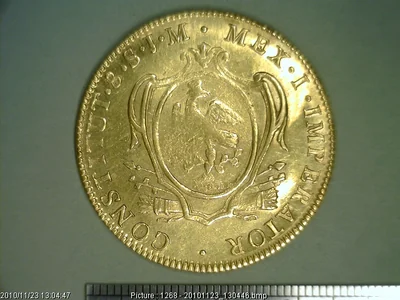
The 8 escudos was the largest gold denomination of early independent Mexico. Your 1826 piece comes from the first Mexican Federal Republic, established under the Constitution of 1824. It carries the republican eagle standing on a cactus, devouring a serpent, the national emblem still used today.
The specific details that matter for value:
- Metal: Gold, 0.875 fine (21 karat)
- Weight: 26.98 grams
- Diameter: 36 mm
- Edge: Diagonally reeded
- Mint: Mexico City Mint (Casa de Moneda de México)
- Assayer mark: JM
The Octaval variant shows the republican eagle in profile with a cord in its beak, which is different from the facing eagle with rays used on other issues. If your coin shows the profile eagle, you have this variant.
At 26.98 grams of 0.875 gold, each coin contains about 23.6 grams (roughly 0.76 troy ounces) of pure gold. That gives it a bullion floor: even a worn, damaged example is worth its gold content, and there is always a buyer for gold.
What it is worth in 2026
Value splits into two layers: the gold in the coin, and the numismatic premium on top.
| Condition | Approximate value (USD) | Notes |
|---|---|---|
| Heavily worn / damaged | Melt value (about 0.76 oz gold) | Sells for gold content, small premium at best |
| Circulated, clear detail | Melt plus a modest premium | Collectible but common wear |
| About Uncirculated | Several hundred to low thousands | Depends on eye appeal |
| Uncirculated / certified MS | Several thousand and up | Certified grade drives the price |
Early Mexican 8 escudos from the 1820s and 1830s regularly cross auction blocks at Heritage Auctions and Stack's Bowers. Common-date examples in circulated grades track close to gold value, while sharp, certified Uncirculated pieces command real numismatic premiums. The Mexico City JM issues are among the more available early republican gold, so grade and originality separate a few-hundred-dollar coin from a few-thousand-dollar one.
Because the gold price moves daily, do the math yourself: multiply 0.76 by the current gold spot price per troy ounce for your bullion floor.
The myth: "old gold coin equals a fortune"
Age alone does not make this coin rare. Mexico City produced 8 escudos across many years, and 1826 is not a scarce standalone date in the broad picture. The premium above gold comes from condition and certification, not from the year on the coin. A worn 1826 8 escudos is worth its gold, period. Do not let a listing convince you a circulated example is worth five figures because it is "almost 200 years old."
How to tell if yours is genuine
Counterfeits of this coin exist, and most give themselves away on the scale. Genuine examples weigh 26.98 grams and measure 36 mm. Fakes, often struck in lower-grade gold or gold-plated base metal, almost always come in under weight or off diameter.
Quick checks before you spend money on authentication:
- Weigh it. Anything meaningfully off 26.98 grams is suspect.
- Measure it. It should be 36 mm across.
- Check the edge. Genuine pieces have diagonal reeding.
- Look at the details. The eagle, lettering, and assayer mark JM should be crisp and correctly placed.
For any coin you believe is worth more than a few hundred dollars, get it graded by NGC or PCGS. Third-party certification confirms authenticity, assigns a grade, and seals the coin in a tamper-evident holder. For gold coins at this value level, certification is the single best protection for both buyer and seller.
Where to sell it
You have several honest routes, ranked by safety:
- Certified auction (Heritage, Stack's Bowers): Best for a certified, high-grade piece. You reach serious international buyers who pay the numismatic premium.
- Established coin dealers: A reputable dealer will weigh and appraise it on the spot. Expect a fair offer near gold value for circulated coins, higher for certified ones.
- Bullion buyers: If your coin is worn or damaged, a gold buyer will pay melt value. Simple and quick.
- Collector marketplaces and forums: You can reach collectors directly, but only deal with buyers who ask to see weight and edge photos, and verify before you pay.
Whatever route you choose, photograph the obverse, reverse, and edge, and know your gold floor before you accept any offer. Do not sell a genuine gold coin below its melt value.
If you have one of these and want a second opinion on grade, authenticity, or a fair price, post clear photos of both sides and the edge in the Pesoteca forum and let collectors weigh in before you sell.
Historical context
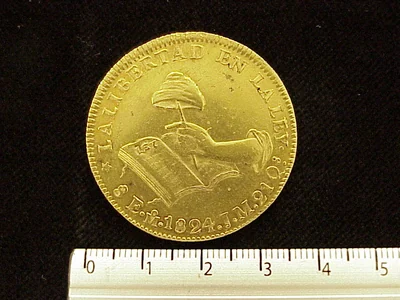
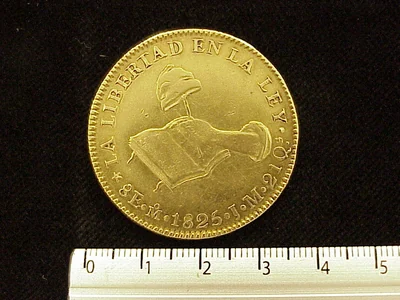
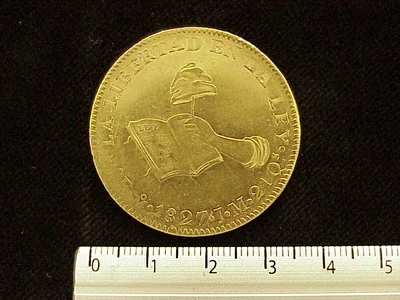
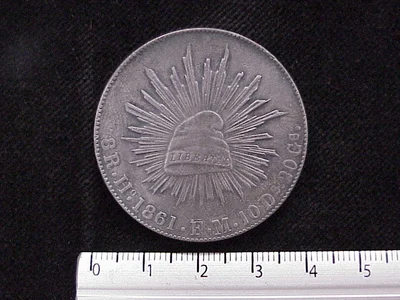
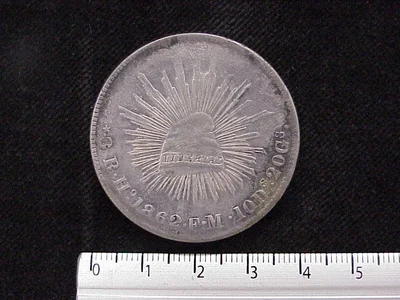
Eight-escudo eight-real type, Mexican Republic, 1826, Mexico City mint, assayer JM, Krause KM#383.9. This was the year Mexico held the first Amphictyonic Congress of Panama, convened by Simón Bolívar, one of the earliest attempts at continental Spanish American integration. Mexico sent representatives, but the project failed. Guadalupe Victoria was still president, in the second year of his term. The ounce weighs 27.06 grams with the .875 fineness typical of republican gold. Krause keeps KM#383.9 for the Mexico City mint type. Produced by milling with a round planchet. The obverse shows the republican eagle on a nopal cactus with a serpent, and the reverse the arm with sword and Phrygian cap. The assayer's JM signature continues in the field. 1826 pieces are testimony to a stable early phase of the Republic before the political convulsions that would begin in 1828.
This piece belongs to the era
República Federal Mexicana →Explore all the Mexican coins of this era, their historical context and how they connect to the monetary system of the period.
Value range of this piece
Market estimate: $51,308 - $72,912 MXN depending on the grade of preservation (typical range between a circulated and an uncirculated piece).
See the full breakdown by grade (VG, F, VF, EF, AU, MS-60, MS-63, MS-65) for the whole series →
Same denomination, other years
8 escudos Oro 0.875 (21k) · Escudos Coloniales (oro)
Frequently asked questions
How much is an 1826 Mexican 8 escudos gold coin worth?
It has a hard floor at gold melt value, about 0.76 troy ounces of pure gold, so a worn example is worth its metal content. Circulated coins with clear detail sell for melt plus a modest premium, while certified Uncirculated examples can reach several thousand US dollars. Grade and certification drive the difference.
Is the 1826 8 escudos rare?
Age alone does not make it rare. Mexico City struck 8 escudos across many years, and 1826 is not a scarce standalone date in the broad market. The premium above gold value comes from high grade and certification, not from the date. A worn example is worth its gold, period.
How can I tell if my 1826 8 escudos is genuine?
Weigh and measure it first. A real coin is 26.98 grams and 36 mm with diagonal reeding on the edge. Most fakes are struck in lower-grade or plated metal and come up short on weight or diameter. For any coin you think is worth more than a few hundred dollars, have it certified by NGC or PCGS.
Where can I sell an 1826 8 escudos gold coin?
For a certified high-grade piece, an auction house like Heritage or Stack's Bowers reaches serious buyers. Established coin dealers will appraise it on the spot, and bullion buyers pay melt value for worn coins. Always photograph the obverse, reverse, and edge, and know your gold floor before accepting any offer.
Conversation
0 comments
Sources
Images for informational and educational purposes, attributed to their original source. Reference values; the real price depends on the grade, the specific variant and demand.
Loading comments…