
8 Reales Carlos II Silver Coin: Value & How to Sell
The 8 Reales Carlos II Silver Coin: Value & How to Sell is worth between $756 and $875 MXN depending on its grade of preservation.
Prices updated: August 2026
Viceroyalty · Mexico City Mint · Assayer G
Viceroyalty · Mexico City Mint · Assayer G
The 8 Reales Carlos II Silver Coin: Value & How to Sell is worth between $756 and $875 MXN depending on its grade of preservation.
Prices updated: August 2026
How much is the 8 Reales Carlos II Silver Coin: Value & How to Sell worth?
The estimated value of the 8 Reales Carlos II Silver Coin: Value & How to Sell ranges from $756 (circulated, XF) up to $875 (official blister pack), with $832 as a reference for an uncirculated (UNC) piece. The estimate is based on the official mintage and the historical behavior of the family.
The real price depends on four factors: the grade of preservation (a circulated piece is worth the low end of the range; an uncirculated one, or one still in its official blister pack, the high end), the finish (satin vs mirror/proof), the rarity within the series based on the mintage, and the metal spot price on the day of the deal when the piece is silver or gold. Check the value-by-grade table above and compare with equivalent pieces before buying or selling.
Where to buy or sell this coin?
Browse the national directory of numismatic shops or the community forum to trade directly with other collectors.
Description
If you inherited or found an 8 Reales coin of Carlos II, here is the honest answer: worn examples trade for modest sums, but genuine, well-preserved colonial silver from the Mexico City mint can climb into the thousands of dollars at auction. Value depends on grade, authenticity, and the assayer mark, not just age.
This is a Spanish colonial silver piece, struck at the Casa de Moneda de México (the Mexico City mint) during the reign of Carlos II. Collectors call these "pieces of eight," the world's first global trade coin. That history matters, but for value the numbers below matter more.
What you actually have
The 8 Reales Carlos II is part of the Colonial 8 Reales series. Core specs to verify against your coin:
- Weight: 27.47 grams
- Diameter: 39 mm
- Metal: Silver, 0.900 fineness (90% silver)
- Edge: plain (unmilled)
- Mint: Mexico City (Ceca México), assayer G
- Era: Colonial / Viceroyalty (Virreinato)
Because the coin is 90% silver, it carries a hard floor: melt value. Even a heavily worn, common example is worth at least its silver content, roughly 0.79 troy ounces of pure silver. That is the number every offer should beat.
What it's worth
There is no single price. Colonial 8 Reales range enormously by condition and how the coin was made. Early cob-style strikes and clean milled examples behave very differently in the market.
| Condition | Realistic value (USD) | Notes |
|---|---|---|
| Heavily worn, damaged | Melt value (silver floor) | Around 20 to 30 USD in silver alone |
| Circulated, honest wear | 100 to 500 USD | Legible date and assayer help a lot |
| High grade / uncirculated | 1,000 to several thousand USD | Sharp detail, original surfaces |
| Certified MS-63 and above | 3,000 USD and up | Top examples set the records |
The premium over melt is driven by three things: how sharp the strike and detail are, whether the surfaces are original (not cleaned or polished), and demand for that specific assayer and date combination. A cleaned coin loses much of its collector premium even if the silver is intact.
For a precise read on your coin, compare it against the Mexican coin grading guide before you accept any offer.
The myth to ignore
"It's colonial, it must be worth a fortune." Not automatically. Millions of 8 Reales were struck over the colonial period, and most surviving pieces are common in circulated grades. The fortune-level prices go to rare date-and-mint combinations in top certified grades, not to every old silver coin in a drawer. Age alone does not create value. Rarity, grade, and originality do.
How to tell if yours is genuine
Colonial silver is heavily faked, so verify before you buy or sell.
- Weigh and measure it. A genuine piece is 27.47 grams and 39 mm. If your coin is light, thin, or oversized, treat it as suspect.
- The ping test. Real silver rings with a high, sustained tone when you balance it on a fingertip and tap it gently. Fakes with base-metal cores sound dull and short.
- Look at the edge and surfaces. Casting seams, a greasy shine, or soft mushy details are red flags for a cast counterfeit.
- Get it certified. For any coin you think is worth more than a few hundred dollars, third-party grading from NGC or PCGS is the definitive safeguard. A slabbed coin sells faster and for more.
Where to sell it
Your best options, in order of safety:
- A verified numismatic dealer from the Pesoteca shop directory. A dealer values it on the spot and offers a fair price against melt plus any collector premium.
- Collector-to-collector in the Pesoteca buy/sell forum, where you reach people who actually want colonial silver.
- Auction houses (Heritage, Stack's Bowers) for genuinely high-grade or rare examples. This is where record prices happen, but it only makes sense above a certain value.
Before selling, photograph the obverse, reverse, and edge in good light, and check your grade against the table above. Do not dump it to the first Facebook offer, and never ship precious metal to a buyer who won't show you their own coin and weight first.
Think you have a strong example, or unsure about the assayer and date on yours? Post clear photos in the Pesoteca forum and let collectors help you pin down what it's really worth.
Historical context
This piece belongs to the reign of Carlos II of Spain (1665-1700). The last king of the House of Austria in Spain. His death without heirs triggered the War of the Spanish Succession (1701-1714).
The viceregal period in which this piece was struck coincided with the administration of the Royal Audiencia of Mexico and its titular viceroys, who governed the New Spain territory until 1821.
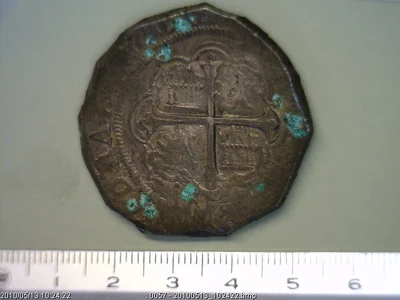
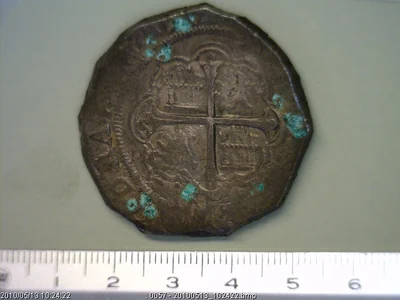
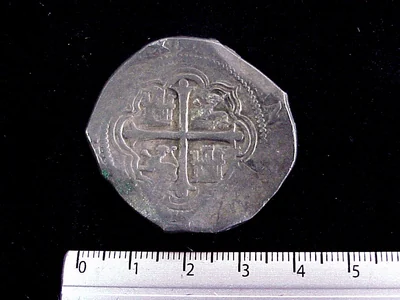
The numismatic type of the piece is cob (macuquina), also called hammer-cut coin. The planchets were clipped with shears from a silver bar and struck between hand dies, so no cob has an edge or a perfectly circular shape. It circulated as the reference trade coin throughout the Atlantic for more than two centuries.
The Mexico City mint (crowned Mo mark) operated from 1535 as the first mint of the Americas. During the 17th century it struck cobs almost without interruption, being the main point of issue of struck silver in the Spanish empire. The assayer's initials declared on the piece are G, an official of the Royal Treasury charged with certifying the silver fineness (0.930 and later 0.903) according to the viceregal standard.
The colonial catalogs trace this piece within the Real de a Ocho families of Mexico, with prices that respond to rarity by year and assayer signature.
With no firm year declared, the record is kept as a reference to the reign of Carlos II in New Spain with assayer G.
This piece belongs to the era
Colonial / Virreinato →Explore all the Mexican coins of this era, their historical context and how they connect to the monetary system of the period.
Value range of this piece
Market estimate: $756 - $875 MXN depending on the grade of preservation (typical range between a circulated and an uncirculated piece).
See the full breakdown by grade (VG, F, VF, EF, AU, MS-60, MS-63, MS-65) for the whole series →
Same denomination, other years
8 reales Plata 0.900 · 8 Reales Coloniales
Frequently asked questions
How much is an 8 Reales Carlos II worth?
It depends heavily on grade. Heavily worn or damaged pieces are worth close to their silver melt value (roughly 20 to 30 USD). Circulated coins with honest wear typically bring 100 to 500 USD, and high-grade or certified uncirculated examples can reach several thousand dollars. Have your specific coin appraised or certified for an accurate figure.
Is the 8 Reales Carlos II rare?
In circulated grades, no. Millions of colonial 8 Reales were struck at the Mexico City mint, so worn examples are common. Rarity comes from specific date and assayer combinations in high certified grades. Age alone does not make it rare; condition and the exact variety do.
How do I know if my 8 Reales Carlos II is genuine?
Start with weight and size: a real coin is 27.47 grams and 39 mm. Genuine silver rings with a high, sustained tone when tapped, while base-metal fakes sound dull. Watch for casting seams or soft details. For anything you believe is valuable, NGC or PCGS certification is the definitive proof of authenticity.
Where can I sell an 8 Reales Carlos II?
Safest options are a verified dealer from the Pesoteca shop directory, who values it in person, or the Pesoteca buy/sell forum for collectors. For genuinely high-grade coins, consider auction houses like Heritage or Stack's Bowers. Photograph the obverse, reverse, and edge, and check your grade before accepting any offer.
Conversation
0 comments
Sources
Images for informational and educational purposes, attributed to their original source. Reference values; the real price depends on the grade, the specific variant and demand.
Loading comments…