
8 Reales Carlos IV 1790: Value & Real Prices
The 8 Reales Carlos IV 1790: Value & Real Prices is worth between $743 and $3,126 MXN depending on its grade of preservation.
Prices updated: August 2026
Second type; bust of Charles III with Charles IIII legend
Second type; bust of Charles III with Charles IIII legend
The 8 Reales Carlos IV 1790: Value & Real Prices is worth between $743 and $3,126 MXN depending on its grade of preservation.
Prices updated: August 2026
How much is the 8 Reales Carlos IV 1790: Value & Real Prices worth?
The estimated value of the 8 Reales Carlos IV 1790: Value & Real Prices ranges from $743 (circulated, XF) up to $3,126 (official blister pack), with $2,259 as a reference for an uncirculated (UNC) piece. The estimate is based on the official mintage and the historical behavior of the family.
The real price depends on four factors: the grade of preservation (a circulated piece is worth the low end of the range; an uncirculated one, or one still in its official blister pack, the high end), the finish (satin vs mirror/proof), the rarity within the series based on the mintage, and the metal spot price on the day of the deal when the piece is silver or gold. Check the value-by-grade table above and compare with equivalent pieces before buying or selling.
Where to buy or sell this coin?
Browse the national directory of numismatic shops or the community forum to trade directly with other collectors.
Description
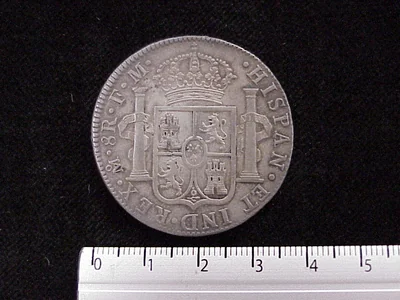
If you inherited an old, heavy silver coin marked "CAROLUS IV" and "1790," you have a Spanish colonial 8 Reales struck in Mexico City. The honest answer on value: most circulated examples trade from about USD 40 to USD 120 for the silver and collector interest combined, with clean, high-grade pieces reaching several hundred dollars. This is a real silver coin with a genuine floor value, not a rare rarity worth a fortune.
Here is what you actually have and what drives the price in 2026.
What this coin is
The 8 Reales was the workhorse silver coin of the Spanish Empire, and Mexico City was the busiest mint producing it. Your 1790 piece was struck under Carlos IV (Charles IV of Spain). The "8 Reales" was the famous "piece of eight" that circulated across the Americas, Europe, and Asia for centuries. It even circulated legally in the early United States.
The letters FM on the coin are the assayer's initials, the mint official who certified the metal's fineness. The coin was made in the Mexico City mint (mint mark Mo, an M with a small o above it).
Metal and specs (this is where the floor value comes from)
This coin is genuine silver, so it has a bullion floor no matter its condition.
| Spec | Detail |
|---|---|
| Metal | Silver, 0.900 fine (90% silver) |
| Weight | 26.98 g |
| Diameter | 39 mm |
| Edge | Incuse (design pressed into the rim) |
| Catalog reference | KM#108 |
| Ruler | Carlos IV of Spain |
| Mint | Mexico City (Mo) |
| Assayer | FM |
At 0.900 fine and 26.98 grams, the coin holds roughly 0.78 troy ounces of pure silver. That means its melt value alone is a solid double-digit figure in USD, and it moves with the silver market. No genuine example of this coin is worth less than its silver content.
What it's actually worth
Value depends almost entirely on grade (condition) and eye appeal. The 1790 date is common enough that it does not carry a rarity premium on its own, so condition is the whole game.
| Condition | Approximate value (USD) |
|---|---|
| Heavily worn / damaged | Melt value, roughly USD 20 to 40 |
| Circulated but clear detail (Fine to VF) | USD 50 to 120 |
| High grade, sharp detail (XF to AU) | USD 150 to 400 |
| Uncirculated, certified | USD 500 and up |
The biggest killers of value are cleaning, holes (many were worn as jewelry), heavy scratches, and corrosion. A cleaned coin can lose half its collector value even if the detail survives. Never clean an old silver coin before selling it.
The myth to ignore
A very old coin does not automatically mean a fortune. Millions of 8 Reales were struck across the colonial period, and the mint pumped them out for global trade. Age is not rarity. What lifts one of these into the hundreds of dollars is condition, a certified grade from NGC or PCGS, or a genuine, verifiable mint error. Ordinary worn examples are worth their silver plus a modest collector premium, and that is a fair, honest number.
How to check what yours is worth
- Weigh and measure it. Use a jewelry scale and a caliper. It should hit 26.98 g and 39 mm. Big deviations point to a fake or a cast copy. Colonial 8 Reales are among the most counterfeited coins in the world, so this step matters.
- Check the details. Look at the engraving style, the Mo mint mark, and the FM assayer initials. Cast fakes show soft, mushy detail and often a seam on the edge.
- Grade it honestly. Compare wear on the high points against online grading photos. Be conservative.
- Get it authenticated if you think it's high grade. Certification by NGC or PCGS both confirms it's real and locks in a market value.
Be suspicious of any offer far below the silver value, and equally suspicious of any "buyer" who won't let you verify weight and detail in person.
Where to sell it
For the fairest price, go to a verified coin dealer or trade with collectors directly. A verified numismatic shop from the Pesoteca directory can appraise it on the spot, or you can list it in the Pesoteca buy-and-sell forum among collectors. Photograph the obverse, reverse, and edge before you sell, and check the value range in this page first. Don't dump it to the first Facebook offer.
If you think you have a mint error or an unusual variant, post clear photos in the Pesoteca forum and let the community weigh in before you assume it's worth a premium.
Have one of these sitting in a drawer? Post your weight and photos in the forum and find out where yours lands on the value scale.
Historical context
This piece belongs to the reign of Carlos IV of Spain (1788-1808), son of Carlos III. His reign coincided with the French Revolution and with the Napoleonic wars that ended in the abdications of Bayonne.
The government of New Spain in 1790 was headed by Juan Vicente de Guemes, second Count of Revillagigedo, who promoted the first population census of New Spain.
The numismatic type of the piece is bust (busto), introduced in 1772 under Carlos III. The obverse shows the king's portrait in the neoclassical fashion, and the reverse the crowned royal coat of arms with the Golden Fleece. The edge is laurel or corded, and all examples were struck on a screw press, with Latin legends spelling out the monarch's titles and dignities.
The Mexico City Mint had migrated to the bust pattern in 1772. Under Carlos III and Carlos IV, the highest annual production of struck silver in the viceroyalty was recorded, feeding trade with the Philippines via the Manila Galleon and the payment of the situado to the Antilles. The dies were signed by the Mexico City Mint assayer active in the period, an official charged by the Royal Treasury with certifying that the silver fineness met the viceregal standard.
Colonial catalogs trace this piece within the families of the Mexico City Real de a ocho, with prices driven by rarity by year and assayer signature.
Year of the start of the second viceroyalty of the Guemes family with the second Count of Revillagigedo, who organized the first population census of New Spain.
This piece belongs to the era
Colonial / Virreinato →Explore all the Mexican coins of this era, their historical context and how they connect to the monetary system of the period.
Value range of this piece
Market estimate: $743 - $3,126 MXN depending on the grade of preservation (typical range between a circulated and an uncirculated piece).
See the full breakdown by grade (VG, F, VF, EF, AU, MS-60, MS-63, MS-65) for the whole series →
Other denominations from 1790
8 Reales Coloniales · Plata 0.900
Same denomination, other years
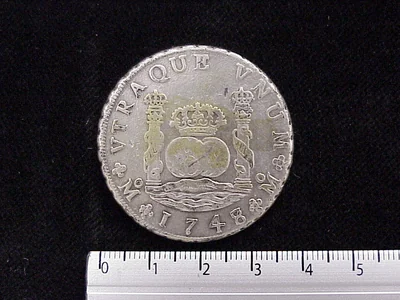
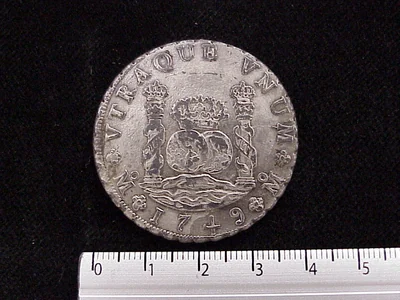
8 reales Plata 0.900 · 8 Reales Coloniales
Frequently asked questions
How much is the 1790 Carlos IV 8 Reales worth?
It depends on condition. Heavily worn examples are worth their silver content, roughly USD 20 to 40. Circulated coins with clear detail bring about USD 50 to 120, and high-grade or certified pieces can reach USD 150 to 400 or more. It's genuine 0.900 silver (26.98 g), so it always has a bullion floor.
Is the 1790 8 Reales rare?
No. Mexico City struck huge numbers of 8 Reales for global trade, and the 1790 date is common. Age does not equal rarity here. Value is driven by condition, a certified grade, or a genuine mint error, not by the date alone.
Where can I sell my 1790 Carlos IV 8 Reales?
The safest options are a [verified coin shop from the Pesoteca directory](/tiendas), which can value it on the spot, or the [Pesoteca buy-and-sell forum](/foro/compra-venta) among collectors. Photograph the obverse, reverse, and edge, check the value range on this page, and don't sell to the first low offer online.
How do I tell if my 1790 8 Reales is genuine?
Weigh and measure it: it should be 26.98 g and 39 mm. Check the Mo (Mexico City) mint mark and the FM assayer initials, and look for sharp, crisp engraving. Colonial 8 Reales are heavily counterfeited, so soft detail, an edge seam, or wrong weight are red flags. Be wary of any price far below the silver value.
Conversation
0 comments
Loading comments…