
8 Reales Copper 1811: Independence War Coin Value
Prices updated: August 2026
Morelos, struck.
Morelos, struck.
How much is the 8 Reales Copper 1811: Independence War Coin Value worth?
The market value of the 8 Reales Copper 1811: Independence War Coin Value is not yet documented with enough data to give a firm range. Weigh and measure your piece, compare it against the specifications, and check the forum for a second opinion.
The real price depends on four factors: the grade of preservation (a circulated piece is worth the low end of the range; an uncirculated one, or one still in its official blister pack, the high end), the finish (satin vs mirror/proof), the rarity within the series based on the mintage, and the metal spot price on the day of the deal when the piece is silver or gold. Check the value-by-grade table above and compare with equivalent pieces before buying or selling.
Where to buy or sell this coin?
Browse the national directory of numismatic shops or the community forum to trade directly with other collectors.
Description
If you inherited an 1811 copper 8 Reales, you have one of the more interesting pieces of the Mexican War of Independence, not one of the famous silver "pieces of eight." This is copper, it is an emergency wartime issue, and genuine examples in decent shape typically trade from roughly 40 to several hundred dollars depending on grade and mint. Worn or damaged pieces sit at the low end.
Let's be clear up front, because the confusion costs sellers money. The world-famous 8 Reales, the coin that became the global trade dollar for centuries, is a large silver coin. The piece you have is copper. During the war of independence (starting in 1810), control of the Spanish colonial mints shifted between Royalist and insurgent forces, and metal was scarce. Several regional and provisional mints struck 8 Reales in copper as necessity money. That wartime context is exactly why these matter to collectors, and it is also why so many crude fakes and cast copies exist.
What you actually have
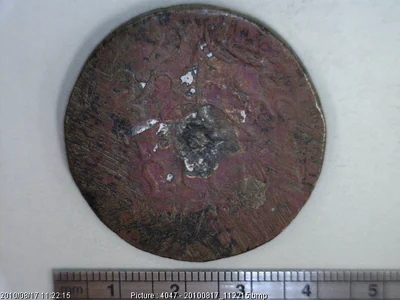
Your coin is a copper 8 Reales dated 1811, catalogued as KM# 234. Here are the specifications to check against, because the numbers are how you separate a genuine strike from a modern fake or a random token.
| Feature | Specification |
|---|---|
| Denomination | 8 Reales |
| Metal | Copper |
| Weight | 33.22 g |
| Diameter | 40.05 mm |
| Edge | Plain (smooth, not reeded) |
| Catalog reference | KM# 234 |
| Period | War of Independence, insurgent/provisional issue |
The silver 8 Reales of the same era weighs around 27 grams and is a lighter color. If your coin is reddish-brown, heavy, and about 40 mm across, you are holding copper, and that is correct for this type. A silver-colored "8 Reales 1811" that weighs 33 grams is a red flag: either it is plated or it is a fake.
What it's worth in 2026
Copper coins are harder to value than silver because condition swings the price dramatically. Copper corrodes, and most surviving wartime coppers are heavily circulated, so grade is everything.
- Well worn (readable date and design, but heavy wear or corrosion): roughly 30 to 80 USD.
- Solid circulated, clear detail, honest surfaces: roughly 100 to 300 USD.
- High grade or a scarce mint variety, certified: several hundred dollars and up.
These are copper necessity issues, not bullion, so there is no melt-value floor to protect the price. That means condition and eye appeal drive nearly all the value. A green, pitted, or holed example is worth far less than a smooth brown coin with a legible date and mint mark.
If you want to understand why the silver version is the household name and this copper piece is the specialist's coin, our overview of the 8 Reales series puts both in context.
The myth to ignore
Every few weeks someone posts an "1811 8 Reales worth millions." That is not this coin. The genuinely valuable independence-era rarities are specific provisional silver issues in top grade, or documented mint errors, and even those rarely reach the numbers clickbait promises. A copper 8 Reales in average condition is a modest collectible, not a retirement fund. Price it honestly and you will actually sell it.
Where real premiums do appear: genuine, verifiable striking errors (off-center strikes, die rotation, double strikes) can multiply the value. Be skeptical. Most "errors" circulating on social media are post-mint damage, corrosion, or casting flaws, not factory errors. If you think you have a true error, get it looked at before you assume anything.
How to tell if yours is genuine
Colonial and wartime coppers are among the most faked Mexican coins, because cast copies are cheap to make.
- Weigh it. Use a jewelry scale. It should be close to 33.22 g. Cast fakes are often noticeably off.
- Measure the diameter. A caliper should read about 40.05 mm.
- Check the edge. It should be plain and smooth. A seam line running around the edge suggests a cast copy.
- Look at the surfaces. Genuine struck coins show sharp, crisp detail. Cast fakes look soft, grainy, or bubbly, and the lettering blurs.
- Study the engraving, mint mark, and assayer marks. Provisional issues have specific styles by mint. A design that doesn't match any documented variety is a warning sign.
For anything with real value, send it to a grading service like NGC or PCGS. Certification confirms authenticity and grade, and a slabbed coin sells for more and faster than a raw one.
Where to sell it
Don't dump it on Facebook Marketplace to the first buyer. To sell an 1811 copper 8 Reales for what it's actually worth:
- A verified coin dealer from the Pesoteca shop directory can appraise it in person, no middleman markup.
- The collector-to-collector buy/sell forum on Pesoteca connects you directly with people who want this exact series.
- Photograph the obverse (front), reverse (back), and edge in good light before you list it.
Got one of these copper pieces, or an "error" you can't figure out? Post clear photos of both sides in the Pesoteca forum and let collectors who know this series weigh in before you sell.
Value range of this piece
Value range without enough data for this piece.
See the full breakdown by grade (VG, F, VF, EF, AU, MS-60, MS-63, MS-65) for the whole series →
Same denomination, other years
8 reales Cobre · misc-8 Reales Cobre Independencia
Frequently asked questions
How much is an 1811 copper 8 Reales worth?
It depends heavily on condition, because copper coins have no bullion floor. Well-worn or corroded examples run roughly 30 to 80 USD. Clean circulated pieces with a legible date and mint mark bring about 100 to 300 USD, and high-grade or scarce certified varieties can reach several hundred dollars and up. Check the specifications in the table above to confirm you have the genuine copper type.
Is the 1811 copper 8 Reales rare?
It is a scarce War of Independence emergency issue, struck in copper because silver was in short supply during the fighting. It is far less common than the famous silver 8 Reales, but it is not a headline rarity worth thousands in average grade. Real premiums come from high grade, a scarce mint variety, or a verified striking error.
How can I tell if my 1811 copper 8 Reales is genuine?
Weigh it (should be about 33.22 g) and measure the diameter (about 40.05 mm) against the specs above. The edge should be plain and smooth, with no casting seam. Genuine coins show sharp struck detail; cast fakes look soft, grainy, or bubbly. Colonial and wartime coppers are heavily faked, so for anything valuable, have it certified by NGC or PCGS.
Where can I sell an 1811 copper 8 Reales?
Use a verified coin dealer from the Pesoteca shop directory for an in-person appraisal, or list it in the Pesoteca collector buy/sell forum where people actively collect this series. Photograph the front, back, and edge first, and compare your coin to the value ranges on this page before you accept an offer. Avoid selling to the first random buyer online.
Conversation
0 comments
Loading comments…