
8 Reales Felipe II (Real de a Ocho): Value & Prices
The 8 Reales Felipe II : Value & Prices is worth between $746 and $864 MXN depending on its grade of preservation.
Prices updated: August 2026
Viceroyalty · Mexico City Mint
Viceroyalty · Mexico City Mint
The 8 Reales Felipe II : Value & Prices is worth between $746 and $864 MXN depending on its grade of preservation.
Prices updated: August 2026
How much is the 8 Reales Felipe II (Real de a Ocho): Value & Prices worth?
The estimated value of the 8 Reales Felipe II (Real de a Ocho): Value & Prices ranges from $746 (circulated, XF) up to $864 (official blister pack), with $821 as a reference for an uncirculated (UNC) piece. The estimate is based on the official mintage and the historical behavior of the family.
The real price depends on four factors: the grade of preservation (a circulated piece is worth the low end of the range; an uncirculated one, or one still in its official blister pack, the high end), the finish (satin vs mirror/proof), the rarity within the series based on the mintage, and the metal spot price on the day of the deal when the piece is silver or gold. Check the value-by-grade table above and compare with equivalent pieces before buying or selling.
Where to buy or sell this coin?
Browse the national directory of numismatic shops or the community forum to trade directly with other collectors.
Description
Most people who inherit an old "piece of eight" assume it's either worthless costume silver or a million-dollar treasure. The truth sits in the middle: a genuine 8 Reales from the Felipe II era, struck in silver at the Mexico City mint, is worth anywhere from a few hundred to several thousand US dollars depending on condition and authenticity. This is the coin that became the world's first global currency, the original Spanish dollar.
What you actually have
The 8 Reales (called a "real de a ocho," or Spanish dollar) was minted in México from the 1500s onward and circulated worldwide, including in colonial America. It's the direct ancestor of the US dollar sign and the phrase "pieces of eight." Coins attributed to the reign of Felipe II (Philip II of Spain) are among the earliest silver pieces struck in the Americas.
Here are the hard specs. Use them to confirm what you're holding:
| Feature | Specification |
|---|---|
| Denomination | 8 Reales (real de a ocho) |
| Metal | Silver, .900 fine (90% silver) |
| Weight | 27.1 grams |
| Diameter | 41 mm |
| Edge | Plain (unmarked) |
| Mint | Mexico City (Ceca México) |
| Era | Colonial / Viceroyalty of New Spain |
If your coin does not match those measurements, especially the 27.1 gram weight, treat it as suspect until proven otherwise. Weight is the single fastest fraud check on this coin.
What it's worth in USD
There's no single price, and any site that gives you one flat number is guessing. Value on early 8 Reales is driven by four things: authenticity, grade (condition), the specific issue, and the silver spot price setting a floor.
- Silver floor: At 27.1 grams of .900 fine silver, the coin contains roughly 0.78 troy ounces of pure silver. That gives it a hard melt floor of about 20 to 25 US dollars in metal alone, before any collector premium. No genuine example trades below that.
- Circulated, common issues: Typically a few hundred US dollars.
- Well-preserved or scarcer issues: Often into the low thousands.
- Rare early cobs, top grades, or historically significant examples: Several thousand US dollars and up at auction. Exceptional early Mexican colonial silver has crossed into five figures at Heritage and Stack's Bowers sales.
Early Spanish colonial silver is a deep, well-documented market. Because the reign of Felipe II spans several decades and the coinage evolved (from crude hand-struck "cobs" to more regular strikes), attribution matters enormously. Two coins that look similar can differ by an order of magnitude in price based on the exact type, assayer mark, and die variety.
The honest catch: dates and mintage
We won't invent a figure. The exact mintage for early Mesoamerican Felipe II 8 Reales is not documented in official records, which is normal for 16th-century coinage. Mints of that era did not publish production runs the way modern facilities do. Attribution to the period is done by weight, diameter, design, and assayer marks, not by a stamped calendar year in the modern sense.
If you need a firm date and type on the coin in your hand, that's a job for a professional. See our grading and condition guide to assess it yourself first, then confirm with a grading service.
Beware the fakes
Early Spanish dollars are among the most counterfeited coins on the planet, precisely because they're valuable and old-looking fakes are easy to age artificially. Cast reproductions and "museum replica" pieces flood online marketplaces. Three quick checks before you get excited:
- Weight. Genuine equals 27.1 grams. Cast fakes are often light or heavy and use base metal.
- The ring test. Real .900 silver produces a high, sustained ring when balanced on a fingertip and tapped lightly. Fakes sound dull and short.
- Detail and edges. Cast copies show soft mushy detail and sometimes a seam on the edge. Struck originals have sharper relief.
None of these replaces professional authentication. For anything you suspect is worth real money, send it to NGC or PCGS for grading. A certified, encapsulated coin is the only version buyers trust at full price, and it typically sells for a meaningful premium over a raw "trust me" coin.
How to check what yours is worth
- Weigh it on a gram scale. Confirm 27.1 grams.
- Grade the condition using our condition guide. Wear level is a huge price driver.
- Photograph the obverse, reverse, and edge in good light.
- Get it authenticated if the specs check out. NGC/PCGS certification pays for itself on any coin above a few hundred dollars.
- Compare against recent Heritage and Stack's Bowers auction results for the same type, not against optimistic listing prices.
Where to sell it
For US owners, the deepest market for early Spanish colonial silver is the major auction houses (Heritage, Stack's Bowers) and established colonial-coin dealers, especially once the coin is certified. For direct collector-to-collector deals, the Pesoteca buy-sell forum connects you with people who actually know this series and can read a die variety. You can also find vetted shops in the Pesoteca dealer directory.
Whatever route you pick, get it authenticated first and never accept the first lowball offer. A coin this old and this liquid deserves a second opinion. This piece belongs to the broader Colonial 8 Reales series, and cross-checking comparable sales in that series is the fastest way to price yours accurately.
Got one in a drawer and not sure what you're looking at? Post clear photos of the obverse, reverse, and edge on the Pesoteca forum and let collectors who read these coins for a living tell you what you actually have.
Historical context
This piece belongs to the reign of Philip II of Spain (1556-1598). Son of Charles I of Spain (Charles V of the Holy Roman Empire). Under his reign the Spanish Empire reached its maximum territorial extent.
The viceregal period in which this piece was struck coincided with the administration of the Royal Audiencia of Mexico and its titular viceroys, who governed the New Spain territory until 1821.
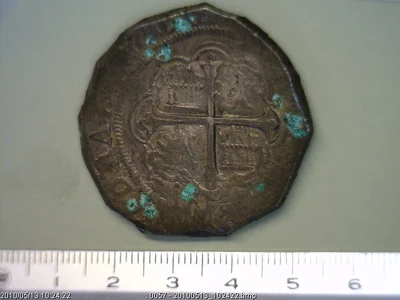
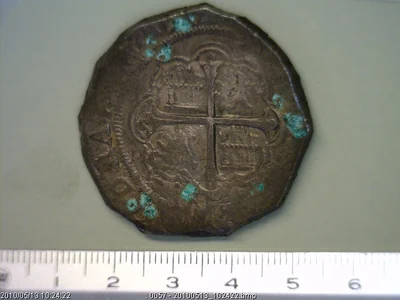
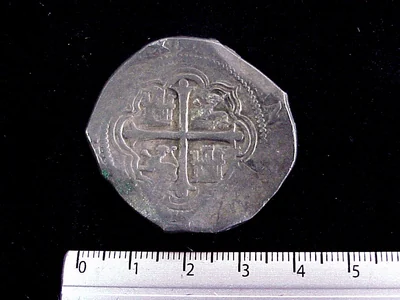
The numismatic type of the piece is cob (macuquina), also called hammer-cut coin. The planchets were clipped with shears from a silver bar and struck between manual dies, so no cob has a milled edge or a perfectly circular shape. It circulated as the benchmark trade coin throughout the Atlantic for more than two centuries.
The Mexico mint (crowned Mo mark) operated from 1535 as the first mint in America. During the 17th century it struck cobs almost uninterruptedly, being the main issuing point of struck silver in the Spanish empire. The dies were signed by the Mexico mint assayer active in the period, an official charged by the Royal Treasury with certifying that the silver fineness met the viceregal standard.
The colonial catalogs trace this piece within the families of the Mexico piece of eight, with prices that respond to rarity by year and assayer signature.
With no firm year declared, the record is kept as a reference of the reign of Philip II at the Mexico mint, with shield-type cobs as the dominant issue.
This piece belongs to the era
Colonial / Virreinato →Explore all the Mexican coins of this era, their historical context and how they connect to the monetary system of the period.
Value range of this piece
Market estimate: $746 - $864 MXN depending on the grade of preservation (typical range between a circulated and an uncirculated piece).
See the full breakdown by grade (VG, F, VF, EF, AU, MS-60, MS-63, MS-65) for the whole series →
Same denomination, other years
8 reales Plata 0.900 · 8 Reales Coloniales
Frequently asked questions
How much is an 8 Reales Felipe II worth?
Genuine examples range from a few hundred US dollars for circulated common issues to several thousand for scarce types in high grade, with exceptional early Mexican colonial silver reaching five figures at auction. The silver content alone sets a floor of roughly 20 to 25 US dollars. Certified (NGC/PCGS) coins always sell higher than raw ones, so grade your best piece before selling.
Is the 8 Reales Felipe II rare?
It's genuinely old and historically important as the original Spanish dollar, but rarity varies enormously by issue, assayer mark, and grade. Exact mintages from the 16th century were never officially documented. Common circulated types are collectible but affordable; scarce early cobs and top-grade survivors are the ones that command serious money.
How do I know if my 8 Reales Felipe II is genuine?
Start with weight: a real one is 27.1 grams and 41 mm. Genuine .900 silver rings with a high, sustained tone when tapped; fakes sound dull and short. Cast reproductions show soft detail and sometimes an edge seam. Because this is one of the most counterfeited coins in the world, send anything valuable to NGC or PCGS for certified authentication.
Where can I sell an 8 Reales Felipe II?
For the best price, use a major auction house like Heritage or Stack's Bowers, or an established colonial-coin dealer, ideally after certifying the coin. You can also sell directly through the [Pesoteca buy-sell forum](/foro/compra-venta) or find vetted shops in the [Pesoteca dealer directory](/tiendas). Always authenticate first and photograph the obverse, reverse, and edge before listing.
Conversation
0 comments
Sources
Images for informational and educational purposes, attributed to their original source. Reference values; the real price depends on the grade, the specific variant and demand.
Loading comments…