
8 Reales of Felipe II (Spanish Colonial Silver)
The 8 Reales of Felipe II is worth between $740 and $857 MXN depending on its grade of preservation.
Prices updated: August 2026
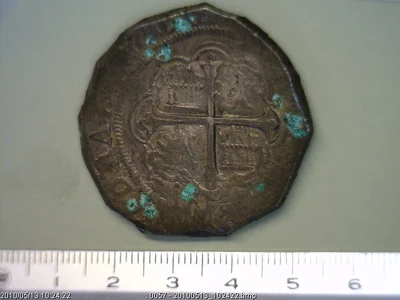
Viceroyalty · Mexico City Mint · Assayer A
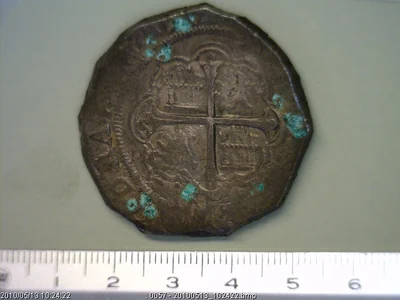
Viceroyalty · Mexico City Mint · Assayer A
The 8 Reales of Felipe II is worth between $740 and $857 MXN depending on its grade of preservation.
Prices updated: August 2026
How much is the 8 Reales of Felipe II (Spanish Colonial Silver) worth?
The estimated value of the 8 Reales of Felipe II (Spanish Colonial Silver) ranges from $740 (circulated, XF) up to $857 (official blister pack), with $814 as a reference for an uncirculated (UNC) piece. The estimate is based on the official mintage and the historical behavior of the family.
The real price depends on four factors: the grade of preservation (a circulated piece is worth the low end of the range; an uncirculated one, or one still in its official blister pack, the high end), the finish (satin vs mirror/proof), the rarity within the series based on the mintage, and the metal spot price on the day of the deal when the piece is silver or gold. Check the value-by-grade table above and compare with equivalent pieces before buying or selling.
Where to buy or sell this coin?
Browse the national directory of numismatic shops or the community forum to trade directly with other collectors.
Description
Most colonial-era 8 reales you inherit are worth their silver first and a collector premium second. A worn, common example trades for roughly 20 to 60 USD as silver, while a genuine early Felipe II piece from the Mexico City Mint in strong condition can bring hundreds to several thousand USD at auction. The difference is entirely about authenticity, grade, and how early the strike is.
If you found one in a family collection, here is the honest breakdown: what it is, what drives the price, and how to check before you sell.
What you actually have
The 8 reales was the workhorse silver coin of the Spanish Empire, the direct ancestor of the US dollar (the "piece of eight"). The pieces tied to Felipe II (Philip II of Spain, who ruled 1556 to 1598) were among the first large silver coins struck in the Americas, at the Casa de Moneda de México, the Mexico City Mint, the oldest mint in the New World.
Specifications for this type:
- Metal: 0.900 silver (90 percent pure)
- Weight: 26.9 grams
- Diameter: 40 mm
- Edge: plain (unmilled)
- Mint: Mexico City (ceca México)
- Assayer mark: A
Those numbers matter for two reasons. They tell you the melt floor (about 0.78 troy ounces of pure silver), and they are the first authenticity check. If your coin does not weigh close to 26.9 grams and measure about 40 mm, treat it as suspect until proven otherwise.
What it's worth in USD
There is no single price. Value depends on which specific type you have, how much wear it shows, and whether it has been certified. Genuine early Mexico City silver of this era is highly collectible, and top pieces are scarce.
| Condition | What it means | Approximate value (USD) |
|---|---|---|
| Heavily worn / damaged | Dates and details barely readable | 20 to 60 (largely silver value) |
| Circulated, honest wear | Design clear, some detail lost | 100 to 500 |
| High grade, sharp detail | Strong strike, minimal wear | 800 to 3,000+ |
| Certified rare early type | NGC/PCGS, scarce assayer or date | Several thousand and up |
Early Spanish colonial 8 reales in exceptional condition, especially pillar dollars and rare mint or assayer combinations, have crossed 5,000 to well over 20,000 USD at Heritage Auctions and Stack's Bowers. Those are the exceptions, not the rule. A typical inherited example lands in the low hundreds.
The myth to kill
The biggest mistake people make with old Spanish silver is assuming "400 years old" equals "fortune." It does not. Millions of 8 reales were struck over three centuries, and many survive. Age alone adds little. What actually moves the price is rarity of the specific type, the strength of the strike, eye appeal, and above all whether the coin is genuine.
Be especially careful here: 8 reales are among the most counterfeited coins in the world, both period fakes and modern reproductions sold as souvenirs. A confident-looking "antique" 8 reales bought online is a fake more often than not.
How to tell if yours is genuine
- Weigh and measure it. Genuine pieces of this type sit near 26.9 grams and 40 mm. A light or oversized coin is a red flag.
- The ping test. Balance the coin on a fingertip and tap it lightly. Real silver rings with a high, sustained tone. Base-metal fakes sound dull and short.
- Look at the edges and surfaces. Cast counterfeits often show a seam, bubbles, or a soft, sandy texture. Struck coins have crisp raised detail.
- Get it certified. For anything you think is worth more than a few hundred dollars, submit it to NGC or PCGS. A certified coin sells for more and removes all doubt. Use our conservation grading guide to estimate the grade first.
This piece belongs to the broader Colonial 8 Reales series, which is worth reviewing to identify your exact type.
Errors and varieties
Genuine mint errors (off-center strikes, die rotation, double strikes) can raise value significantly. Most "errors" people spot are post-mint damage, corrosion or dings, not factory flaws. If you think you have a real one, get a second opinion before you assume it's rare.
Where to sell it
- Certified numismatic dealers give the safest, fastest appraisal, especially for higher-value pieces. Find one in the Pesoteca dealer directory.
- The Pesoteca buy/sell forum connects you directly with collectors who know Spanish colonial silver: compra-venta forum.
- Major auction houses (Heritage, Stack's Bowers) make sense only for confirmed rare, high-grade examples.
Before selling anywhere, photograph the obverse, reverse, and edge in good light, and note the weight. Never accept a lowball offer from the first buyer, and never buy or sell a colonial silver coin sight unseen.
Think you may have an early Mexico City 8 reales? Post clear photos and the weight on the Pesoteca forum and let collectors help you pin down the type before you sell.
Historical context
This piece belongs to the reign of Felipe II of Spain (1556-1598). Son of Carlos I of Spain (Carlos V of the Holy Roman Empire). Under his reign the Spanish Empire reached its greatest territorial extent.
The viceregal period in which this piece was struck coincided with the administration of the Royal Audiencia of Mexico and its sitting viceroys, who governed the New Spain territory until 1821.
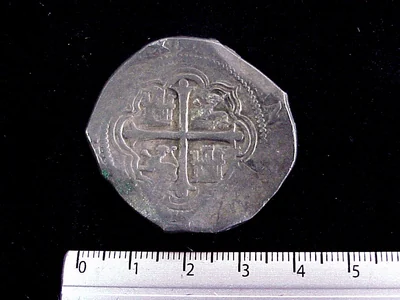
The numismatic type of the piece is a cob, also called a hammered cut coin. The planchets were cut with shears from a silver bar and struck between hand dies, so no cob has a fully round edge or shape. It circulated as a benchmark trade coin throughout the Atlantic for more than two centuries.
The Mexico mint (crowned Mo mark) operated from 1535 as the first mint in the Americas. During the 17th century it struck cobs almost without interruption, being the main point of issue of struck silver in the Spanish empire. The assayer's initials declared on the piece are A, an official of the Royal Treasury charged with certifying the fineness of the silver (0.930 and later 0.903) according to the viceregal standard.
Colonial catalogs trace this piece within the families of the Mexico Real de a ocho, with prices that respond to rarity by year and assayer signature.
The A signature appears on Felipe II cobs attributed to the Mexico mint assayer with that initial, and it serves to distinguish variants within the same king's reign.
This piece belongs to the era
Colonial / Virreinato →Explore all the Mexican coins of this era, their historical context and how they connect to the monetary system of the period.
Value range of this piece
Market estimate: $740 - $857 MXN depending on the grade of preservation (typical range between a circulated and an uncirculated piece).
See the full breakdown by grade (VG, F, VF, EF, AU, MS-60, MS-63, MS-65) for the whole series →
Same denomination, other years
8 reales Plata 0.900 · 8 Reales Coloniales
Frequently asked questions
How much is an 8 Reales of Felipe II worth?
It ranges widely. A worn or common example is worth roughly 20 to 60 USD as silver, a solid circulated coin runs about 100 to 500 USD, and a genuine high-grade or rare early type can bring several thousand USD or more at auction. Grade, exact type, and authenticity decide the number, so get valuable pieces appraised by a certified dealer.
Is the 8 Reales of Felipe II rare?
The type is historically important but not automatically rare. Millions of 8 reales were struck across the colonial period and many survive. Value comes from the specific date, mint, and assayer combination plus condition. Early, well-preserved Mexico City strikes are genuinely scarce and command strong prices; average worn examples do not.
How can I tell if my 8 Reales is genuine?
Start with the specs: it should weigh close to 26.9 grams and measure about 40 mm. Real 0.900 silver rings with a high, sustained tone when tapped, while fakes sound dull. Watch for cast seams, bubbles, or sandy texture that signal a counterfeit. For anything valuable, submit it to NGC or PCGS for certification, since these are among the most faked coins in the world.
Where can I sell an 8 Reales of Felipe II?
The safest options are a certified numismatic dealer, who will appraise it on the spot, or the Pesoteca buy/sell forum where collectors of colonial silver trade directly. For confirmed rare, high-grade pieces, major auction houses like Heritage or Stack's Bowers reach the most serious buyers. Always photograph the obverse, reverse, and edge and record the weight before selling.
Conversation
0 comments
Sources
Images for informational and educational purposes, attributed to their original source. Reference values; the real price depends on the grade, the specific variant and demand.
Loading comments…