
8 Reales Felipe II Silver Coin: Value & How to Sell
The 8 Reales Felipe II Silver Coin: Value & How to Sell is worth between $731 and $847 MXN depending on its grade of preservation.
Prices updated: August 2026
Viceroyalty · Mexico City Mint · Assayer O
Viceroyalty · Mexico City Mint · Assayer O
The 8 Reales Felipe II Silver Coin: Value & How to Sell is worth between $731 and $847 MXN depending on its grade of preservation.
Prices updated: August 2026
How much is the 8 Reales Felipe II Silver Coin: Value & How to Sell worth?
The estimated value of the 8 Reales Felipe II Silver Coin: Value & How to Sell ranges from $731 (circulated, XF) up to $847 (official blister pack), with $805 as a reference for an uncirculated (UNC) piece. The estimate is based on the official mintage and the historical behavior of the family.
The real price depends on four factors: the grade of preservation (a circulated piece is worth the low end of the range; an uncirculated one, or one still in its official blister pack, the high end), the finish (satin vs mirror/proof), the rarity within the series based on the mintage, and the metal spot price on the day of the deal when the piece is silver or gold. Check the value-by-grade table above and compare with equivalent pieces before buying or selling.
Where to buy or sell this coin?
Browse the national directory of numismatic shops or the community forum to trade directly with other collectors.
Description
Most old-looking Spanish colonial coins that turn up in a US drawer are either worn common types worth a modest premium over silver, or outright replicas. But a genuine 8 Reales struck in Mexico City under Felipe II is a real historical piece, and depending on condition it can range from around 200 USD to well over 5,000 USD. Here is what you actually have, how to tell if it is real, and where to sell it.
What this coin actually is
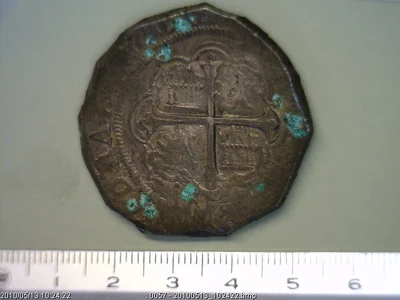
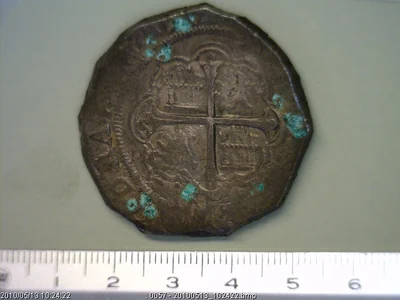
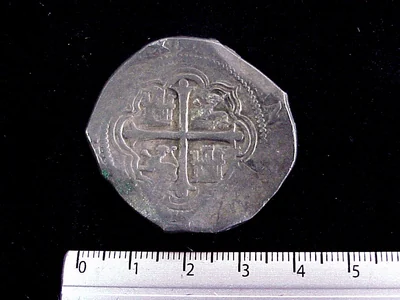
The 8 Reales was the classic "piece of eight," the silver dollar of the Spanish Empire and the direct ancestor of the US dollar. This example is attributed to the reign of Felipe II (Philip II of Spain) and was struck at the Casa de Moneda de México, the Mexico City mint, one of the earliest and most important mints in the Americas. The assayer mark is O.
If you inherited one, you are holding a piece of the colonial silver trade that funded Spain for centuries. That history is real, but history alone does not set the price. Rarity, grade, and metal content do.
Specifications (check yours against these)
A genuine piece should match these numbers closely.
| Spec | Value |
|---|---|
| Denomination | 8 Reales |
| Ruler | Felipe II |
| Mint | Mexico City (Casa de Moneda de México) |
| Assayer | O |
| Metal | Silver, .900 fine (90% silver) |
| Weight | 26.57 grams |
| Diameter | 40 mm |
| Edge | Plain (unmilled) |
| Era | Colonial / Viceroyalty |
Early hand-struck 8 Reales (often called cobs) were made by hand and can be irregular in shape, so the diameter is a guide rather than a strict measurement. The weight of about 26.57 grams and the .900 silver fineness are the reliable checkpoints. A coin far off the weight, or one that measures wrong and feels light, is a warning sign.
What it is worth in USD
There is no single price. Condition drives everything.
| Condition | Typical range (USD) |
|---|---|
| Heavily worn / circulated | roughly 100 to 300 |
| Solid circulated, clear detail | roughly 300 to 800 |
| High grade, minimal wear | roughly 800 to 3,000 |
| Certified UNC / MS (top grade) | 3,000 and up |
These are honest working ranges, not a promise on your specific coin. A genuine, cleanly struck, well-preserved colonial 8 Reales with a clear date and mint mark sits at the high end. A corroded, holed, or heavily cleaned example sits at the bottom, sometimes barely above its silver melt value.
Speaking of melt: at 26.57 grams of .900 silver, the coin contains close to 0.77 troy ounces of pure silver. That gives it a hard floor. Even a beat-up example is worth at least its silver content at the current spot price, which is why a real one is never worthless.
The myth to kill: "it's ancient, so it's worth a fortune"
Age does not equal money. Millions of 8 Reales were struck over the colonial period, and common worn examples trade for a few hundred dollars, not tens of thousands. The pieces that bring serious money are the scarce dates, the finest-known grades, and shipwreck coins with documented provenance. If a website tells you any old Spanish colonial coin is "worth millions," that is clickbait. The record prices belong to specific rarities in specific grades, not to the average inherited coin.
How to tell if yours is genuine
Replicas and modern souvenir strikes of colonial coins are everywhere, so verify before you get excited.
- Weigh it. A digital scale should read close to 26.57 grams. Well off that number is a red flag.
- Check the metal. Real ones are .900 silver. They do not stick to a magnet. A magnetic "silver" coin is a fake.
- The ping test. Genuine silver gives a long, high ringing tone when balanced on a fingertip and tapped gently. Base-metal fakes sound dull and short.
- Look at the surfaces. Cast copies show seams, bubbles, or a soft mushy strike. Hand-struck originals are irregular but have crisp design detail where present.
- Get it certified for the big ones. If your coin looks high grade or rare, submitting it to NGC or PCGS for grading and authentication is the definitive answer. Certification also raises resale value because buyers trust a sealed, graded holder.
Where to sell it (US and international)
- Established coin dealers and numismatic shops. Bring it in for an in-person appraisal. Colonial silver is a known market, so any serious dealer can quote you.
- Major auction houses (Heritage, Stack's Bowers) if the coin is high grade or rare. This is where record prices are set, and it is the right channel for anything you think might be scarce.
- The Pesoteca directory of verified numismatic shops at /tiendas, organized by city, so you avoid resellers who lowball inherited coins.
- The Pesoteca buy-and-sell forum at /foro/compra-venta, where collectors trade directly.
Before you sell anything: photograph the front, the back, and the edge in good light, and know your grade range from the table above. Never dump it to the first buyer on social media. Because this is a precious-metal coin, deal only with buyers who let you verify the weight and see the piece first.
Before you value it, grade it
The difference between "circulated" and "uncirculated" on this coin can mean a difference of thousands of dollars. Use the coin grading guide to place your piece, and compare it against the full Colonial 8 Reales series to see where yours fits.
Got one in hand and not sure what date or grade it is? Post clear photos of the obverse, reverse, and edge on the Pesoteca forum and let collectors who handle these coins weigh in before you sell.
Historical context
This piece belongs to the reign of Felipe II of Spain (1556-1598). Son of Carlos I of Spain (Charles V of the Holy Roman Empire). Under his reign the Spanish Empire reached its maximum territorial extent.
The viceregal period in which this piece was struck coincided with the administration of the Royal Audiencia of Mexico and its titular viceroys, who governed the New Spanish territory until 1821.
The numismatic type of the piece is cob (macuquina), also called hammer-struck coin. The planchets were clipped with shears from a silver bar and struck between hand dies, so no cob has a proper edge or a perfectly circular shape. It circulated as the benchmark commercial coin throughout the Atlantic for more than two centuries.
The Mexico City mint (crowned Mo mark) operated from 1535 as the first mint of the Americas. Throughout the 17th century it struck cobs almost without interruption, being the main point of issue of struck silver in the Spanish empire. The assayer initials declared on the piece are O, an official of the Royal Treasury charged with certifying the silver fineness (0.930 and later 0.903) according to the viceregal standard.
Colonial catalogs track this piece within the families of the Mexican eight-real, with prices that respond to rarity by year and assayer signature.
The O signature appears on a subset of Felipe II cobs attributed to the Mexico City mint assayer registered under that initial, a datum used by colonial catalogs to date the piece within the reign.
This piece belongs to the era
Colonial / Virreinato →Explore all the Mexican coins of this era, their historical context and how they connect to the monetary system of the period.
Value range of this piece
Market estimate: $731 - $847 MXN depending on the grade of preservation (typical range between a circulated and an uncirculated piece).
See the full breakdown by grade (VG, F, VF, EF, AU, MS-60, MS-63, MS-65) for the whole series →
Same denomination, other years
8 reales Plata 0.900 · 8 Reales Coloniales
Frequently asked questions
How much is an 8 Reales Felipe II worth?
It depends heavily on grade and condition. Worn circulated examples typically bring around 100 to 500 USD, and prices climb into the thousands for high-grade or certified UNC/MS coins. Because it is .900 silver weighing 26.57 grams, even a worn one is worth at least its silver melt value. For a firm number on your exact coin, get it appraised by a professional numismatist or dealer.
Is the 8 Reales Felipe II rare?
Millions of 8 Reales were struck across the colonial period, so common circulated examples are not rare. The value comes from scarce dates, top grades, and coins with documented shipwreck provenance. A genuine Mexico City piece attributed to Felipe II is historically significant, but rarity, and therefore high price, depends on the specific date and condition of your coin.
How can I tell if my 8 Reales Felipe II is genuine?
Weigh it: a real one is close to 26.57 grams and 40 mm. It should not stick to a magnet. Genuine silver gives a long high ring when tapped gently, while fakes sound dull and short. Watch for casting seams or bubbles that indicate a copy. For a valuable coin, certification by NGC or PCGS is the definitive confirmation of authenticity and grade.
Where can I sell my 8 Reales Felipe II?
The safest options are established coin dealers who appraise in person, and major auction houses like Heritage or Stack's Bowers for high-grade or rare pieces. You can also use the Pesoteca verified shop directory at /tiendas or the collector buy-and-sell forum at /foro/compra-venta. Photograph the front, back, and edge, know your grade range, and always let buyers verify the weight before payment.
Conversation
0 comments
Sources
Images for informational and educational purposes, attributed to their original source. Reference values; the real price depends on the grade, the specific variant and demand.
Loading comments…