
8 Reales Fernando VII 1808 (Mexico City): Value & Prices
The 8 Reales Fernando VII 1808 : Value & Prices is worth between $740 and $3,115 MXN depending on its grade of preservation.
Prices updated: August 2026
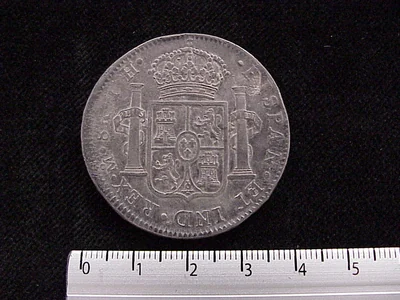
First type; armored bust; metal overlay on obverse.
First type; armored bust; metal overlay on obverse.
The 8 Reales Fernando VII 1808 : Value & Prices is worth between $740 and $3,115 MXN depending on its grade of preservation.
Prices updated: August 2026
How much is the 8 Reales Fernando VII 1808 (Mexico City): Value & Prices worth?
The estimated value of the 8 Reales Fernando VII 1808 (Mexico City): Value & Prices ranges from $740 (circulated, XF) up to $3,115 (official blister pack), with $2,251 as a reference for an uncirculated (UNC) piece. The estimate is based on the official mintage and the historical behavior of the family.
The real price depends on four factors: the grade of preservation (a circulated piece is worth the low end of the range; an uncirculated one, or one still in its official blister pack, the high end), the finish (satin vs mirror/proof), the rarity within the series based on the mintage, and the metal spot price on the day of the deal when the piece is silver or gold. Check the value-by-grade table above and compare with equivalent pieces before buying or selling.
Where to buy or sell this coin?
Browse the national directory of numismatic shops or the community forum to trade directly with other collectors.
Description
If you inherited an 1808 Mexican 8 Reales with a bust of Fernando VII, here is the honest answer: in circulated condition it is worth roughly 40 to 90 USD, mostly for its silver. Clean, high-grade examples reach a few hundred dollars, and the rare transitional "imaginary bust" varieties from that first year go higher. It is not a million-dollar rarity, but it is real silver with genuine collector demand.
What you actually have
The 8 Reales was the Spanish colonial silver dollar, the coin that circulated worldwide for centuries and even served as legal tender in the early United States. The Mexico City mint (Casa de Moneda de México) was the largest producer of these coins in the entire Spanish Empire, which is why so many survive today.
Your 1808 piece carries the portrait of Fernando VII, king of Spain, and the assayer initials TH (the official who certified the silver purity). Key specs to confirm what you have:
| Feature | Detail |
|---|---|
| Denomination | 8 Reales |
| Year | 1808 |
| Mint | Mexico City ("Mo" mint mark) |
| Assayer | TH |
| Metal | Silver, .903 fine |
| Weight | 26.88 g |
| Diameter | 40 mm |
| Edge | Incuse (decorated, not smooth) |
| Catalog reference | KM#110 |
The silver content alone gives this coin a floor value. At 26.88 g of nearly pure silver, its melt value tracks the silver spot price, currently in the 20 to 25 USD range depending on the market. No genuine 1808 8 Reales is worth less than its metal, which is why you should never sell one for a few dollars.
Why 1808 matters
1808 was a chaotic transition year. Fernando VII had just come to the throne after his father Carlos IV was forced to abdicate, and Napoleon had invaded Spain. Mexico City did not yet have an official portrait of the new king, so the mint improvised. This produced several distinct bust types in 1808:
- Carlos IV bust with Fernando VII's name. The mint kept using the old die punch of the previous king while updating the legend. Common and the least valuable of the 1808 issues.
- "Imaginary bust" (busto imaginario) of Fernando VII. An invented portrait created before Madrid sent an official likeness. These transitional busts are scarcer and command a premium.
- Armored bust, first official type. The standard portrait once the correct design arrived.
Check which bust yours shows, because it changes the value. The plain armored bust is the most common; the imaginary bust varieties draw stronger collector interest.
What it's worth in 2026
Condition drives everything above the silver floor. A worn coin with smooth details is close to melt. A sharp coin with clear luster and no cleaning marks is worth several times that.
| Grade (condition) | Approximate value (USD) |
|---|---|
| Heavily worn (Good to Fine) | 35 to 55 |
| Moderate wear (Very Fine) | 60 to 110 |
| Light wear (Extremely Fine) | 120 to 250 |
| About Uncirculated / Mint State | 300 to 800+ |
Scarce assayer or bust varieties in top grade can exceed these ranges. High-grade Spanish colonial 8 Reales routinely sell at Heritage Auctions and Stack's Bowers, and the best certified examples of the early Fernando VII issues have brought well over 1,000 USD. But that is the exception. A typical inherited 1808 in a coin jar is an honest silver coin worth double or triple digits, not a fortune.
Watch out for cleaning and counterfeits
Two things kill the value of these coins.
Cleaning. People polish old silver thinking it helps. It does the opposite. A wiped or scrubbed 8 Reales loses its original surface and can drop 30 to 50 percent in value. If yours has that unnaturally bright, hairline-scratched look, it was cleaned. Never clean a coin before selling it.
Counterfeits. Colonial 8 Reales are among the most faked coins in the world, both period contemporary counterfeits and modern replicas. Weigh yours: a genuine coin is 26.88 g. Measure the diameter: 40 mm. Check the edge, which should be incuse (a decorated pattern pressed in, not smooth and not reeded like a modern coin). Cast fakes often show a seam, wrong weight, or mushy details. When in doubt, third-party grading from NGC or PCGS settles both authenticity and value.
Where to sell it
Get a real appraisal before you accept any offer. A verified dealer in the Pesoteca shop directory can value it in person, and the Pesoteca buy-and-sell forum puts you in front of collectors who pay actual market prices. Photograph the front, back, and edge in good light before listing.
Because this is a precious-metal coin, only deal with a buyer who will show you the piece and its weight. Verify before you pay, and be suspicious of any offer far below the silver value. Avoid dumping it on social media to the first person who messages you.
If you have a whole box of inherited coins, sort them first. Compare against our guide to Mexican coin values and check whether any others are silver Mexican coins before you decide what to keep and what to sell.
Do you have an 1808 8 Reales and want to know its exact grade? Post clear photos of both sides on the Pesoteca forum and let the community weigh in.
Historical context
This piece belongs to the reign of Ferdinand VII of Spain (1808-1833). Son of Charles IV. In 1808 he was forced to abdicate to Napoleon, and he was held captive until 1814. Under his reign nearly all the American colonies were lost.
The government of New Spain in 1808 was in the hands of José de Iturrigaray, deposed in September by the so-called coup of Gabriel de Yermo.
The numismatic type of the piece is bust, introduced in 1772 under Charles III. The obverse shows the king's portrait in the neoclassical fashion and the reverse the crowned royal shield with the Order of the Golden Fleece. The edge is laureate or corded, and every example was struck on a screw press, with Latin legends spelling out the monarch's titles and dignities.
The Mexico mint had migrated to the bust pattern in 1772. Under Charles III and Charles IV the highest annual output of struck silver in the viceroyalty was recorded, feeding trade with the Philippines via the Manila Galleon and the payment of the subsidy to the Antilles. The dies were signed by the Mexico mint assayer active in the period, an official charged by the Royal Treasury with certifying that the silver fineness met the viceregal standard.
Colonial catalogs trace this piece within the families of the Mexican piece of eight, with prices that respond to rarity by year and assayer signature.
Year of the Abdications of Bayonne, when Napoleon forced Charles IV and Ferdinand VII to abdicate in favor of his brother Joseph I.
This piece belongs to the era
Colonial / Virreinato →Explore all the Mexican coins of this era, their historical context and how they connect to the monetary system of the period.
Value range of this piece
Market estimate: $740 - $3,115 MXN depending on the grade of preservation (typical range between a circulated and an uncirculated piece).
See the full breakdown by grade (VG, F, VF, EF, AU, MS-60, MS-63, MS-65) for the whole series →
Other denominations from 1808
8 Reales Coloniales · Plata 0.900
Same denomination, other years
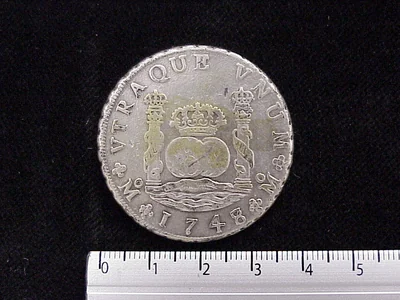
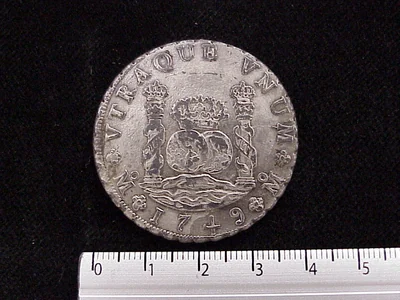
8 reales Plata 0.900 · 8 Reales Coloniales
Frequently asked questions
How much is an 1808 8 Reales Fernando VII worth?
In circulated condition, roughly 35 to 110 USD depending on wear, driven mostly by its 26.88 g of .903 silver. Sharp, uncleaned examples run 120 to 250 USD, and top Mint State or scarce bust varieties can exceed several hundred to over 1,000 USD at auction. Grade decides everything above the silver floor.
Is the 1808 8 Reales rare?
The standard armored-bust type is common because Mexico City produced these coins in huge numbers. What is scarcer is condition: high-grade uncleaned examples are hard to find. The 1808 transitional varieties, especially the "imaginary bust" of Fernando VII, are more sought after and worth a premium.
Where can I sell an 1808 8 Reales?
The safest options are a verified dealer from the [Pesoteca shop directory](/tiendas), who can appraise it on the spot, or the [Pesoteca buy-and-sell forum](/foro/compra-venta) where collectors pay market prices. Photograph the front, back, and edge, check the value range on this page first, and never sell to the first social-media offer.
How can I tell if my 1808 8 Reales is genuine?
Weigh it (26.88 g) and measure the diameter (40 mm) with a scale and caliper, then check the edge, which should be incuse rather than smooth or reeded. Colonial 8 Reales are heavily counterfeited, so look for casting seams, wrong weight, or soft details. For certainty, submit it to NGC or PCGS for grading and authentication.
Conversation
0 comments
Loading comments…