
Mexican 8 Reales (FM Assayer): Silver Value & How to Sell
The Mexican 8 Reales : Silver Value & How to Sell is worth between $670 and $775 MXN depending on its grade of preservation.
Prices updated: August 2026
Viceroyalty · Mexico City Mint · Assayer FM
Viceroyalty · Mexico City Mint · Assayer FM
The Mexican 8 Reales : Silver Value & How to Sell is worth between $670 and $775 MXN depending on its grade of preservation.
Prices updated: August 2026
How much is the Mexican 8 Reales (FM Assayer): Silver Value & How to Sell worth?
The estimated value of the Mexican 8 Reales (FM Assayer): Silver Value & How to Sell ranges from $670 (circulated, XF) up to $775 (official blister pack), with $737 as a reference for an uncirculated (UNC) piece. The estimate is based on the official mintage and the historical behavior of the family.
The real price depends on four factors: the grade of preservation (a circulated piece is worth the low end of the range; an uncirculated one, or one still in its official blister pack, the high end), the finish (satin vs mirror/proof), the rarity within the series based on the mintage, and the metal spot price on the day of the deal when the piece is silver or gold. Check the value-by-grade table above and compare with equivalent pieces before buying or selling.
Where to buy or sell this coin?
Browse the national directory of numismatic shops or the community forum to trade directly with other collectors.
Description
If you inherited a large, heavy Mexican silver coin marked "8 R" with the letters "FM," you own an 8 Reales, the workhorse silver piece of colonial Mexico and one of the most traded coins in world history. The honest answer on value: most worn examples are worth their silver, roughly 15 to 30 USD depending on the metal market. But specific dates and high grades sell into the hundreds or thousands. The date and condition decide everything.
Quick answer: is it worth money?
The 8 Reales is real 0.900 fine silver, so it has a floor. It will never be worthless. A common, circulated coin trades near its melt value. A scarce date in sharp condition, or one certified by NGC or PCGS, is where the money is. "FM" is not a mystery mark, it stands for the initials of the two assayers (the mint officials who guaranteed the silver content) who signed off on the coin at the Casa de Moneda de México, the Mexico City mint.
What you actually have
The 8 Reales was the Spanish colonial "piece of eight," the coin that circulated worldwide and was legal tender in the United States until 1857. That global demand is exactly why so many survive and why the common ones are affordable today.
Key specs to confirm you have the right coin:
| Attribute | Specification |
|---|---|
| Denomination | 8 Reales |
| Metal | Silver, 0.900 fine (90% silver) |
| Weight | 24.33 grams |
| Diameter | 39 mm |
| Mint | Casa de Moneda de México (Mexico City) |
| Assayer mark | FM |
| Era | Colonial / Viceroyalty of New Spain |
If your coin does not weigh close to 24.33 grams or measure about 39 mm, treat it as suspect. Counterfeits of this exact coin exist because it is famous and valuable.
What drives the value
Four things, in this order:
- Date and mint combination. Some years had huge production and are common. Others are genuinely scarce and command strong premiums. The year on your coin matters more than any other single factor.
- Grade (condition). A crisp, lightly worn coin can be worth many times a smooth, heavily circulated one. The conservation grading guide explains the difference between a coin worth melt and a coin worth real money.
- Certification. A coin slabbed by NGC or PCGS sells for more than a raw coin, because buyers trust the grade and the authenticity. For anything you think is scarce or high grade, certification pays for itself.
- Silver spot price. Every 8 Reales holds a bullion floor of roughly 0.70 troy ounces of pure silver. That is your guaranteed baseline no matter what.
Realistic value ranges
We avoid inventing exact prices for an unspecified date. Here is the honest picture:
- Common date, heavily worn: melt value, roughly 15 to 30 USD.
- Common date, decent circulated condition: 40 to 150 USD.
- Scarcer date or high grade, uncertified: a few hundred dollars.
- Scarce date, certified in high grade: often into the low thousands at auction.
Colonial 8 Reales in top condition, especially rare mint-and-assayer combinations, have sold for well over 1,000 USD at Heritage Auctions and Stack's Bowers. The plain, well-circulated ones that fill most inheritance boxes sit near melt.
How to tell if yours is genuine
- Weigh it. A real one is 24.33 grams. A digital jewelry scale settles most fakes instantly.
- Measure it. 39 mm diameter.
- Ping test. Genuine 0.900 silver rings with a long, high tone when balanced on a fingertip and tapped gently. Base-metal fakes give a dull, short clunk.
- Check the edge. Colonial 8 Reales have a distinctive edge design. Cast counterfeits often show a seam or a blurry edge.
- When in doubt, certify. For a coin you believe is scarce, submit it to NGC or PCGS. That removes all doubt about authenticity and grade.
Where to sell it in the US
- Reputable coin dealers who handle world and Mexican coins will make an offer on the spot. Bring the weight and, ideally, know the date.
- Auction houses (Heritage, Stack's Bowers) for anything you suspect is scarce or high grade. This is where record prices happen.
- Certified marketplaces like eBay's authenticated listings, but only sell slabbed coins there to protect yourself. Raw coins invite lowball offers and disputes.
- The Pesoteca directory to find verified numismatic shops, and the buy-and-sell forum** to reach collectors directly.
Always photograph the front, back, and edge before you sell, and check the range above so you are not talked below melt value.
This coin belongs to the Colonial 8 Reales series, one of the most collected areas in all of Mexican numismatics.
Have one in front of you and want a second opinion on the date, grade, or whether it is real? Post clear photos of both sides and the edge in the Pesoteca forum and the community will help you pin it down.
Historical context
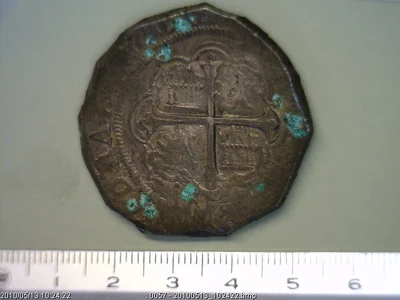
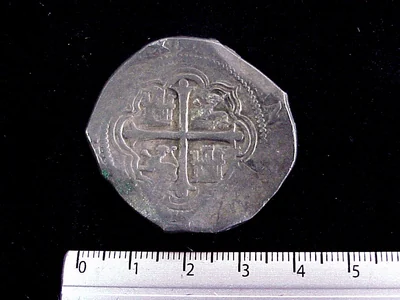
This piece is an issue of the Spanish Crown in New Spain, with the assayer initials FM declared on the planchet. The system of the silver piece of eight ran between 1535 and 1821 as the universal trade coin of the Atlantic and the Pacific.
The viceregal period in which this piece was struck coincided with the administration of the Royal Audiencia of Mexico and its titular viceroys, who governed the territory of New Spain until 1821.
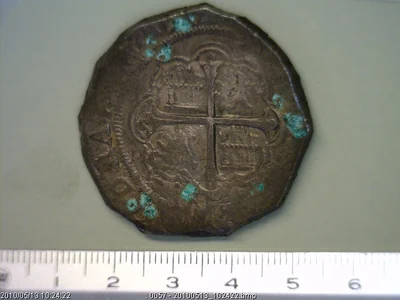
The numismatic type of the piece is cob (macuquina), also called a hammer-struck coin. The planchets were clipped with shears from a silver bar and struck between hand-held dies, so no cob has a rim or a perfectly circular shape. It circulated as a benchmark commercial coin throughout the Atlantic for more than two centuries.
The Mexico City mint (crowned Mo mint mark) operated from 1535 as the first mint in the Americas. During the 17th century it struck cobs almost without interruption, being the main point of issue of struck silver in the Spanish empire. The assayer's initials declared on the piece are FM, an official of the Royal Treasury charged with certifying the silver fineness (0.930 and later 0.903) according to the viceregal standard.
Colonial catalogs trace this piece within the families of the Mexico City piece of eight, with prices that respond to rarity by year and assayer signature.
The FM signature on the piece is the only maker's mark present and serves to distinguish it from other listings of the same type.
This piece belongs to the era
Colonial / Virreinato →Explore all the Mexican coins of this era, their historical context and how they connect to the monetary system of the period.
Value range of this piece
Market estimate: $670 - $775 MXN depending on the grade of preservation (typical range between a circulated and an uncirculated piece).
See the full breakdown by grade (VG, F, VF, EF, AU, MS-60, MS-63, MS-65) for the whole series →
Same denomination, other years
8 reales Plata 0.900 · 8 Reales Coloniales
Frequently asked questions
How much is a Mexican 8 Reales worth?
It depends almost entirely on the date and condition. A common, worn example is worth its silver, roughly 15 to 30 USD. A scarcer date or a high grade coin can reach several hundred dollars, and rare combinations certified by NGC or PCGS have sold for over 1,000 USD at auction. Every 8 Reales holds a bullion floor of about 0.70 ounces of pure silver, so it is never worthless.
Is the 8 Reales rare?
As a type, no. The 8 Reales circulated worldwide for centuries, so millions survive and common dates are affordable. Rarity is about the specific year and mint-assayer combination. Some dates are genuinely scarce and command strong premiums, while most inheritance-box examples are common. The date on your coin is what tells you which one you have.
How can I tell if my 8 Reales is genuine?
Weigh it: a real one is 24.33 grams. Measure it: 39 mm across. Do the ping test, since genuine 0.900 silver rings with a long high tone when tapped, while base-metal fakes sound dull and short. Check the edge for a seam that would indicate a cast counterfeit. For any coin you believe is scarce, submit it to NGC or PCGS to confirm authenticity and grade at once.
Where can I sell an 8 Reales in the US?
Reputable coin dealers who handle world coins will make an immediate offer. For anything scarce or high grade, use an auction house like Heritage or Stack's Bowers, where record prices happen. Sell only certified coins on online marketplaces to avoid disputes. You can also find verified shops through the Pesoteca directory or reach collectors in the buy-and-sell forum. Photograph both sides and the edge before selling.
Conversation
0 comments
Sources
Images for informational and educational purposes, attributed to their original source. Reference values; the real price depends on the grade, the specific variant and demand.
Loading comments…