
1813 Chihuahua 8 Reales Royalist: Value & How to Sell
The 1813 Chihuahua 8 Reales Royalist: Value & How to Sell is worth between $706 and $2,971 MXN depending on its grade of preservation.
Prices updated: August 2026
Independence · Chihuahua Mint · Assayer RP
Independence · Chihuahua Mint · Assayer RP
The 1813 Chihuahua 8 Reales Royalist: Value & How to Sell is worth between $706 and $2,971 MXN depending on its grade of preservation.
Prices updated: August 2026
How much is the 1813 Chihuahua 8 Reales Royalist: Value & How to Sell worth?
The estimated value of the 1813 Chihuahua 8 Reales Royalist: Value & How to Sell ranges from $706 (circulated, XF) up to $2,971 (official blister pack), with $2,147 as a reference for an uncirculated (UNC) piece. The estimate is based on the official mintage and the historical behavior of the family.
The real price depends on four factors: the grade of preservation (a circulated piece is worth the low end of the range; an uncirculated one, or one still in its official blister pack, the high end), the finish (satin vs mirror/proof), the rarity within the series based on the mintage, and the metal spot price on the day of the deal when the piece is silver or gold. Check the value-by-grade table above and compare with equivalent pieces before buying or selling.
Where to buy or sell this coin?
Browse the national directory of numismatic shops or the community forum to trade directly with other collectors.
Description
If you inherited an old, crudely struck Mexican silver dollar dated 1813 with a Chihuahua mint mark, here is the honest answer: most examples are worth from their silver value (a floor of roughly USD 18 to 22 at current spot) up to a few hundred dollars in strong condition. Rare, sharply struck pieces with clean surfaces can go higher. This is not a million-dollar coin, but it is a genuine relic of Mexico's War of Independence with a real collector market.
What you actually have
The coin is an 8 Reales Realista (Royalist 8 Reales) struck at the Chihuahua mint in 1813. "Realista" means it was issued by authorities loyal to the Spanish Crown, as opposed to the insurgent (rebel) coinage of the same war. It is cataloged as KM#123.
Hard specifications, verify yours against these:
- Metal: silver
- Weight: 25.64 grams (about 0.74 troy ounce of silver)
- Diameter: 40.14 mm
- Edge: reeded (fine ridges around the rim)
- Mint: Chihuahua, northern Mexico
- Date: 1813 only
The Chihuahua mint opened as a provisional facility in 1811 when the war cut off silver shipments to the north and coins ran short. These were struck with limited equipment, often as counterstamped or crudely die-struck pieces on local silver blanks. That is why they look rougher than coins from the Mexico City mint. Those irregularities are normal for the type, not damage, and collectors expect them.
What it is worth in 2026
Value is driven by four things: silver content (the price floor), condition (grade), how legible the design and counterstamp are, and whether the coin is authentic and problem-free. Coins with clear legends, full surfaces, and no holes or file marks bring the top numbers.
| Condition | What it looks like | Approximate value (USD) |
|---|---|---|
| Heavily worn / damaged | Holed, filed, corroded, weak detail | Silver melt, about 18 to 22 |
| Circulated, honest wear | Readable legends, no major problems | 40 to 150 |
| High grade, sharp strike | Clean surfaces, strong counterstamp | 200 to several hundred+ |
These are ranges, not quotes. War-of-Independence provisional coinage varies enormously piece to piece because each was struck by hand under emergency conditions. Two coins of the same date can be worth ten times apart based on strike and preservation. A certified example from NGC or PCGS (the two grading services collectors trust) will always sell for more than a raw coin sold on your own word alone.
The myth to ignore
Age does not equal a fortune. A coin being over 200 years old sounds impressive, but plenty of 1813 pieces exist and most are heavily circulated. If a listing screams "rare 1813 silver coin, worth thousands," treat it as marketing until a grade and a real sale price back it up. The genuine value lives in the mid-hundreds for excellent examples, not the thousands, and certainly not millions.
How to tell if yours is genuine
- Weigh it. A real one is 25.64 grams. Off by more than a fraction of a gram is a red flag.
- Measure it. 40.14 mm diameter. Cast fakes are often slightly off in size and thickness.
- Check the edge. It should be reeded, not smooth or seamed. A visible casting seam means a fake.
- The ring test. Balance the coin on a fingertip and tap it lightly. Genuine silver rings with a clear, sustained tone. Base-metal fakes give a dull, short thud.
- Get it certified. For anything you think is above average, submitting to NGC or PCGS is the only definitive proof. Certification also protects you when selling.
Be aware that counterfeits of War-of-Independence coinage do circulate, and the crude look of authentic pieces makes them easier to fake convincingly. When in doubt, verify before you buy or sell.
Where to sell it
- Certified auction houses. For a strong, certified example, Heritage Auctions and Stack's Bowers reach the collectors who pay the most for Mexican independence-era coinage.
- Coin dealers who know Mexican material. A specialist will appraise it on the spot. Get more than one opinion before accepting an offer.
- The Pesoteca community. You can post clear photos (front, back, and edge) in our buy-and-sell forum and check current asking prices among collectors, or find a vetted shop in our dealer directory.
Photograph the obverse, reverse, and edge in good light before doing anything. Do not sell to the first buyer on social media, and never ship a valuable silver coin before payment clears.
For context on related pieces, compare it with other Mexican War of Independence coins and see how silver content sets a floor for silver Mexican coins across the board.
Have a 1813 Chihuahua 8 Reales sitting in a drawer and not sure what grade it is? Post your photos in the Pesoteca forum and let collectors weigh in before you sell.
Historical context
This piece corresponds to the provincial royalist mintings issued by the Spanish army of Fernando VII during the War of Independence, when the route to the central Mexico mint was cut off.
The government of New Spain in 1813 was in the hands of Felix Maria Calleja del Rey, a veteran royalist commander, now at the head of the viceroyalty.
The piece belongs to the provincial royalist mintings issued by the Spanish army during the War of Independence. Faced with the interruption of the silver supply to the Mexico mint, the Crown authorized temporary mints in Chihuahua, Zacatecas, Guadalajara, Durango, Guanajuato, and Nueva Vizcaya, all operating with rustic technique under the command of royalist commanders.
The declared minting origin is: provincial royalist mints of Chihuahua. The initials RP identify the assayer or the commander who authorized the issue. In the context of the War of Independence the signature served both to certify the metal and to claim the political legitimacy of the provisional mint.
The Krause catalog references this piece under KM#123, useful for matching the listing with international auction records.
The year of the Congress of Chilpancingo convened by Morelos, which issued the Sentiments of the Nation.
This piece belongs to the era
Colonial / Virreinato →Explore all the Mexican coins of this era, their historical context and how they connect to the monetary system of the period.
Value range of this piece
Market estimate: $706 - $2,971 MXN depending on the grade of preservation (typical range between a circulated and an uncirculated piece).
See the full breakdown by grade (VG, F, VF, EF, AU, MS-60, MS-63, MS-65) for the whole series →
Other denominations from 1813
8 Reales Coloniales · Plata 0.900
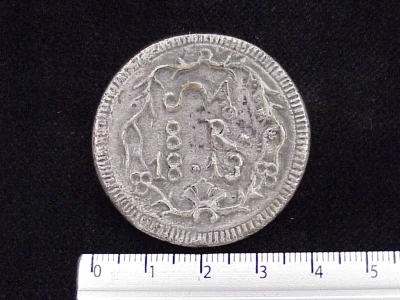
Same denomination, other years
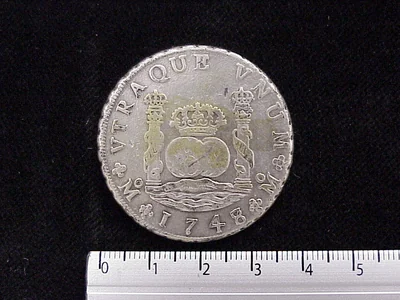
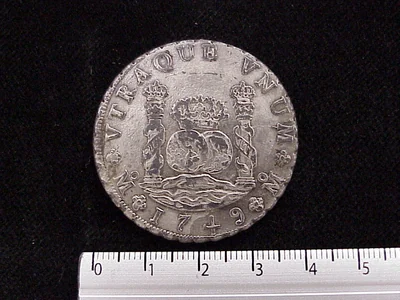
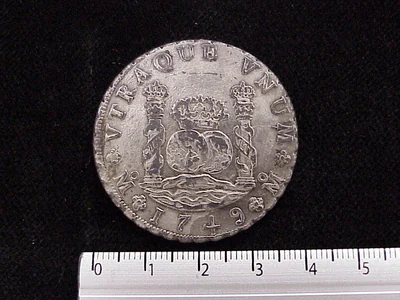
8 reales Plata 0.900 · 8 Reales Coloniales
Frequently asked questions
How much is an 1813 Chihuahua 8 Reales worth?
It ranges from silver melt value (a floor of about USD 18 to 22 at current spot) for worn or damaged pieces, up to 40 to 150 dollars for honest circulated examples, and several hundred dollars or more for high-grade, sharply struck coins. A certified NGC or PCGS example always sells for more than a raw coin.
Is the 1813 Chihuahua 8 Reales rare?
It is a scarce War of Independence provisional issue, but not a museum rarity. Many examples exist and most are heavily circulated. Value comes from condition and strike quality far more than from the date, since each coin was struck by hand under emergency conditions and quality varies widely.
How do I tell if my 1813 8 Reales is genuine?
It should weigh 25.64 grams, measure 40.14 mm, and have a reeded edge with no casting seam. Genuine silver gives a clear, sustained ring when tapped; fakes sound dull and short. For any coin you believe is above average, certification by NGC or PCGS is the only definitive proof and protects you when selling.
Where can I sell an 1813 Chihuahua 8 Reales?
For a strong certified example, Heritage Auctions or Stack's Bowers reach serious buyers of Mexican independence coinage. Locally, use a coin dealer who knows Mexican material for an on-the-spot appraisal. You can also post photos in the Pesoteca buy-and-sell forum or find a vetted shop in our dealer directory. Always show weight and edge photos, and verify before payment.
Conversation
0 comments
Sources
Images for informational and educational purposes, attributed to their original source. Reference values; the real price depends on the grade, the specific variant and demand.
Loading comments…