
1809 Mexican 8 Reales with Countermarks: Value Guide
The 1809 Mexican 8 Reales with Countermarks: Value Guide is worth between $723 and $3,045 MXN depending on its grade of preservation.
Prices updated: August 2026
Independence · Mexico City Mint · Assayer HJ
Independence · Mexico City Mint · Assayer HJ
The 1809 Mexican 8 Reales with Countermarks: Value Guide is worth between $723 and $3,045 MXN depending on its grade of preservation.
Prices updated: August 2026
How much is the 1809 Mexican 8 Reales with Countermarks: Value Guide worth?
The estimated value of the 1809 Mexican 8 Reales with Countermarks: Value Guide ranges from $723 (circulated, XF) up to $3,045 (official blister pack), with $2,201 as a reference for an uncirculated (UNC) piece. The estimate is based on the official mintage and the historical behavior of the family.
The real price depends on four factors: the grade of preservation (a circulated piece is worth the low end of the range; an uncirculated one, or one still in its official blister pack, the high end), the finish (satin vs mirror/proof), the rarity within the series based on the mintage, and the metal spot price on the day of the deal when the piece is silver or gold. Check the value-by-grade table above and compare with equivalent pieces before buying or selling.
Where to buy or sell this coin?
Browse the national directory of numismatic shops or the community forum to trade directly with other collectors.
Description
If you inherited an old, heavy silver Mexican coin marked "8 R" from 1809, here is the honest answer first: at minimum it is worth its silver melt value, roughly 20 to 25 US dollars in today's silver market, and often a good deal more. A clean, genuine 1809 8 Reales with legitimate countermarks can bring 100 to 500 dollars or more depending on grade and which marks it carries. This is not a coin worth a fortune by default, but it is real silver with real collector demand, and it has a story stamped into the metal.
What you actually have
This is an 8 Reales (eight reales), the classic large silver coin of Spanish colonial Mexico, back when the country was the Viceroyalty of New Spain (Nueva España) under the Spanish Crown. The 8 Reales is the direct ancestor of the US silver dollar and the famous "pieces of eight" from pirate lore. It circulated worldwide as trade silver.
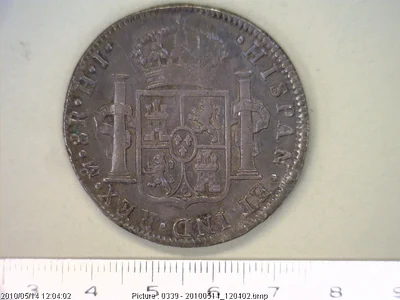
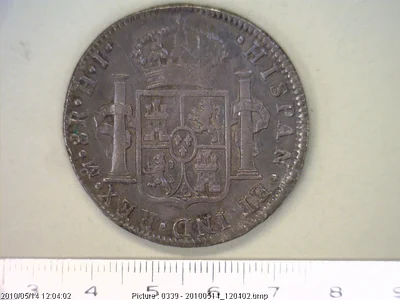
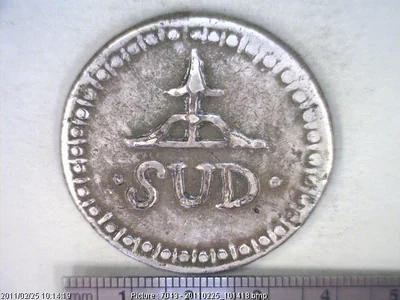
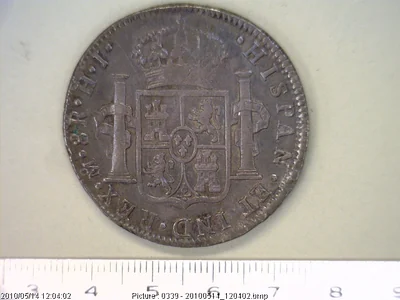
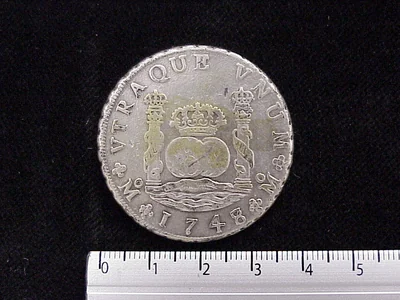
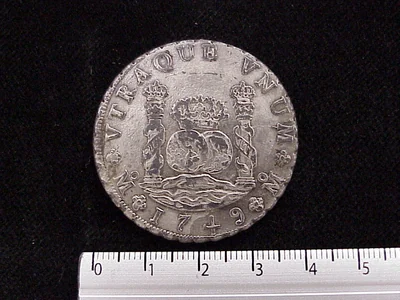
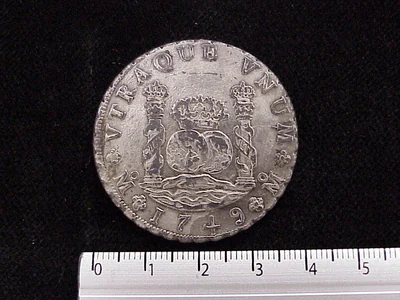
Your specific piece is the 1809 issue, struck at the Mexico City mint (ceca de México) under assayer initials HJ. The countermarks or resellos are small stamps punched into the coin after it left the mint. Various governments and authorities applied these marks to authorize or revalidate the coin for local circulation in other regions and countries. A single 8 Reales could travel the globe and pick up several countermarks over its life.
Hard specs (check yours against these)
| Feature | Specification |
|---|---|
| Denomination | 8 Reales |
| Year | 1809 |
| Metal | Silver, .900 fine (90% silver) |
| Weight | 26.28 grams |
| Diameter | 38 mm |
| Edge | Plain (canto liso) |
| Mint | Mexico City (ceca de México) |
| Assayer | HJ |
If your coin does not weigh close to 26.28 grams and measure about 38 mm, be suspicious. Counterfeits of colonial 8 Reales exist and often miss the weight.
What drives the value
Three things decide what a countermarked 1809 8 Reales is worth:
- The base coin's condition. A worn but genuine 8 Reales trades near its silver value. A sharp, well-detailed example commands a premium above melt.
- The countermarks themselves. This is the big variable. Some resellos are common and add little. Others, tied to a specific country or a short-lived authority, are genuinely scarce and can multiply the price. Countermarks from certain Asian, Caribbean, or Latin American issuers are collected as their own specialty.
- Authentication. A raw coin sells for less than the same coin certified. Because both the base coin and the countermarks can be faked, certification matters here more than usual.
Most countermarked 8 Reales from this era realistically sell in the 100 to 500 US dollar range. Pieces with rare, verified countermarks can reach four figures at auction. Pieces with worn or questionable marks fall back toward silver value.
The melt-value floor
At 26.28 grams of .900 silver, this coin holds about 0.76 troy ounces of pure silver. That gives it a hard floor tied to the international spot price. Even a beat-up example with no collector interest is worth its metal, and you will always find a buyer for silver. This floor is why 8 Reales are considered a safe entry point: the downside is limited to the silver market.
The myth to avoid
A lot of sellers online claim any old colonial coin is "worth thousands." It is not true by default. Age alone does not make a coin valuable. Millions of 8 Reales were struck across decades. What separates a 25-dollar coin from a 2,000-dollar coin is the specific countermark, the grade, and proof that both are genuine. Do not let a listing convince you that a common, worn piece is a rarity.
Be just as skeptical of "error" claims. Genuine mint errors (off-center strikes, die rotations, doubling) can add value, but most "errors" floating around are post-mint damage: dings, corrosion, and scratches. Those lower value, they do not raise it.
How to tell if yours is genuine
- Weigh and measure it. 26.28 g and 38 mm are your baselines. A cheap digital scale settles most fakes instantly.
- The ping test. Balanced on a fingertip and tapped, real .900 silver rings with a clear, sustained high tone. Fakes and base-metal copies sound dull and short.
- Examine the countermarks under magnification. Genuine resellos show tooling consistent with the metal and often disturb the surrounding field. Modern fakes tend to look too clean or float on top of the surface.
- Get it certified for anything valuable. NGC and PCGS are the two grading services US and international buyers trust. Certification authenticates both the coin and the countermark and locks in a grade, which is exactly what serious buyers pay a premium for.
Where to sell it
For a coin like this, your options in order of safety and price:
- A reputable coin dealer or numismatic shop. They appraise on the spot and pay fairly for genuine silver. You can find verified sellers in the Pesoteca shop directory.
- The Pesoteca buy/sell forum, where collectors who actually know colonial countermarks trade directly.
- Established auction houses for high-grade or rare-countermark pieces. This is where certified examples reach their top prices.
- Online marketplaces as a last resort. Prices can be good, but this is also where the most fakes circulate. Always photograph the obverse, reverse, and edge, and share the exact weight with any buyer.
Before you sell, photograph the coin front, back, and edge, and match your grade against the ranges above so you know what a fair offer looks like.
Related pages worth a look
This piece belongs to the 8 Reales Coloniales series. To see how it fits the broader period, browse the Colonial / Viceroyalty era, other Mexican 8 Reales, and more coins dated 1809.
Have one with an unusual countermark you cannot identify? Post clear photos in the Pesoteca forum and let collectors who specialize in resellos tell you what you are holding.
Historical context
This piece belongs to the category of counterstamps and countermarks applied over already-struck pieces of eight, a practice used by both insurgents and royalists during the War of Independence.
The government of New Spain in 1809 was in the hands of Pedro de Garibay and then Francisco Javier de Lizana y Beaumont, interim governments during the dynastic crisis.
The piece belongs to the category of counterstamps and countermarks, punches applied over already-struck pieces of eight to officially revalidate them, move them to another jurisdiction or mark them with an insurgent or royalist symbol. Each counterstamp carries a political reading: the crowned M of Morelos, the Zongolica seal, the M.V.A. and other families documented by colonial catalogs.
The declared minting origin is: counterstamp over a previously struck piece of eight. The initials HJ that accompany the counterstamp identify the official or the commander who authorized the remarking over the previous piece.
The Krause catalog references this piece under KM#202.3, useful for cross-checking the listing with international auction listings.
Provisional year of issue during the dynastic crisis, with the Mexico mint continuing its work under interim authorities.
This piece belongs to the era
Colonial / Virreinato →Explore all the Mexican coins of this era, their historical context and how they connect to the monetary system of the period.
Value range of this piece
Market estimate: $723 - $3,045 MXN depending on the grade of preservation (typical range between a circulated and an uncirculated piece).
See the full breakdown by grade (VG, F, VF, EF, AU, MS-60, MS-63, MS-65) for the whole series →
Other denominations from 1809
8 Reales Coloniales · Plata 0.900
Same denomination, other years
8 reales Plata 0.900 · 8 Reales Coloniales
Frequently asked questions
How much is an 1809 8 Reales with countermarks worth?
Most genuine examples sell for 100 to 500 US dollars depending on grade and which countermarks they carry. The floor is silver melt value, roughly 20 to 25 dollars for the 0.76 troy ounces of .900 silver in the coin. Pieces with rare, verified countermarks in high grade can reach four figures at auction. Certified coins always sell for more than raw ones.
Is the 1809 8 Reales rare?
The base coin is not rare on its own, since large numbers of 8 Reales circulated worldwide. What can be rare is the specific countermark. Common resellos add little value, while marks from certain short-lived authorities or foreign issuers are genuinely scarce and can multiply the price. Have the countermark identified before assuming your coin is common.
How can I tell if my 1809 8 Reales is genuine?
Start with weight and size: it should weigh 26.28 grams and measure 38 mm. Real .900 silver produces a clear, sustained high ring when balanced on a fingertip and tapped; fakes sound dull and short. Examine the countermarks under magnification for authentic tooling. For anything of value, submit it to NGC or PCGS, which authenticate both the coin and the countermark.
Where can I sell an 1809 8 Reales with countermarks?
The safest options are a verified dealer from the Pesoteca shop directory or the Pesoteca buy/sell forum, where collectors who know colonial countermarks trade directly. For high-grade or rare-countermark pieces, an established auction house reaches top prices. Always photograph the obverse, reverse, and edge, and share the exact weight with buyers.
Conversation
0 comments
Sources
Images for informational and educational purposes, attributed to their original source. Reference values; the real price depends on the grade, the specific variant and demand.
Loading comments…