
1821 Chihuahua 8 Reales With Counterstamps: Value & How to Sell
The 1821 Chihuahua 8 Reales With Counterstamps: Value & How to Sell is worth between $696 and $1,832 MXN depending on its grade of preservation.
Prices updated: August 2026
Independence · Chihuahua Mint · Assayer RP
Independence · Chihuahua Mint · Assayer RP
The 1821 Chihuahua 8 Reales With Counterstamps: Value & How to Sell is worth between $696 and $1,832 MXN depending on its grade of preservation.
Prices updated: August 2026
How much is the 1821 Chihuahua 8 Reales With Counterstamps: Value & How to Sell worth?
The estimated value of the 1821 Chihuahua 8 Reales With Counterstamps: Value & How to Sell ranges from $696 (circulated, XF) up to $1,832 (official blister pack), with $1,419 as a reference for an uncirculated (UNC) piece. The estimate is based on the official mintage and the historical behavior of the family.
The real price depends on four factors: the grade of preservation (a circulated piece is worth the low end of the range; an uncirculated one, or one still in its official blister pack, the high end), the finish (satin vs mirror/proof), the rarity within the series based on the mintage, and the metal spot price on the day of the deal when the piece is silver or gold. Check the value-by-grade table above and compare with equivalent pieces before buying or selling.
Where to buy or sell this coin?
Browse the national directory of numismatic shops or the community forum to trade directly with other collectors.
Description
Most people who inherit an old Mexican silver coin assume it is worth a fortune. Usually it isn't. But the 1821 Chihuahua 8 reales is one of the more interesting exceptions, because it was struck during the chaotic final year of the War of Independence, often with counterstamps and countermarks that can add real money. In 2026, a genuine circulated example typically runs from about USD 40 to several hundred, and certified high grades push well past that.
What you actually have
The "8 reales" was the Spanish colonial silver dollar, the coin that circulated worldwide and became the model for the US dollar. This particular piece was struck in 1821 at the Casa de Moneda de Chihuahua (the Chihuahua Mint), in northern Mexico, with assayer initials RP. It belongs to the transition into the short-lived First Mexican Empire, which is why 1821 pieces from this mint carry historical weight beyond plain silver value.
The hard specs, keep these to check authenticity:
- Weight: 25.3 grams
- Diameter: 40 mm
- Metal: .900 fine silver (roughly 0.732 troy oz of pure silver)
- Edge: plain
- Mint: Chihuahua
- Assayer: RP
Because it is 90% silver, this coin has a floor value equal to its melt value. Even the most worn, damaged example is worth its silver content, so it can never be "worthless." That silver floor moves with the spot price of silver.
About the counterstamps
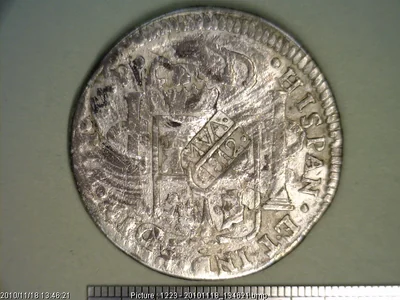
Many Chihuahua 1821 pieces show counterstamps and countermarks: small punched symbols added after the coin was struck, often to validate the coin for circulation in a particular region during the political turmoil of independence. Genuine, documented counterstamps can raise the price above a plain example. Random gouges, initials scratched by a former owner, or corrosion are not counterstamps and do not add value. The difference matters a lot, and it is exactly the kind of thing certification services flag.
What it's worth in 2026
Grade drives everything here. Two coins from the same year and mint can differ by 10x based on wear and eye appeal.
| Condition | Approximate value (USD) |
|---|---|
| Heavily worn / damaged | melt value (silver floor), roughly USD 20 to 30 |
| Circulated, honest wear | USD 40 to 150 |
| Lightly circulated, sharp detail | USD 150 to 400 |
| Uncirculated / MS certified | several hundred to low thousands |
| Rare documented counterstamp, high grade | premium above the above ranges |
These are working ranges, not fixed quotes. Chihuahua's independence-era coinage was struck under improvised conditions, so quality varies wildly and each coin is judged on its own. For a piece you think is high grade, the smart move is professional grading before you sell.
The myth to kill
Because it's old (over 200 years) and silver, sellers online sometimes tag these at thousands of dollars regardless of condition. A worn, cleaned, or damaged example is a common-to-scarce circulated coin worth double digits, not a five-figure rarity. Age alone does not make a coin valuable. What drives real premium here is grade, original surfaces, and a genuine documented counterstamp, in that order.
How to check if yours is genuine
Counterfeits of colonial 8 reales exist, so verify before you celebrate:
- Weigh it. It should be 25.3 grams. Off by more than a fraction of a gram and something is wrong.
- Measure it. 40 mm diameter.
- The ping test. Real .900 silver rings with a high, sustained tone when you balance it on a fingertip and tap it gently. Fakes and base-metal copies sound dull and short.
- Check the edge. It should be plain, no seams or casting lines.
- Get it certified. For any coin you believe is worth more than about USD 100, submission to NGC or PCGS is the definitive answer. They authenticate, grade, and seal the coin, which also makes it far easier to sell at full value.
See our conservation grading guide to figure out roughly where your coin falls before you spend on certification.
Where to sell
You have a US-relevant colonial silver coin, so you have real options:
- US auction houses (Heritage Auctions, Stack's Bowers) for certified, higher-grade or counterstamped examples. This is where world coins reach the strongest prices.
- Verified numismatic dealers from the Pesoteca shop directory, who can value it on the spot.
- The Pesoteca buy/sell forum](/foro/compra-venta) to sell directly to collectors who know exactly what this piece is.
Whatever route you pick, photograph the obverse, reverse, and edge clearly, and never ship or hand over a silver coin before the buyer has shown you a real weight and price. If you're unsure whether a mark on your coin is a genuine counterstamp or just damage, post clear photos in the Pesoteca forum and let collectors who handle these weigh in before you set a price.
Got an 1821 Chihuahua 8 reales in a drawer? What do the counterstamps on yours look like, and have you weighed it yet?
Historical context
This piece belongs to the category of countermarks and counterstamps applied over already-struck reales de a ocho, a practice used by both insurgents and royalists during the War of Independence.
The government of New Spain in 1821 was under Juan O'Donojú, the last superior political chief of New Spain, signatory of the Treaty of Córdoba.
The piece belongs to the category of countermarks and counterstamps, punches applied over already-struck reales de a ocho to officially revalidate them, move them to another jurisdiction, or mark them with an insurgent or royalist symbol. Each countermark carries a political reading: the crowned M of Morelos, the Zongolica seal, the M.V.A. and other families documented by colonial catalogs.
The declared minting origin is: countermark applied in Chihuahua over a previously struck real de a ocho. The initials RP accompanying the countermark identify the official or commander who authorized the remarking over the earlier piece.
The Krause catalog references this piece under KM#201, useful for matching the entry against international auction listings.
The year of the consummation of Independence and the entry of the Army of the Three Guarantees into Mexico City.
This piece belongs to the era
Primer Imperio Mexicano →Explore all the Mexican coins of this era, their historical context and how they connect to the monetary system of the period.
Value range of this piece
Market estimate: $696 - $1,832 MXN depending on the grade of preservation (typical range between a circulated and an uncirculated piece).
See the full breakdown by grade (VG, F, VF, EF, AU, MS-60, MS-63, MS-65) for the whole series →
Other denominations from 1821
8 Reales Coloniales · Plata 0.900
Same denomination, other years
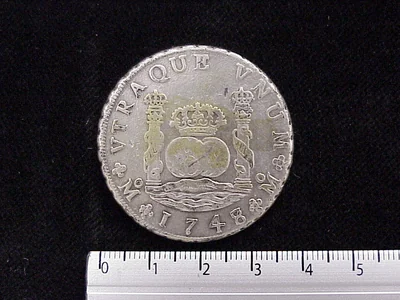
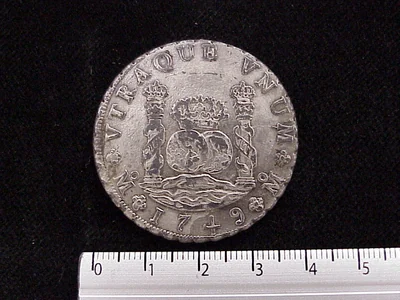
8 reales Plata 0.900 · 8 Reales Coloniales
Frequently asked questions
How much is an 1821 Chihuahua 8 reales worth?
It depends heavily on condition. A heavily worn example is worth its silver content (roughly USD 20 to 30), an honestly circulated coin runs about USD 40 to 150, and sharper examples reach USD 150 to 400. Certified uncirculated pieces or coins with a genuine documented counterstamp can bring several hundred to over a thousand dollars. Have a high-grade piece appraised or certified before selling.
How can I tell if my 1821 8 reales is genuine?
It should weigh 25.3 grams and measure 40 mm in diameter, with a plain edge. Try the ping test: real .900 silver rings with a high, sustained tone when tapped gently on a fingertip, while fakes sound dull and short. For anything you think is valuable, certification by NGC or PCGS is the definitive proof of authenticity and grade.
Are the counterstamps on my coin worth extra money?
A genuine, documented counterstamp (a small symbol punched into the coin during the independence era to validate it for circulation) can raise the value above a plain example. But most marks people ask about are just old scratches, initials, or corrosion, which add nothing. NGC or PCGS can confirm whether a counterstamp is authentic, and it's worth verifying before you price the coin.
Where's the best place to sell an 1821 Chihuahua 8 reales?
For certified or high-grade pieces, US auction houses like Heritage or Stack's Bowers get the strongest prices for world coins. For everything else, use a verified dealer from the Pesoteca directory or sell directly to collectors in the Pesoteca buy/sell forum. Photograph the obverse, reverse, and edge, and confirm weight and price with any buyer before handing over the coin.
Conversation
0 comments
Sources
Images for informational and educational purposes, attributed to their original source. Reference values; the real price depends on the grade, the specific variant and demand.
Loading comments…