
8 Reales Culiacán 1888 (Resplandor): Value & Silver Content
The 8 Reales Culiacán 1888 : Value & Silver Content is worth between $745 and $1,961 MXN depending on its grade of preservation.
Prices updated: August 2026
Strong silver peso .9028, Culiacán Mint, struck in 1888.
Strong silver peso .9028, Culiacán Mint, struck in 1888.
Design
Banxico
Reverse
Reverse with a facing republican eagle devouring a serpent atop a nopal cactus, legend "REPÚBLICA MEXICANA". Piece attributed to the Culiacan mint, 1888.
Obverse
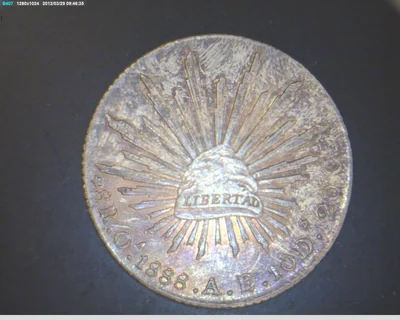
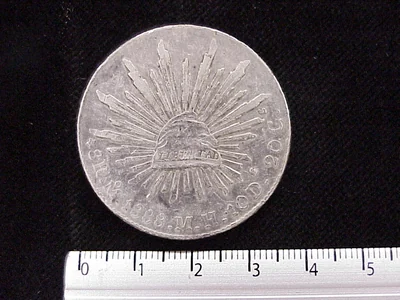
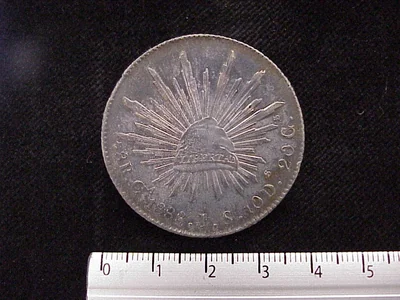
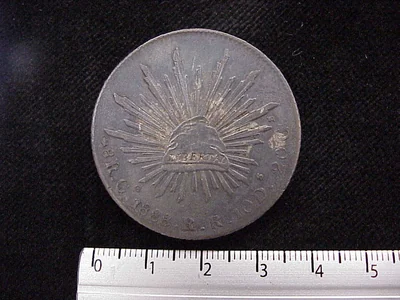
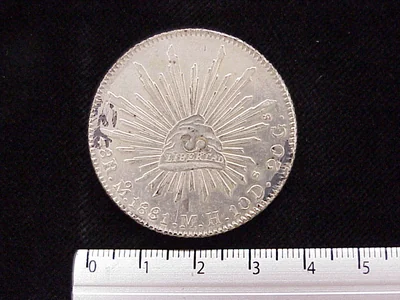
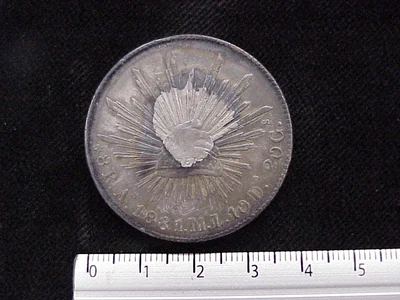
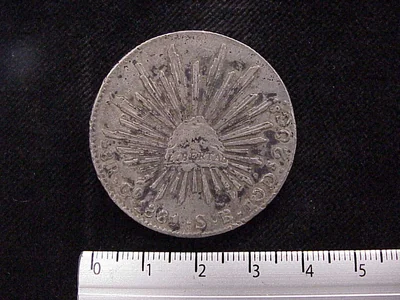
Obverse with a Phrygian cap over solar rays (resplandor) and the legend "LIBERTAD". Struck in .9028 silver per the republican octaval standard in force until the 1905 monetary reform.
The 8 Reales Culiacán 1888 : Value & Silver Content is worth between $745 and $1,961 MXN depending on its grade of preservation.
Prices updated: August 2026
How much is the 8 Reales Culiacán 1888 (Resplandor): Value & Silver Content worth?
The estimated value of the 8 Reales Culiacán 1888 (Resplandor): Value & Silver Content ranges from $745 (circulated, XF) up to $1,961 (official blister pack), with $1,519 as a reference for an uncirculated (UNC) piece. The estimate is based on the official mintage and the historical behavior of the family.
The real price depends on four factors: the grade of preservation (a circulated piece is worth the low end of the range; an uncirculated one, or one still in its official blister pack, the high end), the finish (satin vs mirror/proof), the rarity within the series based on the mintage, and the metal spot price on the day of the deal when the piece is silver or gold. Check the value-by-grade table above and compare with equivalent pieces before buying or selling.
Where to buy or sell this coin?
Browse the national directory of numismatic shops or the community forum to trade directly with other collectors.
Price today
How much is the gold in a Centenario worth?
The Centenario is Mexico's main gold investment piece. Its price follows the gold spot in USD adjusted for MXN.
Description
If you inherited or found an 1888 Mexican 8 Reales with a sunburst and a cap on one side and an eagle eating a snake on the other, you have a real silver coin with a built-in floor value. It is 90 percent silver, so even a worn example is worth more than melt, and clean, high-grade pieces sell for a solid premium. Here is what it actually is and what yours is worth in 2026.
Quick answer: what it's worth
The 1888 8 Reales from the Culiacán mint is a bullion-driven coin with collector upside. Because it contains about 24.4 grams of pure silver (27.07 grams total at .900 fineness), it carries a metal floor that tracks the silver spot price. In circulated condition most examples trade for a modest premium over that silver value. Sharp, high-grade coins pull well above melt, and certified problem-free pieces are where the real money is.
- Worn / circulated: roughly the silver melt value plus a small premium.
- Clean, lightly circulated: a moderate premium over silver.
- High grade / uncirculated: a strong multiple of melt, especially if certified by NGC or PCGS.
The exact figure moves with the silver spot price on the day you sell. Weigh yours and check the current price of silver to get your own floor before you take any offer.
What this coin actually is
The "8 Reales" was Mexico's standard silver dollar-sized coin for centuries, the ancestor of the famous Spanish colonial "pieces of eight." This 1888 version is from the Mexican Republic era (República Restaurada and Porfiriato period). Collectors nickname the design the Resplandor, Spanish for "radiance" or "sunburst," because of the rays of light on the front.
- Obverse (front): a Phrygian cap (a liberty cap) over a burst of solar rays, with the word LIBERTAD ("liberty").
- Reverse (back): the Mexican eagle facing forward, perched on a cactus, eating a snake, with the legend REPÚBLICA MEXICANA.
The Culiacán mint (in the state of Sinaloa) struck this piece. Mint marks matter: the same year and design from different mints can carry different premiums, so the Culiacán origin is part of what identifies your exact coin.
Technical specifications
| Spec | Detail |
|---|---|
| Denomination | 8 Reales |
| Year | 1888 |
| Mint | Culiacán (Sinaloa) |
| Metal | Silver .900 (90 percent) |
| Total weight | 27.07 grams |
| Pure silver content | approx. 24.4 grams |
| Diameter | 39 mm |
| Edge | reeded |
This series ran under the Republic's eight-reales standard until the 1905 monetary reform replaced it. That makes 1888 a genuine 19th-century circulating silver coin, not a modern restrike.
Why grade drives the price
The silver sets the floor, but condition sets the ceiling. A coin that spent decades in circulation shows flat high points, scratches and rim dings, and it sells close to melt. A coin with full detail, original luster and no cleaning can be worth several times as much to a collector. Cleaning a coin (polishing it to look "shiny") destroys value, so do not clean yours.
Before you sell, compare your coin against the coin grading guide to place it in the right condition range.
What people get wrong
"It's over 130 years old, so it must be worth a fortune." Age alone does not make a coin valuable. Millions of 8 Reales were struck across Mexican mints, so most circulated examples are common. What raises value is a scarce mint-and-year combination, a high certified grade, or a genuine, verifiable minting error. The everyday driver here is simply the silver content plus a collector premium.
Be cautious with "error" claims online. Most of the marks people call errors (off-center bumps, doubling, gouges) are post-mint damage or corrosion, not factory errors. A true off-center strike, die rotation or double strike, verified by a grader, can multiply the value. If you think you have one, post clear photos to the Pesoteca forum for a second opinion.
How to tell if yours is genuine
Silver coins of this size are counterfeited, so verify before you buy or sell:
- Weigh it on a jewelry scale. It should be close to 27.07 grams. A fake in the wrong alloy usually misses the weight.
- Measure the diameter with calipers. It should be 39 mm.
- Check the edge: it should be reeded (fine vertical ridges).
- Study the engraving, mint mark and assayer initials. Soft, mushy detail is a red flag for a cast copy.
- Distrust any offer far below the silver value. If someone lowballs you well under melt, they are either doubting authenticity or hoping you don't know the metal content.
When in doubt, get it certified by NGC or PCGS. A certified coin sells faster and for more, because the buyer trusts it.
Where to sell it
To sell an 1888 Culiacán 8 Reales safely, use a verified coin shop from the Pesoteca directory, which can appraise it on the spot, or the collector buy-and-sell forum where you deal with people who know the series. Photograph the obverse, reverse and edge, and check the value range on this page before you accept anything. Do not dump it to the first bidder on social media.
Because this is a precious-metal coin, only deal with a buyer who inspects and weighs the piece in front of you and pays a fair premium over the silver spot price.
Think you have one, or unsure about the mint mark and grade? Post your photos in the Pesoteca forum and let collectors help you pin down what it's really worth.
Historical context
In 1888 Porfirio Diaz was governing in his second consecutive term. Years of railroad expansion (Mexico City-Ciudad Juarez, Mexico City-Laredo) and of consolidation of foreign capital in mining and industry.
The Culiacan mint (Cn) was established in 1846 to strike silver from the Rosario and Cosala mines. It was one of the last to close (1905), by then under the gold standard of the late Porfiriato.
Cn pieces are in demand in the northwestern numismatic market. Late mintages (1896-1897) are scarcer.
For catalog reference, this mint's variant is listed as KM#377.3 in Krause. The piece is silver of .9028 fineness with a reeded edge and a theoretical weight of 27.07 grams. The 1888 example from Culiacan, Sinaloa corresponds to the mint's middle phase (1846-1905) and is identified on the coin by the Cn mint mark.
In the Mexican numismatic market the Cn-1888 radiance peso appears regularly at auction and central-region flea markets. When hunting it down, it's worth verifying a clean reeded edge, with no trimming, and that the Cn mint mark is sharp. Before paying a middleman premium, check the reference range by grade in public catalogs and on the Pesoteca forum; many examples from this decade (1880s) can be had at par price without speculative intermediaries.
This piece belongs to the era
República Restaurada y Porfiriato →Explore all the Mexican coins of this era, their historical context and how they connect to the monetary system of the period.
Value range of this piece
Market estimate: $745 - $1,961 MXN depending on the grade of preservation (typical range between a circulated and an uncirculated piece).
See the full breakdown by grade (VG, F, VF, EF, AU, MS-60, MS-63, MS-65) for the whole series →
Other denominations from 1888
8 Reales Republicanos (Resplandor) · Plata 0.900
Same denomination, other years
8 reales Plata 0.900 · 8 Reales Republicanos (Resplandor)
Frequently asked questions
How much is an 1888 Culiacan 8 Reales worth?
It contains about 24.4 grams of pure silver, so it has a metal floor that tracks the silver spot price. Worn examples sell near that melt value plus a small premium; clean, high-grade or certified coins bring several times more. Weigh yours and check the current silver price to set your floor before selling.
Is the 1888 8 Reales Resplandor rare?
Not particularly in circulated grades, since millions of 8 Reales were struck across Mexican mints. Value comes mainly from the 90 percent silver content plus a collector premium. Scarcity and big premiums show up in high certified grades or with a genuine, verified minting error, not from age alone.
Where can I sell my 1888 Culiacan silver coin?
The safest options are a verified coin shop from the Pesoteca directory, which appraises it on the spot, or the Pesoteca collector buy-and-sell forum. Photograph the front, back and edge, and only deal with a buyer who weighs the coin in front of you and pays a fair premium over silver spot.
How do I know if my 8 Reales is genuine?
Weigh it (should be about 27.07 grams) and measure the diameter (39 mm) against the specs on this page. Confirm the edge is reeded and that the engraving, mint mark and assayer initials are crisp. Soft detail suggests a cast fake, and any offer far below the silver value is a warning sign.
Conversation
0 comments
Sources
- Ejemplar de la Coleccion Numismatica Banco de Mexico . inv. 6053
- Ejemplar de la Coleccion Numismatica Banco de Mexico . inv. 6055
- Ejemplar de la Coleccion Numismatica Banco de Mexico . inv. 6054
- Ejemplar de la Coleccion Numismatica Banco de Mexico . inv. 6056
Images for informational and educational purposes, attributed to their original source. Reference values; the real price depends on the grade, the specific variant and demand.
Loading comments…