
8 Reales Durango 1881 (Resplandor): Value & Prices
The 8 Reales Durango 1881 : Value & Prices is worth between $745 and $1,961 MXN depending on its grade of preservation.
Prices updated: August 2026
Strong silver peso .9028, Durango Mint, struck in 1881.
Strong silver peso .9028, Durango Mint, struck in 1881.
Design
Banxico
Reverse
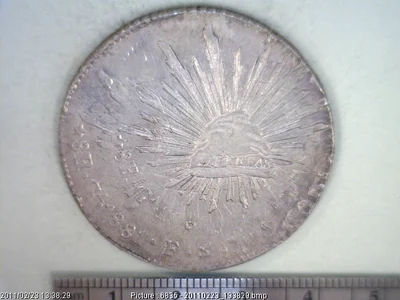
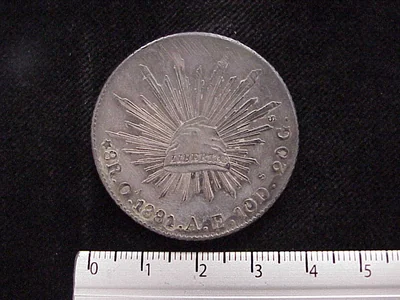
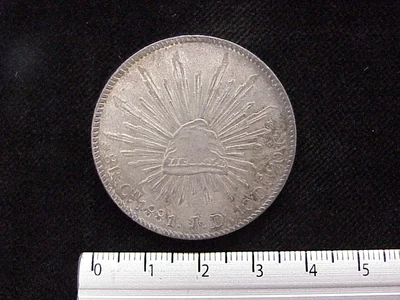
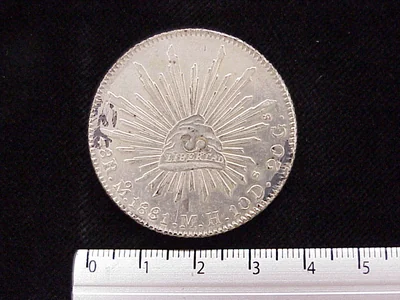
Reverse with the facing republican eagle devouring a serpent atop a nopal cactus, legend "REPÚBLICA MEXICANA". Piece attributed to the Durango mint, 1881.
Obverse
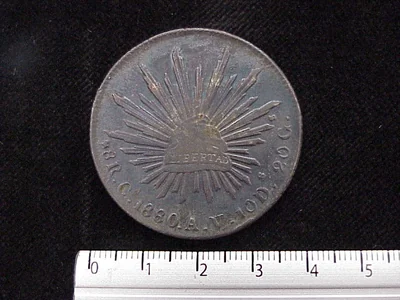
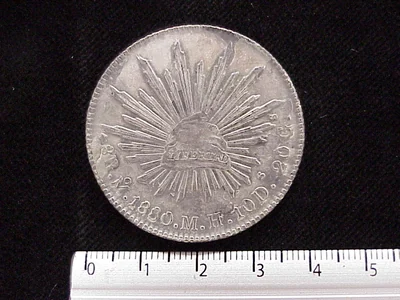
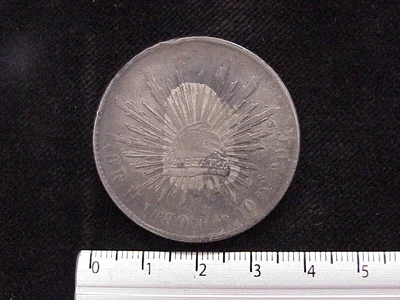
Obverse with a Phrygian cap over solar rays (resplandor) and the legend "LIBERTAD". Struck in 0.9028 silver following the republican eight-real standard in force until the 1905 monetary reform.
The 8 Reales Durango 1881 : Value & Prices is worth between $745 and $1,961 MXN depending on its grade of preservation.
Prices updated: August 2026
How much is the 8 Reales Durango 1881 (Resplandor): Value & Prices worth?
The estimated value of the 8 Reales Durango 1881 (Resplandor): Value & Prices ranges from $745 (circulated, XF) up to $1,961 (official blister pack), with $1,519 as a reference for an uncirculated (UNC) piece. The estimate is based on the official mintage and the historical behavior of the family.
The real price depends on four factors: the grade of preservation (a circulated piece is worth the low end of the range; an uncirculated one, or one still in its official blister pack, the high end), the finish (satin vs mirror/proof), the rarity within the series based on the mintage, and the metal spot price on the day of the deal when the piece is silver or gold. Check the value-by-grade table above and compare with equivalent pieces before buying or selling.
Where to buy or sell this coin?
Browse the national directory of numismatic shops or the community forum to trade directly with other collectors.
Price today
How much is the gold in a Centenario worth?
The Centenario is Mexico's main gold investment piece. Its price follows the gold spot in USD adjusted for MXN.
Description
If you inherited an 1881 Mexican 8 Reales from the Durango mint, here is the honest answer: in worn condition it is worth mainly its silver, roughly 15 to 25 US dollars in melt value. Clean, high-grade examples climb into the low hundreds, and a certified top-grade piece can bring several hundred dollars. It is a genuine silver coin, not a rare rarity, and that distinction drives the price.
This is the "Resplandor" type (Spanish for "radiance" or "sunburst"), named for the Phrygian cap radiating rays on the reverse. Catalog reference is KM#377.4. It was the largest silver denomination of Mexico's republican coinage in that era, and versions were struck at several mints. Yours carries the Durango mint mark.
What an 1881 Durango 8 Reales is worth in 2026
The floor under this coin is its metal. It contains 27.07 grams total weight at .9027 fineness, which is about 24.4 grams (0.786 troy ounces) of pure silver. That means the melt value moves with the silver spot price, and it sets a minimum no dealer should go below.
Above melt, the price is all about condition and eye appeal:
- Heavily worn (Good to Fine): essentially melt value, 15 to 30 USD.
- Moderately circulated (VF to XF): roughly 30 to 90 USD, depending on how sharp the eagle feathers and reverse rays remain.
- About Uncirculated to Mint State: 100 to 400 USD or more for clean, uncleaned examples with full detail.
- Certified top-grade (NGC/PCGS MS62 and up): several hundred dollars, occasionally more for the finest survivors.
Durango-mint pieces draw collectors who study the Resplandor type by mint, so a sharp Durango example can carry a small premium over a common mint. But do not expect a fortune. This is a widely produced trade coin, not a key date.
| Coin | Year / Mint | Typical value (worn) | Typical value (high grade) |
|---|---|---|---|
| 8 Reales Resplandor, KM#377.4 | 1881 Durango | 15 to 30 USD (melt) | 100 to 400+ USD (AU/MS) |
Why this coin is silver, and what that means
Many people assume an old coin must be worth a fortune. This one is worth money because it is real silver, first and foremost. During the late 1800s the Mexican silver peso and its 8 Reales were used as trade currency far beyond Mexico, especially across Asian markets. Millions were struck across multiple mints. That heavy production is exactly why an average example is a bullion-grade coin rather than a rarity.
The Durango mint operated on and off through the 19th century, tied to the silver mining of northern Mexico. Its coins are collected as mint varieties of the Resplandor design, which is where the collector demand (and any premium above silver) comes from.
The ones people think are worth thousands but aren't
A circulated 8 Reales, no matter how old it looks, is not a thousand-dollar coin. Age alone does not create value. What creates value is scarcity in high grade, verified mint errors, or a rare date/mint combination. The common 1881 Durango is none of those in average condition. If a listing claims a worn example is worth thousands, that is marketing, not market reality.
Real premiums appear only when the coin is genuinely uncirculated with original surfaces, or professionally certified. A cleaned coin (shiny, with hairline scratches under a light) loses much of its premium, so resist the urge to polish it.
How to check what yours is worth
- Weigh and measure it. Use a jewelry scale and calipers. It should read close to 27.07 grams and 39 mm in diameter, with a reeded (grooved) edge. Wrong weight or size is a red flag for a fake.
- Grade the wear. Look at the eagle's feathers and the reverse rays. Full, crisp detail means a higher grade and a higher price.
- Check for cleaning and damage. Scratches, unnatural shine, corrosion or edge dings all reduce value.
- Consider certification. For a coin you believe is About Uncirculated or better, grading by NGC or PCGS confirms authenticity and grade, and it usually pays for itself on a nicer example.
How to tell if it is genuine
Counterfeits of Mexican colonial and republican silver are common. Confirm the weight and diameter against the specs above, then examine the engraving style, the mint mark and the assayer initials. Be suspicious of any coin offered well below its silver value, and of examples that feel light or look too crisp for their claimed age.
Where to sell it
Your safest options are a verified coin dealer, who can value it on the spot, or selling directly to collectors. Photograph the obverse, reverse and edge clearly, and know the price range in this guide before you sell. Avoid dumping it to the first buyer on social media, and never sell a silver coin without confirming its weight in front of the buyer.
Not sure which grade yours falls into, or whether you have a scarce variety? Post clear photos of both sides on the Pesoteca forum and let collectors weigh in before you sell. You can also browse the dealer directory or the buy-and-sell forum to compare offers.
Historical context
In 1881 Manuel González governed, a close friend of Porfirio Díaz, during the 1880-1884 term. A period of financial crisis and of the debate over nickel as fractional currency.
The Durango mint (Do) operated from Independence until 1895, fed by the silver of the Cerro del Mercado and the mines of the Sierra Madre Occidental.
Do pieces are hunted by collectors of the 3 great northern mints (Do, Ca, Zs). Medium mintages.
As a catalog reference, this mint's variant is listed as KM#377.4 in Krause. The piece is .9028 fineness silver with a reeded edge and a theoretical weight of 27.07 grams. The 1881 Durango example corresponds to the phase in the mint's mature stage, near its closing (1811-1895), and is identified on the coin by the mint mark Do.
To hunt this Do piece without paying a premium, check both regional fairs and professional auction listings. The 1880s cycle examples from Do have enough supply to compare edges, original luster and strike sharpness across 3 or 4 options before closing. Verify the absence of edge filing and that the Phrygian cap's radiance is not weak from wear; both are marks of circulated examples presented as superior quality.
This piece belongs to the era
República Restaurada y Porfiriato →Explore all the Mexican coins of this era, their historical context and how they connect to the monetary system of the period.
Value range of this piece
Market estimate: $745 - $1,961 MXN depending on the grade of preservation (typical range between a circulated and an uncirculated piece).
See the full breakdown by grade (VG, F, VF, EF, AU, MS-60, MS-63, MS-65) for the whole series →
Other denominations from 1881
8 Reales Republicanos (Resplandor) · Plata 0.900
Same denomination, other years
8 reales Plata 0.900 · 8 Reales Republicanos (Resplandor)
Frequently asked questions
How much is an 1881 Durango 8 Reales worth?
In worn condition it is worth mostly its silver, about 15 to 30 US dollars in melt value. Moderately circulated examples run 30 to 90 USD, and clean About Uncirculated to Mint State coins reach 100 to 400 USD or more. A certified top-grade piece can bring several hundred dollars.
Is the 1881 Durango 8 Reales rare?
No. It was a widely produced trade coin used internationally, so average examples are common and priced close to their silver content. Real premiums appear only in high, uncirculated grades, in certified condition, or with a verified mint error. Durango-mint pieces can carry a small premium among Resplandor collectors.
How can I tell if my 8 Reales is genuine?
Weigh and measure it: a real one is about 27.07 grams and 39 mm across, with a reeded edge. Check the engraving style, the Durango mint mark and the assayer initials, since counterfeits are common. Be suspicious of any coin priced well below its silver value or one that feels too light.
Where can I sell an 1881 Durango 8 Reales?
The safest routes are a verified coin dealer who values it in person, or selling directly to collectors through a numismatic forum. Photograph the obverse, reverse and edge, and know the price range before selling. Avoid selling silver without confirming its weight in front of the buyer.
Conversation
0 comments
Sources
- Ejemplar de la Coleccion Numismatica Banco de Mexico . inv. 6992
- Ejemplar de la Coleccion Numismatica Banco de Mexico . inv. 6993
- Ejemplar de la Coleccion Numismatica Banco de Mexico . inv. 6994
Images for informational and educational purposes, attributed to their original source. Reference values; the real price depends on the grade, the specific variant and demand.
Loading comments…