
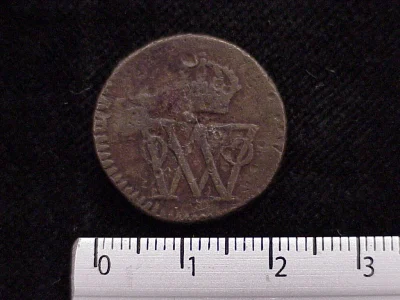
1/2 Real Fernando VII 1815: Value & How to Sell
Prices updated: August 2026
Viceroyalty · Mexico City Mint
Viceroyalty · Mexico City Mint
How much is the coin 1/2 Real Fernando VII 1815: Value & How to Sell worth?
The market value of the coin 1/2 Real Fernando VII 1815: Value & How to Sell is not yet documented with enough data to give a firm range. Weigh and measure your piece, compare it against the specifications, and check the forum for a second opinion.
The real price depends on four factors: the grade of preservation (a circulated piece is worth the low end of the range; an uncirculated one, or one still in its official blister pack, the high end), the finish (satin vs mirror/proof), the rarity within the series based on the mintage, and the metal spot price on the day of the deal when the piece is silver or gold. Check the value-by-grade table above and compare with equivalent pieces before buying or selling.
Where to buy or sell this coin?
Browse the national directory of numismatic shops or the community forum to trade directly with other collectors.
Description
If you inherited or found a 1/2 Real Fernando VII 1815, here is the honest answer: most circulated copper examples are modest coins worth a small premium over face, not a jackpot. The real money is in high-grade certified pieces. What drives value is condition, authenticity, and demand, not just age.
This is a colonial-era Mexican coin, struck in 2026 terms almost two centuries ago, during the Spanish Viceroyalty (Virreinato). Fernando VII (Ferdinand VII) was the Spanish king whose portrait or name appears on coins produced in Mexico while it was still a Spanish colony. The "1/2 real" is the denomination, a half real, one of the small change pieces of that era. This one is copper, not silver, which matters for value: it has no bullion floor to speak of, so its worth is entirely numismatic (collector demand and grade).
What it's actually worth
Value swings hard on condition. A worn, corroded copper coin dug out of a drawer sits at the bottom of the range. A sharp, problem-free example, and especially one certified by NGC or PCGS, sits far higher.
| Condition | Description | Approximate value (USD) |
|---|---|---|
| Heavily worn / corroded | Flat detail, green corrosion, damage | A few dollars to about 25 USD |
| Circulated, honest wear | Readable design, no major damage | 25 to 100 USD |
| High grade, uncertified | Strong detail, minimal wear | 100 to 300 USD |
| Certified Uncirculated (MS) | Graded by NGC or PCGS, top eye appeal | 300 USD and up |
These are honest ranges, not fixed prices. Copper colonial small change is condition-sensitive because copper corrodes; a clean, original-surface example is genuinely scarce and that scarcity, not the date alone, is what a serious buyer pays for. Do not expect "worth thousands" numbers you may have seen elsewhere for an average circulated piece. Those figures apply to top-population certified coins, not to a typical inherited example.
The specs (verify yours against these)
Use these to sanity-check your coin before anything else:
- Weight: 6.92 grams
- Diameter: 27.16 mm
- Metal: Copper
- Edge: Plain (smooth)
- Date: 1815
- Era: Colonial / Viceroyalty (Virreinato)
If your coin is off on weight or diameter, that is your first red flag. Cast fakes and modern replicas often miss these numbers, and their relief looks soft or mushy compared to a genuine struck coin.
The myth to kill
"It's from 1815, it must be worth a fortune." Age is not rarity, and rarity is not the same as value. Millions of small colonial coins circulated for decades, and plenty survive. A common circulated 1/2 real is an affordable collector coin, full stop. The pieces that command real money are the ones that survived in exceptional condition, which for a soft copper coin is uncommon but not mythical.
Be skeptical of "error" claims too. Genuine mint errors (off-center strikes, die rotation, doubled strikes) can multiply value if verified. But most "errors" people spot online are post-mint damage: dings, corrosion, and cleaning scratches. Those lower value, they do not raise it.
How to tell if yours is genuine
- Weigh and measure it. 6.92 g and 27.16 mm. Off on either, be suspicious.
- Check the relief. Genuine struck coins have crisp, raised detail. Casts and replicas look flat, blurry, or grainy, sometimes with a visible seam on the edge.
- Look at the surfaces. Natural copper toning is normal. Bright, unnaturally smooth or freshly polished surfaces often mean the coin was cleaned, which hurts value.
- Get it certified for anything valuable. If you think you have a high-grade example, submit it to NGC or PCGS. Certification settles authenticity and grade in one step and is the standard buyers trust.
Our coin grading guide walks through how to judge condition before you spend money on certification.
Where to sell it
For a common circulated piece, sell through collector channels rather than dumping it to the first buyer. For anything you believe is high grade, get eyes on it from a professional first.
- A verified dealer from the Pesoteca shop directory can appraise and buy on the spot.
- The Pesoteca buy-and-sell forum puts you in front of collectors who actually know this series.
- General online marketplaces work but carry the most fakes; if you buy or sell there, always demand clear photos of the obverse, reverse, and edge, plus the weight.
Photograph both sides and the edge in good light before listing, and check your grade against the ranges above so you don't sell short.
Have a 1/2 Real Fernando VII 1815 sitting in a drawer? Post clear photos of both sides in the Pesoteca forum and let collectors help you pin down the grade and a fair number.
Historical context
Edge: Plain.
This piece belongs to the era
Colonial / Virreinato →Explore all the Mexican coins of this era, their historical context and how they connect to the monetary system of the period.
Value range of this piece
Value range without enough data for this piece.
See the full breakdown by grade (VG, F, VF, EF, AU, MS-60, MS-63, MS-65) for the whole series →
Other denominations from 1815
Reales Coloniales (1/2 a 4 reales) · Cobre
Frequently asked questions
How much is a 1/2 Real Fernando VII 1815 worth?
It depends almost entirely on condition. A worn or corroded copper example runs from a few dollars up to about 25 USD. Honest circulated pieces sit around 25 to 100 USD, high-grade uncertified coins 100 to 300 USD, and certified Uncirculated examples 300 USD and up. Because it's copper, there's no bullion value, so it's all about grade and demand.
Is the 1/2 Real Fernando VII 1815 rare?
Not in circulated condition. Many colonial small-change coins survive, so a worn example is affordable, not scarce. What is genuinely uncommon is a clean, high-grade copper piece, because copper corrodes easily. Those top-condition examples are what serious collectors pay a premium for, not the date itself.
How can I tell if my 1/2 Real Fernando VII 1815 is genuine?
Start with weight and diameter: it should be 6.92 grams and 27.16 mm. If it's off, be suspicious. Genuine struck coins show crisp raised relief, while casts and fakes look flat or grainy and may have an edge seam. For anything you believe is valuable, submit it to NGC or PCGS for certification, which confirms authenticity and grade at once.
Where can I sell a 1/2 Real Fernando VII 1815?
The safest routes are a verified dealer from the Pesoteca shop directory, who can appraise and buy immediately, or the Pesoteca buy-and-sell forum where collectors who know the series bid. Photograph both sides and the edge, check the value ranges first, and avoid selling to the first buyer on a general marketplace, where fakes are most common.
Conversation
0 comments
Sources
Images for informational and educational purposes, attributed to their original source. Reference values; the real price depends on the grade, the specific variant and demand.
Loading comments…