
En resumen
Most Mexican coins are worth a few dollars, but a 1538 8 Reales sold for 528,000 dollars. The most valuable Mexican coins with real auction prices in USD.
Most Mexican coins people inherit are worth face value or a few dollars. The 20th-century pesos and centavos in that shoebox are almost never a fortune. But a small group of Mexican coins is genuinely valuable, and one sold for 528,000 dollars. Here are the ones that actually command record prices in 2026, with real auction figures and honest ranges.
The gap between "this is worth millions" and "this is worth real money" is huge. Viral posts with twenty emojis and "one of a kind, urgent sale" are almost always wrong. Real rarity is quiet. It shows up at Heritage and Stack's Bowers with a hammer price, not in a social media caption.
The most valuable Mexican coins at a glance
| Coin | Year | Record / range (USD) | Notes |
|---|---|---|---|
| 8 Reales "Rincón" (Carlos y Juana) | 1538 | 528,000 (sold 2016) | The record-holder. Only a few known |
| "Royal" 8 Escudos (presentation gold) | 1714 | 310,500 (sold 2008) | Galano / presentation strike |
| 8 Reales pillar dollar (first milled) | 1732 | ~130,000 | First machine-struck Mexican dollar |
| "Pattern" 8 Reales | 1823 | ~120,750 | Early independence pattern |
| Centenario 50 pesos gold | 1921 | melt + premium (see below) | 90% gold, ~1.2 troy oz |
| Caballito 1 peso (silver) | 1910 | modest to thousands | High grade drives the price |
| 8 Reales "piece of eight" | colonial | tens to thousands | Common dates cheap, rare dates high |
The record prices belong to colonial rarities, gold, and pieces in high certified grade. A worn, common coin does not become valuable because someone photographs it and claims it has an "error."
What actually makes a coin valuable
Four things move the real market, and none of them is a viral video:
- Low survival. Not just low mintage, but how many still exist in collectible condition.
- Grade. A coin graded MS64 by PCGS can be worth ten times the same coin in circulated shape.
- Certification. NGC and PCGS are the two grading services collectors trust. An uncertified "rare error" is usually just a normal coin.
- Sustained demand. A coin is worth what a buyer will actually pay, proven by real sales, not asking prices.
Silver and gold content sets a floor. Any pre-1970s Mexican peso with real silver in it is worth at least its melt value, regardless of condition. That is why bullion-type coins never go to zero.
#1 The 1538 8 Reales "Rincón": the record holder
This is the most valuable Mexican coin on record. It sold for 528,000 dollars in 2016. It belongs to the very first silver coinage struck in the Americas, under Carlos y Juana, at the Mexico City mint. Only a handful are known, and some were recovered from a shipwreck (the Golden Fleece, around 1550). If you own one, you already know it. These are not sitting in inherited coin jars.
#2 The 1714 "Royal" 8 Escudos
A presentation-quality gold coin, struck with extra care for ceremonial purposes. One example sold for 310,500 dollars in 2008. "Royal" strikes (galanos) were made to a higher standard than circulating coins, which is exactly why collectors pay for them.
#3 The 1732 pillar dollar (first milled 8 Reales)
The 1732 8 Reales was the first machine-struck Mexican silver dollar, a turning point in coin production. Strong examples trade around 130,000 dollars. This is the ancestor of the modern dollar coin, and its historical weight is a big part of the price.
#4 The 1823 "Pattern" 8 Reales
An early pattern from the independence period, trading around 120,750 dollars. Patterns are test or trial strikes, made in tiny numbers, which is what pushes them into this range.
#5 The 1921 Centenario 50 pesos (gold)
The Centenario is the best-known modern Mexican gold coin. It was struck for the 100th anniversary of independence, hence the name. It holds 90% gold, about 37.5 grams, roughly 1.2 troy ounces. Its value tracks the gold price, which sits near historic highs in 2026, so the coin is worth more today than a couple of years ago.
Two things to know: the original pre-1947 dates carry a collector premium above pure melt value. Modern restrikes (the government minted more later) trade close to bullion. For the exact figure today, check the live Centenario price and the full series, since it moves with the gold spot.
#6 The 1910 Caballito peso (silver)
The Caballito, meaning "little horse," gets its nickname from the horse-and-rider design by Charles Pillet, widely considered one of the most beautiful Mexican coins ever struck. Here condition is everything. A worn, common Caballito is modest money. The highest certified grades (PCGS MS64 and up) command strong premiums into the thousands. See the details on the 1910 Caballito peso.
#7 The 8 Reales "piece of eight"
The Spanish-Mexican 8 Reales was the world's first truly global currency and the direct origin of the US dollar. Common dates trade from tens to a couple hundred dollars. Rare dates and mints in high grade climb into the thousands. If you have colonial silver, the date and mintmark decide everything. The columnario 8 Reales of Carlos III is a good reference point for how much variation exists within one type.
The ones people think are worth millions but aren't
- Common 20th-century pesos and centavos. Almost all are worth face value or a few dollars. Age alone means nothing when millions were made.
- "Error" coins from social media. Most so-called errors are normal minting variation or post-mint damage. A real, valuable error is confirmed by NGC or PCGS, not by a caption.
- Modern Centenario restrikes sold as "rare." They are bullion. Worth their gold, not a collector fortune.
- Any coin advertised as "unique in the world" with an urgent price. Genuine rarities appear at established auction houses with documented sales. That is the only proof that matters.
How to check what your Mexican coins are worth
- Identify it. Note the denomination, year, and mintmark. Search the exact date, since one type can range from a few dollars to thousands depending on the year.
- Weigh it and check the metal. Older pesos with real silver have a floor at melt value. That alone tells you if it is a bullion piece or a collector piece.
- Assess condition honestly. Grade drives the biggest coins on this list. If a coin looks worn, do not expect a premium price.
- Get it certified if it might be valuable. For anything that could reach hundreds of dollars, professional grading by NGC or PCGS is what buyers trust and what unlocks the higher end.
- Compare to real sales. Look at completed auction results, not asking prices. Heritage and Stack's Bowers archives show what pieces actually sold for.
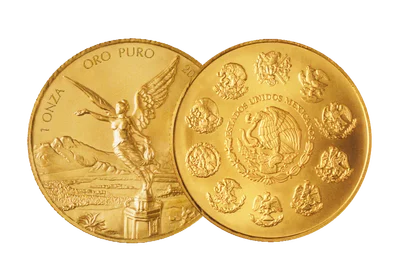
For coins whose value follows the metal, the Onza Libertad series, Mexico's modern silver and gold bullion coin, is a clear example of a price that moves with the daily spot rather than a collector fad.
Have a coin you can't identify, or a "rare error" someone told you was worth a fortune? Post clear photos of both sides in the Pesoteca forum and we'll tell you straight what it is and what it's really worth.
Loading comments…