
En resumen
Seven checks to confirm whether your Onza Libertad silver coin is genuine: weight of 31.103 grams, diameter of 36 or 40 mm by series, magnet, ping test, and relief detail.
If you have an Onza Libertad in hand and you're not sure it's real silver, here's the fast answer: a genuine one-ounce coin weighs exactly 31.103 grams and measures either 36 mm or 40 mm depending on the year. Get those two numbers wrong and it's a fake, no matter how shiny it looks.
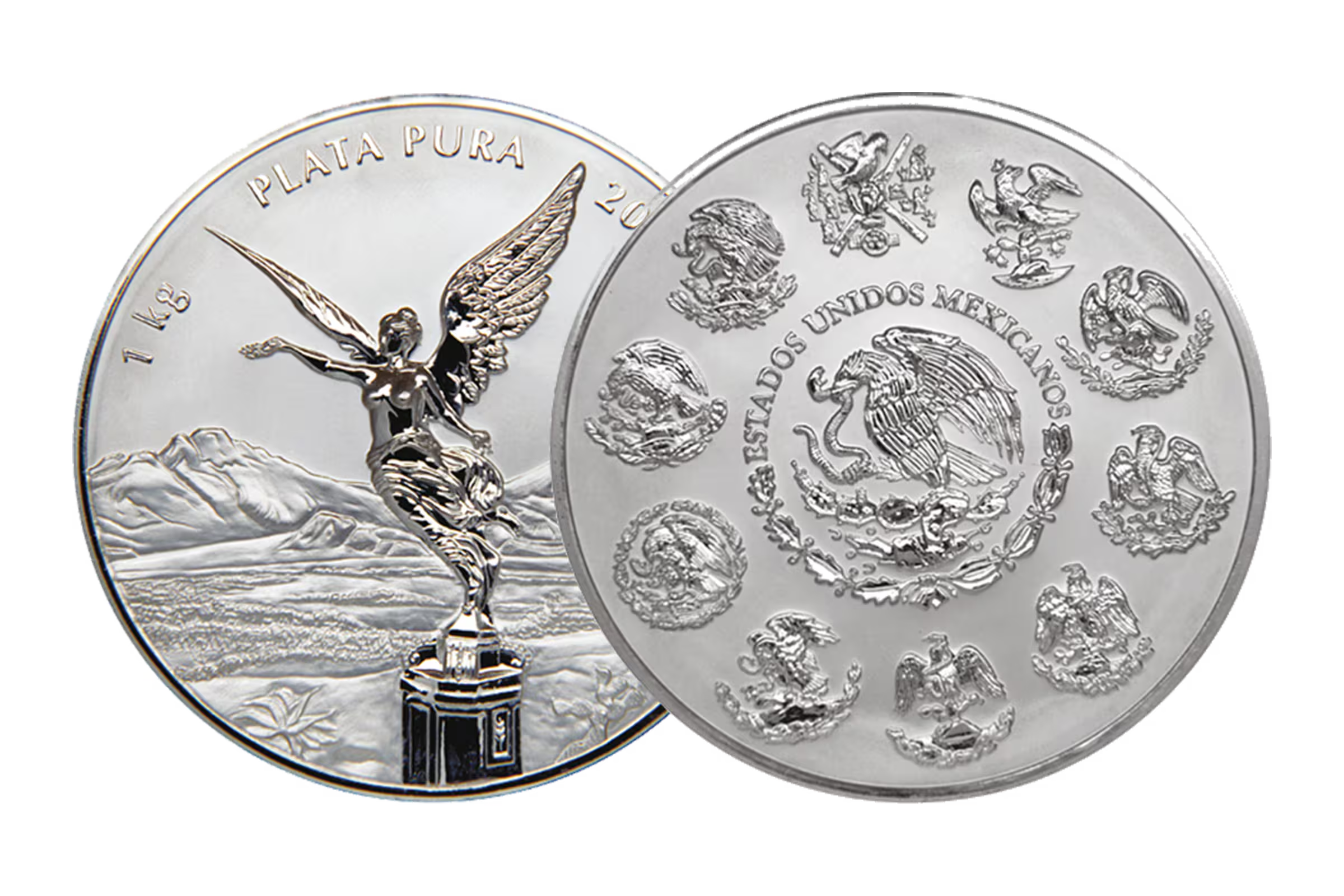
The Onza Libertad ("Libertad ounce") is Mexico's official silver bullion coin, minted by Casa de Moneda de México, the oldest mint in the Americas. It comes in two formats: the original series (1982 to 1995, 36 mm across) and the New Series (1996 to today, 40 mm across). Because it trades close to the spot price of silver, counterfeiters copy it in cheaper metals. This guide walks you through 7 tests, from least to most invasive, so you can decide whether to keep it or return it.
Before you start, get these tools together: the coin, a scale that reads to 0.01 g, a digital caliper, a neodymium magnet, and good light. The first six tests do not damage the coin.
1. Weight
A one-ounce (one troy ounce) Onza Libertad weighs 31.103 grams. A reasonable tolerance for wear or scale calibration is 0.1 g. If it comes in at 28 g or 33 g, it isn't pure silver, it's another metal with plating on top. Kitchen scales that read in whole grams are useless here. You need one that reads to 0.01 g, which you can buy online for under 20 USD.
2. Diameter
Measure across the coin with your caliper. Per Banxico's technical specifications, the original series (1982 to 1995) is 36 mm and the New Series (1996 onward) is 40 mm. If your coin is dated 1996 but measures 36 mm, or dated 1990 but measures 40 mm, it's a counterfeit. The date and the diameter have to match the correct series.
3. Edge and thickness consistency
A common fake is a disc of lead or zinc, plated in silver color, with the design stamped on. These almost always have uneven thickness or a poorly cut edge. Run your finger around the edge: it should feel uniform all the way around, with no burrs or rough spots. Compare it against any Libertad you've already verified, or against pieces from an established dealer.
4. The magnet test
Pure silver is not magnetic. Hold a neodymium magnet near the coin. If it jumps or sticks, the coin is out. If it doesn't react, it passes this step. One caution: a non-magnetic result does not prove the coin is silver. Fakes made of lead or copper aren't magnetic either. This is a test that rules a coin out, not one that confirms it.
5. The ping test
Pure silver rings with a long, high-pitched tone when you tap it lightly. Balance the coin on your fingertip (not flat in your palm, which deadens the sound) and tap it gently with another silver coin. It should ring like a small bell, with resonance lasting one to two seconds. Lead or zinc give a short, dull thud.
6. Relief and lettering
Compare your coin against high-resolution reference images from Banxico. Check the Escudo Nacional (Mexico's national coat of arms, an eagle on a cactus) on the front, and the Winged Victory ("Victoria Alada") with the volcanoes Popocatépetl and Iztaccíhuatl in the background on the reverse. Counterfeits fall apart in the details: blurry feathers, smeared lettering in the word LIBERTAD, an irregular date. A 10x loupe makes these flaws obvious.
7. Nitric acid (last resort)
Use this only if the first six tests still leave you unsure and the coin is low value. Nitric acid leaves pure silver a milky white color, while other metals react green, red, or blue. This permanently marks the coin and lowers its collector value. Never use it on a coin still in its blister pack or in uncirculated (UNC) grade.
What doesn't work
- Biting it. Lead is soft too, so a tooth mark proves nothing.
- Dropping it on the floor to hear the sound. You'll scratch the relief and hurt the value.
- Judging by shine. A polished fake shines brighter than a genuine coin with natural toning.
- Trusting a paper certificate. Fake certificates get printed everywhere.
Quick reference table
| Series | Years | Diameter | Weight | Silver content |
|---|---|---|---|---|
| Original series | 1982 to 1995 | 36 mm | 31.103 g | .999 fine silver |
| New Series | 1996 to today | 40 mm | 31.103 g | .999 fine silver |
If your coin fails on weight or diameter, no other test can save it. Those two specifications are non-negotiable.
If yours turns out fake
Go back to whoever sold it to you. If it was an online purchase with an invoice, most marketplaces and platforms have a return or buyer-protection window, so check the seller's policy and file a claim quickly. Share the case in the community so others can flag the same seller.
Where to buy without the risk
The surest way to avoid a fake is to buy from Casa de Moneda de México directly or from an established dealer that issues an invoice. Pesoteca keeps a directory of verified sellers. For coins from earlier years, the Sistema Pesoteca catalogs each finish with its own ID, so you know exactly what you're buying before money changes hands.
Stuck on one of the tests, or want other collectors to look at your photos? Post them in the Pesoteca forum and let the community weigh in.

Loading comments…