
En resumen
Mexico released FIFA-licensed silver and gold coins for the 2026 World Cup. Resellers had them before the public did, and the official bank price was nearly as high as the gray market. Here is what happened and what the coins actually cost.
If you have one of Mexico's 2026 FIFA World Cup silver ounces, or you're thinking of buying one, the short answer is this: the official bank price landed around 175 USD per coin, resellers wanted about 200 USD each, and silver bullion value was near 70 USD. That is a 150 percent premium over metal. This is a licensed collector coin, not a rare classic, and the story of how it reached the market before the public is the real headline.
This article explains what these coins are, what each buyer channel actually paid, and why the resale market existed weeks before the official launch. All figures come from firsthand reporting at the BBVA bank line in Mexico City and from leaked pricing documents. Amounts are converted to USD at roughly 20 pesos to the dollar for an international reader.
What these coins are
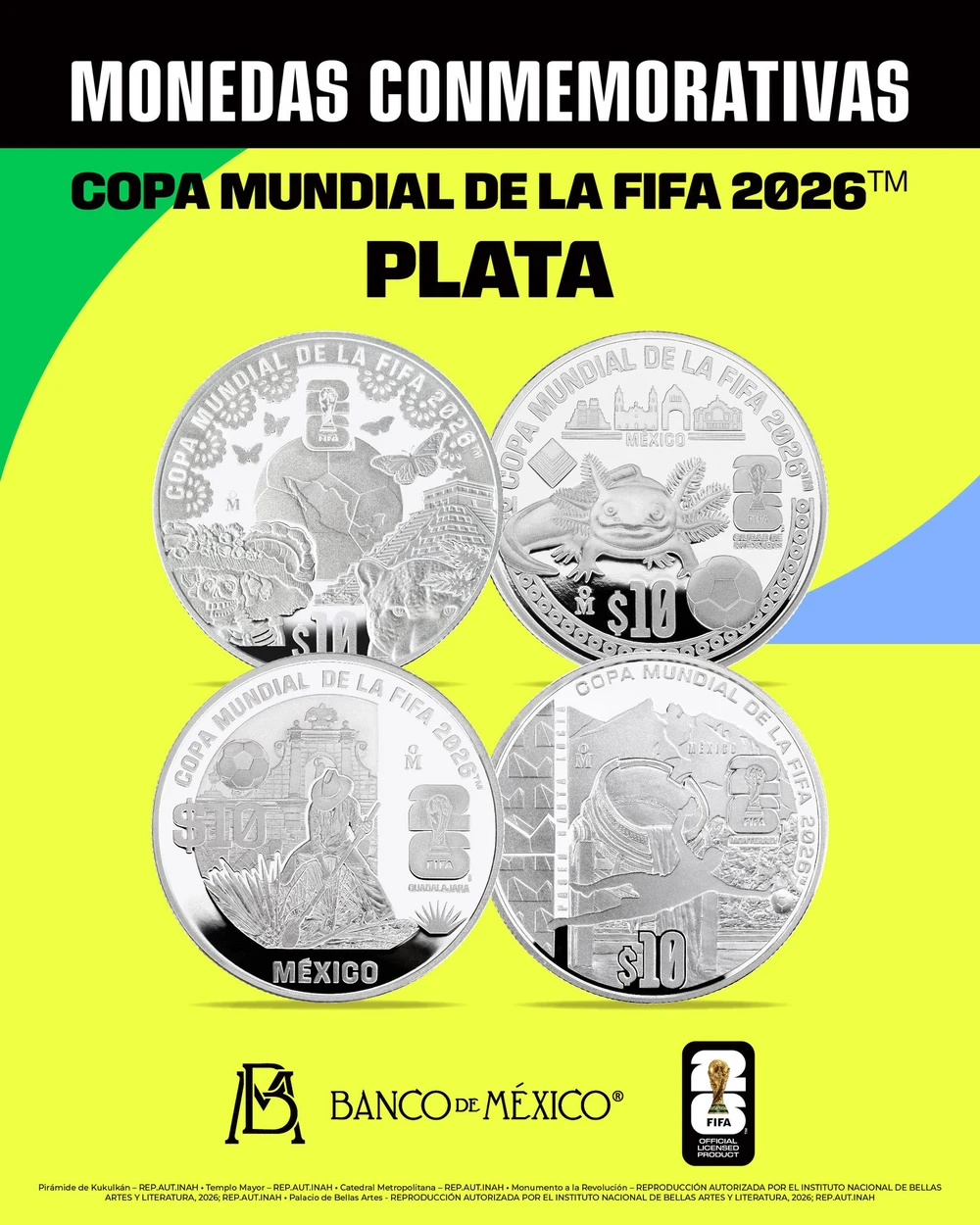
Mexico is co-hosting the 2026 FIFA World Cup. To mark it, Banco de México (Banxico, the central bank) and the Casa de Moneda de México (the Mexican Mint) struck a set of commemorative coins carrying the FIFA Official Licensed Product hologram. Two formats matter to collectors:
- Silver: four 1-ounce Proof coins, one per host-city design, face value 10 pesos. These are the pieces everyone is chasing.
- Gold: quarter-ounce Proof coins for the same designs.
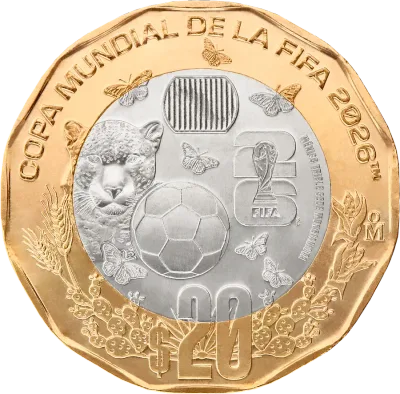
There are also bimetallic 20-peso circulating coins already in change. Those are common and worth little above face. The silver ounces and gold quarters are the collector items, and they are the subject here.
Each silver coin is genuine .999 Proof silver with a unique 10-digit FIFA hologram QR code. That is important for authenticity: the hologram traces to FIFA's licensing database, at least in theory. In practice, neither the Mint nor Banxico publishes that traceability.
What each buyer actually paid
Here is the pricing across every known channel, converted to USD.
| Buyer | Price per silver ounce | Premium vs. internal Banxico price |
|---|---|---|
| Banxico employee (internal) | about 104 USD | 0 percent (official internal) |
| PowerCoin Europe (presale) | about 190 USD | +84 percent |
| Public at BBVA bank, June 12 (confirmed) | about 175 USD | +69 percent |
| Reseller auction (Alex Pintle), full set of 4 | about 200 USD each | +93 percent |
| Reseller (Rich García), full set of 4 | about 200 USD each | +93 percent |
Silver spot on June 12 was near 70 USD per ounce. So the official bank price carried a 150 percent premium over metal content. For comparison, Mexico's classic bullion coins, the gold Centenario and the silver Onza Libertad, normally sell at 5 to 25 percent over melt. A Proof finish plus a FIFA license plus a limited mintage justify part of the premium, but 150 percent is high-end collectible territory, not the pricing of a circulating commemorative.
The gap between the bank price (about 175 USD) and the reseller price (about 200 USD) is only about 25 USD. The reseller guarantees you a coin; the bank guaranteed nothing. That is why the gray market did not vanish once official sales opened.
Firsthand report: the bank line, June 12
We went to the BBVA Torre branch on Paseo de la Reforma in Mexico City on Thursday, June 12. The raw numbers:
- Official price of the 10-peso silver ounce: about 175 USD each
- Silver spot the same day: about 70 USD per ounce
- Premium of the bank price over metal: 150 percent
- Line: more than 200 people before opening
- Served: 50 people. The other 150 left with nothing
- Inventory available across 3 host cities (Mexico City, Guadalajara, Monterrey). The Triple Sede / Jaguar silver design was not available
- BBVA gave no date for restock and no timeline for other branches
- HSBC, Santander, Banamex, Banorte, Banco Azteca, Banregio, Multiva, and the Mint itself: no date announced as of June 17
The roughly 175 USD price is 69 percent above the internal Banxico employee price (about 104 USD) and only 12 percent below reseller auction prices. The public that stood in line paid nearly what a Facebook buyer paid a reseller. The difference: the reseller actually delivered a coin.
The 150 people who left empty-handed had two choices: wait for an undated next batch, or pay a reseller. That fed the exact gray market the Mint says it does not authorize.
Resellers had product before the public
Three weeks before the BBVA announcement, all four silver ounces were already sealed and circulating. The evidence is direct photography showing visible Banxico batch numbers and FIFA holograms with unique QR codes.
The physical packager is not Banxico. It is a contractor, Mapposá. Each sealed bag carried a label with the text "1 Coin 1 Oz Silver Proof, FIFA World Cup 2026," a 4-digit internal Banxico batch number, and a seal date between May 18 and May 25, 2026. Official BBVA distribution did not begin until June 11. Somewhere in that 16 to 23 day window, product left the Mint-to-bank pipeline and landed in Facebook groups.
By early June, two independent sellers were asking about 200 USD per coin (roughly 800 USD for the four-coin set) in Mexico City. One reseller auction closed the night of June 10, exactly 12 hours before BBVA started selling on the morning of June 11. Gray-market buyers had their coins the night before the public could line up.
The international channel
PowerCoin Europe ran an international presale weeks before the BBVA announcement. Published prices: about 190 USD for a silver ounce and about 1,975 USD for the quarter-ounce gold, both Proof with a Certificate of Authenticity. PowerCoin listed a mintage of 30,000 pieces per silver design and 10,000 per gold design.
PowerCoin does not strike coins. It buys from the Mexican Mint or an authorized distributor. If it was selling with a COA, it already had the coins in hand. In plain terms, the Mint distributed internationally before it reached the Mexican public.
The internal employee channel
A leaked internal Banxico form confirms the employee price: about 104 USD per silver ounce, about 415 USD for the full four-coin set, zero sales tax, in-person pickup only. The same form warns employees in writing that "this purchase does not pursue profit, nor should it be used as an incentive to generate a profit-making activity for yourself or third parties," and asks them to declare it on their financial disclosure.
That written warning is proof the institution knows the privilege can be abused. It sets no explicit penalty, publishes no follow-up audit, and does not disclose the total quota. It trusts the employee's word.
How the coins reached resellers before the public
We are not claiming every Banxico employee resells. Most do not. But some do, and the math is straightforward:
- Physical coins exist in Facebook groups with real FIFA holograms and unique serial numbers.
- The Mexican Mint did not distribute them through Mexican retail.
- PowerCoin sells internationally, but buying from PowerCoin at about 190 USD and reselling is not profitable.
- The only Mexican internal channel with early access at a lower price is the Banxico employee presale at about 104 USD.
Someone holding physical coins at about 200 USD with a working margin most likely sourced them from an employee who bought a set at about 104 USD each, or from a direct wholesale relationship with the Mint. Neither is strictly illegal. Both are problematic: the first because Banxico told the employee not to do it, the second because it feeds wholesale to a privileged few ahead of retail.
The community called it out, and the Mint went silent
On its official Facebook page, the Casa de Moneda de México posted an infographic showing the four steps of its distribution chain. The top comment added an unofficial fifth step: reselling. From there the thread filled with real testimony from Mexican collectors.
One recurring complaint: 40 years ago, the coins for the 1986 World Cup were sold at newsstands, one released every few days, spread across the country. In 2026, no bank had them, only resellers. Distribution got worse, not better.
Another pointed out that only Mexico City, Guadalajara, and San Pedro Garza García (a wealthy suburb near Monterrey) got official branches, three of the most expensive areas in the country. Collectors in the rest of Mexico had no official channel to go to. Several noted the Mint refuses to sell online the way The Royal Mint of the UK does, with live visible stock, which would let collectors outside the capital buy directly.
The official post drew 62 reactions, 118 likes on the key question, and 21 shares. The Mint replied to none of it. As of June 9, the coins do not appear in the Mint's own online store at cmm.gob.mx, and no date has been announced.
Where the official sales happened: 6 branches
Starting June 11, BBVA México distributed the coins struck by Banxico. The press release said "branches in host states." In reality it was six branches: four in Mexico City, one in Guadalajara, and one in San Pedro Garza García near Monterrey. Four branches for the roughly 22 million people of greater Mexico City.
What BBVA did not publish in advance: the sale price, the per-person limit, whether coins sold individually or only as a set, and how many pieces each branch held. Collectors in cities like Aguascalientes, Veracruz, or Mérida had to decide whether to pay for travel and lodging without knowing if any coins would be left.
Is it worth buying, and what to check
For most collectors, the honest read is that this is a licensed commemorative selling at a heavy premium, not a rare classic that will multiply in value. Mintage is 30,000 per silver design. That is not scarce. Buy it because you want the FIFA World Cup 2026 set, not as an investment expecting a fast return.
If you do buy, whether at a bank or from a reseller:
- Verify the FIFA hologram. Every genuine coin has a 10-digit QR hologram. A missing or damaged hologram is a red flag.
- Confirm the metal. The silver coins are .999 fine, 1 troy ounce. Metal alone sets a floor near 70 USD per coin.
- Buy from verifiable sellers only. If you buy from a reseller, use one with a documented track record. Never send a deposit to an anonymous account.
- Get it graded if you want liquidity later. NGC and PCGS both certify modern Mexican Proof issues, and a graded coin is far easier to resell.
What accountable mints do differently
The United States Mint handles high-demand commemoratives with a public calendar, a stated per-person limit, a lottery when demand exceeds supply, published channel allocation, a live online store, and a follow-up audit. Mexico's Mint published none of that here. That opacity is what fed the parallel market. It does not excuse reselling, but the institution that distributes in the dark carries part of the responsibility.
What is still unknown
As of June 17, several questions remained open: the date of the next BBVA batch, when other banks would receive stock, when the Triple Sede / Jaguar silver design would appear, whether the Mint would open online retail, how many coins went to employees before launch, and how much stock was reserved for international distributors.
If you stood in line, bought one at a bank, or found these coins abroad, tell us your price, your city, and whether stock was available in the Pesoteca forum. We are building the real distribution timeline that Banxico, BBVA, and the Mint never published.
Loading comments…