
En resumen
The silver Caballito Peso is one of Mexico's most beloved coins. Here's what it's really worth in dollars, which year commands the most, and how to tell a genuine one from a cast fake.
A circulated Caballito Peso is worth roughly 30 to 80 US dollars for the metal and collector interest combined, not the fortune some listings claim. But high-grade examples and the scarce 1914 date sell for hundreds to a few thousand dollars. Here's what actually drives the price, and how to check the one you inherited.
The Caballito is the silver one-peso coin Mexico struck from 1910 to 1914. The nickname ("little horse" in Spanish) comes from the reverse: a figure of Liberty as a woman riding a galloping horse. If you found one in a drawer or inherited a box of old Mexican coins, this guide covers what it is, what it's worth in dollars, which year is scarce, and how to spot the many fakes.
What the Caballito Peso is
The Caballito is a silver one-peso coin minted between 1910 and 1914, released for the centennial of Mexican independence under President Porfirio Díaz. Many collectors rank it as the most beautiful Mexican coin of the 20th century.
Specifications matter for authentication, so memorize these:
- Metal: silver, .903 fine
- Weight: 26.7 grams
- Edge: lettered with the phrase INDEPENDENCIA Y LIBERTAD
At roughly .903 fineness and 26.7 grams, each coin holds about 0.786 troy ounces of pure silver, so it has a bullion floor tied to the silver spot price. Even a beat-up, common-date example is never worth less than its melt value. You can see the year-by-year records in the Pesoteca Caballito catalog.
What it looks like: Liberty on horseback and the eagle
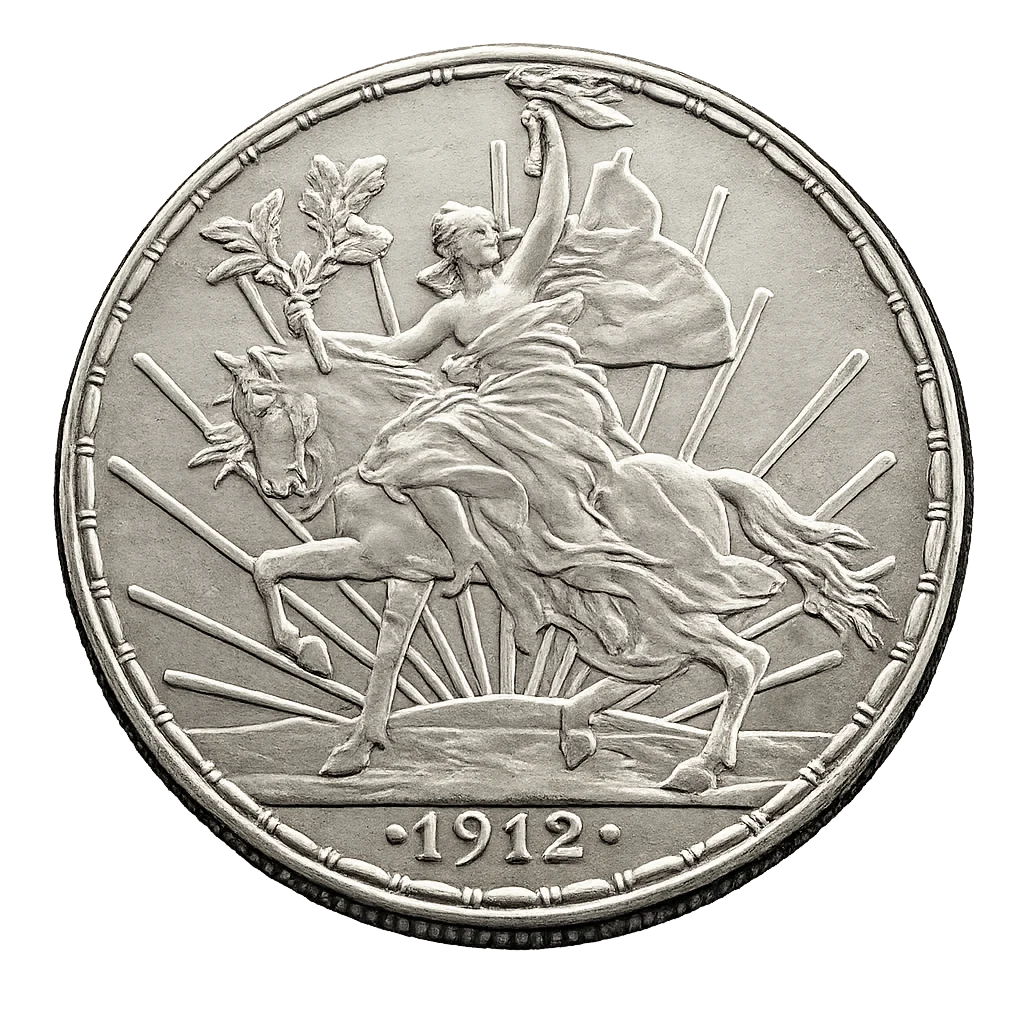
The reverse is the reason for the name. Liberty appears as a woman on a horse in full stride, a lit torch raised in one hand and a branch of oak in the other, with the sun rising on the horizon. It's a scene built on the optimism of the centennial.
The obverse carries the Mexican national eagle facing forward, perched on a cactus and devouring a serpent, with the legend ESTADOS UNIDOS MEXICANOS and the value UN PESO. This is one of the first times the eagle appears facing front rather than in profile, as it did on 19th-century coins.
Who designed it: Charles Pillet and his signature
The Caballito was not designed by a Mexican. It was engraved by the French artist Charles Pillet, brought in during a period when European talent was hired for major projects. His signature, a tiny "CH. PILLET," is worked into the design. Finding it is both a pleasure and a useful authentication step, since cast fakes often blur or lose it entirely.
The years, and which one is worth most
The Caballito was struck from 1910 through 1914, and the dates are not equal. The key fact: 1914 is the scarce year. Only around 120,000 pieces were minted, far fewer than the other years, because the country was in the middle of the Mexican Revolution and production collapsed. A genuine 1914 in good condition is the most sought-after and brings the highest prices.
The 1910, 1911, 1912, and 1913 dates are more common, though all have steady demand. As with any old coin, the date matters, but condition matters just as much or more.
What a Caballito Peso is really worth
Here is the honest version, because there's a lot of exaggeration about this coin. A common-date, circulated Caballito sells in the range of about 30 to 80 US dollars. That's not a fortune, but it's real money for a coin that sat forgotten in a drawer.
Condition changes everything. Higher grades climb into the low hundreds, and the scarce 1914 or top-graded examples can reach several hundred to a few thousand dollars at auction. Exceptional certified pieces have brought well into four figures.
| Coin | Year | Typical value (USD) | Notes |
|---|---|---|---|
| Caballito Peso | 1910-1913 (circulated) | 30 to 80 | Common dates, worn |
| Caballito Peso | 1910-1913 (high grade) | 150 to 600 | Sharp detail, minimal wear |
| Caballito Peso | 1914 (any grade) | 300 to 3,000+ | Scarce, ~120,000 minted |
| Caballito Peso | Top certified (NGC/PCGS) | 1,000 to several thousand | Best-preserved survivors |
The real price depends on the year, the grade, and whether the coin is genuine. Ignore listings asking absurd sums for a common circulated example. Always compare against completed sales, not asking prices. For a serious read on yours, check the catalog or post it in the Pesoteca forum.
How to tell if your Caballito is authentic
The Caballito is one of the most-faked Mexican coins, precisely because of its fame and value. Before you get excited or pay anyone, run these checks:
- Weight and diameter. It should weigh 26.7 grams. A precision scale is your first filter. If it's noticeably off, be suspicious.
- The edge. Confirm the lettering reads INDEPENDENCIA Y LIBERTAD. The edge is the hardest part to fake well.
- The silver. Genuine silver is not magnetic, so a magnet should not attract it. Real silver also gives a clear ring when tapped; base-metal fakes sound dull.
- The relief. Under a loupe, cast copies show a porous surface and soft detail, especially in the horse's mane and the sun's rays.
- The signature. Look for the small CH. PILLET engraver's mark.
If you're unsure, don't guess. Post it in the Pesoteca forum with clear photos of the obverse, reverse, and edge. We look these over without charging for the opinion.
Where to sell a Caballito Peso
For common dates, a reputable coin dealer or an online marketplace with completed-sales data works fine. For the 1914 or any high-grade coin, get it authenticated and graded by NGC or PCGS first, then consign it to a major auction house such as Heritage or Stack's Bowers, where serious Mexican material draws collectors worldwide. Grading and third-party certification typically add far more than they cost on scarce or high-grade pieces.
Why collectors love the Caballito
Beyond market value, the Caballito carries a story. It marks the centennial of Mexican independence, the end of the Porfiriato, European art applied to Mexican coinage, and the debut of the modern forward-facing eagle still used today. Holding one is holding a piece of 1910 Mexico.
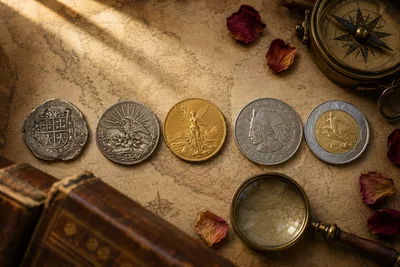
If you're building a set of historic Mexican silver, the Caballito sits naturally between the 19th-century Republican 8 reales and the modern issues.
Keep reading
- Caballito Peso catalog: the year-by-year records.
- Republican 8 reales (Resplandor): the silver coin that preceded the modern peso.
- Colonial 8 reales: the origin of it all, the Spanish Dollar.
Got a Caballito and not sure where to start? Bring it to the Pesoteca forum. We're collectors, not a storefront, and the appraisal is free.
Loading comments…