
Mexico 100 Pesos (1994) Cuauhtémoc: Value & Prices
Familia AA · algodón
Period: México Contemporáneo
Design
Banxico
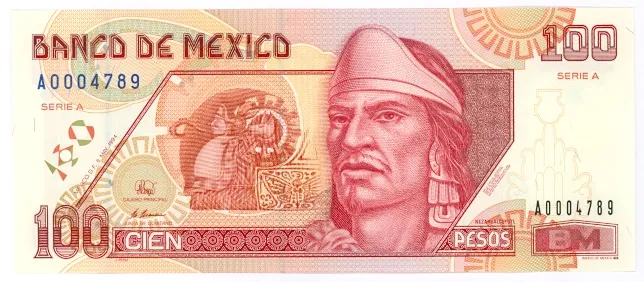
Obverse
Cuauhtémoc
Portrait of Cuauhtémoc with pre-Hispanic motifs
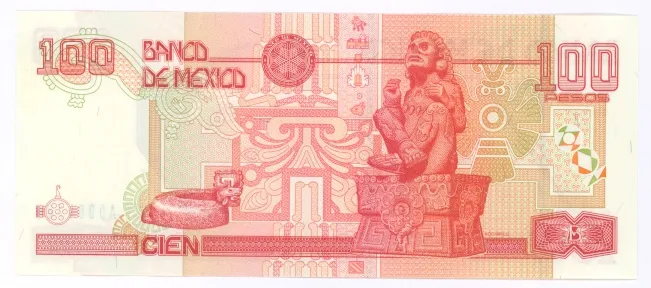
Reverse
The sculpture of Xochipilli, god of flowers
About this banknote
If you inherited or found a Mexican 100 pesos note from 1994, here's the honest answer: in average circulated condition it's worth a few US dollars, mostly as a collectible. A crisp uncirculated example, a low or radar serial number, or a genuine printing error is where the real money sits, and those can bring several times face.
This is the note featuring Cuauhtémoc, the last Mexica (Aztec) emperor, part of the Banco de México Family AA series. It was demonetized long ago, so it no longer has spending value in Mexico. Everything now depends on condition and rarity.
What it's worth in 2026
For a plain circulated note (folds, soft corners, light staining), expect roughly 2 to 6 US dollars in the collector market. The value climbs with condition and with special features.
| Condition / feature | Typical value (USD) |
|---|---|
| Circulated, average | 2 to 6 |
| Uncirculated (crisp, sharp corners) | 8 to 20 |
| Low serial number (e.g. 00000123) | 20 to 60+ |
| Radar / palindrome serial (reads same both ways) | 25 to 80+ |
| Genuine printing error | 30 to several hundred |
These are guide ranges from the world paper money market, not fixed prices. A single note can fall anywhere in the range depending on grade and how badly two collectors want it. Watch out for inflated listings online; a seller asking hundreds for a common circulated note is not the market rate.
What the note looks like
Front (obverse): portrait of Cuauhtémoc, the last Mexica tlatoani (ruler), framed by pre-Hispanic motifs.
Reverse: the stone sculpture of Xochipilli, the Aztec deity of flowers, music and dance, an original piece held in the Museo Nacional de Antropología in Mexico City.
It belongs to Banco de México's Family AA, the modern peso series issued after the 1993 currency reform that removed three zeros from the old peso.
What makes one worth more
Three things separate a common note from one collectors chase:
- Condition. Uncirculated notes, no folds, no stains, full sharp corners, carry a real premium. A worn note is worth a fraction of a crisp one.
- Serial number. Low serials, radar serials (a number that reads the same forward and backward, like 1234321), solid or repeating digits, and early-series prefixes all attract bids.
- Printing errors. Misaligned cuts, ink smears, factory folds, missing print, or off-center serials turn a common note into a genuine rarity worth several times face. Normal wear or handling damage is not an error.
The myth: "old note, must be a fortune"
Most people who inherit a stack of these assume age equals money. It rarely does. Millions of Family AA notes were printed, and the survivors in circulated grades are common. Age alone adds little. Rarity, grade and demand set the price, not the date on the note.
How to tell if yours is genuine
Check the security features against official Banco de México images:
- Watermark: hold the note to light; a genuine watermark shows a portrait, not a flat printed patch.
- Security thread: an embedded strip visible against light.
- Microprinting: tiny text that stays sharp under magnification.
- Feel of the paper: genuine notes have raised intaglio printing you can feel; reproductions tend to have smooth paper and flat, dull colors.
If the paper feels like a photocopy or the colors look washed out, treat it as a reproduction. When unsure, post clear photos of both sides in the Pesoteca forum and the community will weigh in.
Where to sell it
For the best price and a safe transaction:
- A verified dealer from the Pesoteca shop directory can appraise it on the spot.
- The Pesoteca buy-and-sell forum puts you in front of collectors who actually want the note.
- For world-market reach, world paper money also trades through major auction houses and graded-note platforms.
Photograph both sides in good light, note the serial number, and flag any low serial, radar number or error before you agree a price. Don't dump it to the first bidder on social media.
Got one with an unusual serial or still sealed in a bank pack? Post it in the forum and we'll take a look. To see what circulates as fakes, read the most counterfeited banknotes in Mexico.
Historical context
100-peso note of Family AA, the inaugural generation of the new pesos that emerged from the 1993 monetary reform, which removed three zeros from the currency and introduced the N$ symbol visible on the piece.
The obverse is dedicated to Cuauhtémoc, the last Mexica tlatoani, a symbol of Indigenous resistance against the Spanish conquest, surrounded by pre-Hispanic motifs.
The reverse presents the sculpture of Xochipilli, the Mexica deity of flowers, song, and beauty, whose famous effigy is kept at the National Museum of Anthropology. With this pair of motifs, the piece pays tribute to the pre-Hispanic world. In the later Family D, the 100-peso denomination would change to Nezahualcóyotl, while keeping the Indigenous thread in its iconography.
Frequently asked questions
How much is the 1994 Mexican 100 pesos note worth?
In average circulated condition, about 2 to 6 US dollars as a collectible, since the note is demonetized and no longer spendable. An uncirculated example runs roughly 8 to 20 dollars, while a low or radar serial number or a genuine printing error can bring several times that. Condition and rarity drive the price.
Is the 1994 100 pesos note rare?
In common circulated grades, no. Millions of Family AA notes were printed and survivors are easy to find. What is scarce is a crisp uncirculated note, an early or low serial number, a radar serial, or a factory printing error. Any of those turns an ordinary note into something collectors compete for.
Where can I sell my 1994 100 pesos note?
The safest options are a verified dealer from the [Pesoteca shop directory](/tiendas), who can appraise it immediately, or the [Pesoteca buy-and-sell forum](/foro/compra-venta) among collectors. Photograph both sides in good light, note the serial number, and check for a low serial, radar number or error, which raise the value.
How do I tell if my 1994 100 pesos note is genuine?
Check the security features against official Banco de México images: a portrait watermark visible against light, an embedded security thread, microprinting that stays sharp under magnification, and raised intaglio printing you can feel. Reproductions usually have smooth paper and flat, dull colors. If in doubt, post photos in the [Pesoteca forum](/foro).
Familia AA
This banknote belongs to the BIL-AA family within the Sistema PSM . Explore all the banknotes that share origin, era and design with this piece.
Ver todos los billetes de la familia AA →