
Mexico 100 Pesos (2000), Family D: Value & Nezahualcóyotl Note
Familia D · algodón
Period: México Contemporáneo
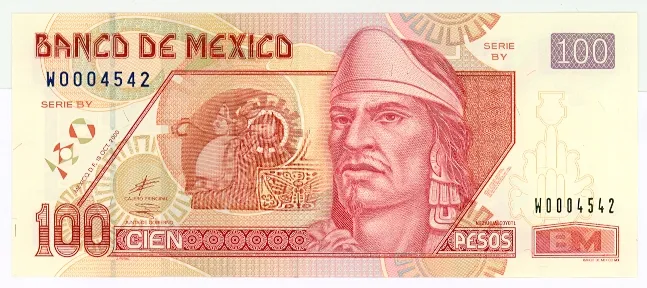
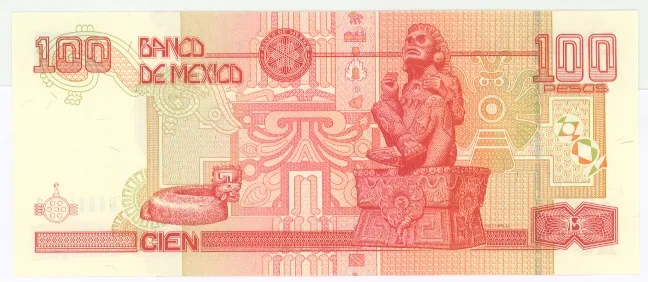
Design
Banxico
Obverse
Nezahualcóyotl
Portrait of Nezahualcóyotl, the poet-king
Reverse
The Templo Mayor of Tenochtitlan
About this banknote
Most old Mexican banknotes are worth exactly their face value, and the 100 pesos (2000) Family D note is usually one of them. A circulated example is worth 100 pesos and nothing more. But a crisp uncirculated copy, a special serial number, or the 75th-anniversary commemorative variant can sell for several times that to collectors. Here is what actually moves the price.
This is the Family D 100-peso note (Banco de México classifies its note designs by family letter, D being the series issued before the F family). The front features Nezahualcóyotl, the 15th-century poet-king of Texcoco. The back shows the Templo Mayor, the main temple of the Aztec capital Tenochtitlan. Check the printed year to tell this D-family note apart from the later F-family 100 that shares the same portrait.
What it's worth in 2026
If you found one and it's worn, folded, or stained, it's a face-value note: 100 pesos, roughly 5 to 6 US dollars at the exchange rate, and not a cent more from a collector. There is no hidden fortune in an average circulated example.
The value jump comes from three things, and you need at least one of them:
- Uncirculated condition. Crisp, no folds, no stains, original paper snap. Collectors of world paper money (the hobby is called notaphily) pay a premium for notes that never touched a wallet. An uncirculated D-family 100 can bring several times face value, though exact figures depend on demand and grading.
- A special serial number. Low numbers (like 0000012), radar/palindrome serials (reads the same both ways, such as 1234321), solid serials, or repeaters. These carry a premium regardless of denomination.
- A genuine printing error. Misaligned cuts, ink smears, factory folds, doubled or off-center serials. A real error turns a common note into a rarity worth several times face. Normal wear and use damage is not an error.
When a denomination starts leaving circulation, that's when collectors begin hunting clean, unused examples. To understand that cycle, read why the 20-peso note is leaving circulation and the most counterfeited banknotes in Mexico.
The 75th-anniversary commemorative variant
The 100 pesos (2000) exists in a commemorative variant marking the 75th anniversary of Banco de México (1925-2000). It is not a redesigned note. It's the same Family D 100 with an added commemorative legend, printed on cotton paper. Banxico did the same thing across several denominations of that period.
For collectors, the 75th-anniversary variant is more sought after than the plain note of the same year. If you have one, look closely for the commemorative legend on the note, because it can make a real difference in value. Not sure which one you have? Post clear photos on the Pesoteca forum and the community will identify it.
Value at a glance
| Note | Year | Condition / feature | Typical value to a collector |
|---|---|---|---|
| 100 pesos, Family D | 2000 | Circulated (folds, wear) | Face value only (about 5-6 USD) |
| 100 pesos, Family D | 2000 | Uncirculated | Several times face value |
| 100 pesos, Family D | 2000 | Low / radar / repeater serial | Premium over face, varies by serial |
| 100 pesos, Family D | 2000 | Genuine printing error | Several times face, case by case |
| 100 pesos, 75th anniversary variant | 2000 | Any grade | Above the plain note of the same year |
How to tell if yours is genuine
Check the built-in security features: hold it to the light for the watermark, look for the embedded security thread, feel the raised intaglio printing, and inspect the microprinting. Compare the design, paper, and signatures against official Banco de México reference images. Reproductions usually give themselves away with smooth, flat paper and dull, flat colors. If anything looks off, ask on the forum before you buy or sell.
Where to sell it
The safest routes are a verified numismatic dealer from the Pesoteca shop directory, who can appraise it on the spot, or the Pesoteca buy-and-sell forum among collectors. Photograph both sides in good light and note whether it has a low, radar, or repeater serial or the 75th-anniversary legend, since those raise the price. Avoid dumping it to the first bidder on social media.
Got a Family D 100 with an odd serial number, a printing error, or the anniversary legend? Post it on the forum and let the community weigh in on what it's really worth.
Fun fact
There is a commemorative variant of this note for the 75th anniversary of the Banco de México (1925-2000): the same design with a special legend added. Collectors seek it more than the common note.
Historical context
The 100-peso note of family D pays tribute to Nezahualcóyotl, the famous poet-king of Texcoco, a ruler, engineer, and author of songs in Nahuatl that tradition preserves to this day. It is one of the few times Mexican paper money places a figure from the pre-Hispanic world on the obverse.
The reverse shows the Templo Mayor of Tenochtitlan, the ceremonial heart of the Mexica world, whose remains were rediscovered in downtown Mexico City in the twentieth century. Obverse and reverse thus build a bridge to ancient Mexico.
This piece belongs to the series that circulated between 1996 and 2006, with the peso already consolidated after the 1993 monetary reform. Choosing an Indigenous poet for a widely used denomination was a decision heavily charged with symbolism about the country's roots.
Frequently asked questions
How much is the Mexico 100 pesos (2000) note worth?
A circulated example is worth face value, about 5 to 6 US dollars at current exchange. An uncirculated copy, a special serial number, or a genuine printing error can sell for several times that. The 75th-anniversary commemorative variant also brings a premium. Condition and rarity drive everything.
Is the 100 pesos (2000) Family D note rare?
The plain circulated note is common and worth face value only. What's genuinely scarce is a truly uncirculated example, a special serial (low, radar, or repeater), a real printing error, or the 75th-anniversary of Banco de México variant with its added commemorative legend. Any one of those makes it worth chasing.
Where can I sell my Mexico 100 pesos (2000) note?
Use a verified dealer from the Pesoteca shop directory, who can appraise it in person, or the Pesoteca buy-and-sell forum among collectors. Photograph both sides clearly and note any low or radar serial, printing error, or the 75th-anniversary legend, since those raise the value. Don't sell to the first random online offer.
How do I tell if the 100 pesos (2000) note is genuine?
Check the watermark against the light, the embedded security thread, the raised intaglio feel of the printing, and the microprinting. Compare the design, paper, and signatures with official Banco de México images. Fakes usually have smooth, flat paper and dull colors. If in doubt, post photos on the Pesoteca forum for a second opinion.
Familia D
This banknote belongs to the BIL-D family within the Sistema PSM . Explore all the banknotes that share origin, era and design with this piece.
Ver todos los billetes de la familia D →