
Mexican 100-Peso Nezahualcóyotl Banknote (Family F): Value Guide
Familia F · algodón
Period: México Contemporáneo
Design
Banxico
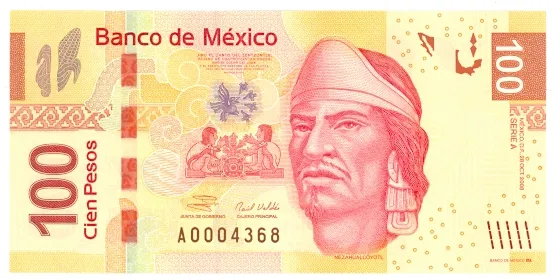
Obverse
Nezahualcóyotl
Portrait of Nezahualcóyotl, the poet-king of Texcoco
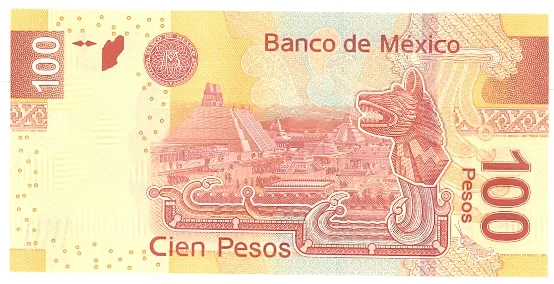
Reverse
The Templo Mayor and a fragment of a Nahuatl poem
About this banknote
Most circulated Mexican 100-peso notes with Nezahualcóyotl on the front are worth exactly their face value: about 5 to 6 US dollars at the current exchange rate. The exceptions are uncirculated notes, fancy serial numbers, and genuine printing errors, which collectors pay a premium for. If you inherited a stack of these, here is how to tell a common note from one worth chasing.
What this note is
This is the 100-peso note from the Banco de México Family F series, first issued in 2008. The front shows Nezahualcóyotl, the poet-king of Texcoco (a pre-Hispanic city in the Valley of Mexico). Around his portrait is an illustration tied to the verse "Amo el canto del cenzontle, pájaro de cuatrocientas voces" ("I love the song of the cenzontle, bird of four hundred voices"): a cenzontle (a mockingbird native to Mexico), Nahuatl speech symbols, and a flower sprouting from a piece of jade.
The back shows the Templo Mayor of México-Tenochtitlan, the main temple of the Aztec capital, along with the glyph of Nezahualcóyotl's name, a coyote fasting. One footnote collectors like: there is real academic debate over whether Nezahualcóyotl actually wrote that famous poem attributed to him.
The Banco de México has announced the retirement of this note from circulation. That matters for value, because a denomination starts drawing collector interest the moment it stops being printed and people begin hunting for crisp, unused examples.
How much is it worth in 2026
If the note still circulates and shows normal wear, it is worth face value, roughly 5 to 6 US dollars depending on the peso exchange rate. That is the honest answer for the vast majority of these notes.
Three things push a Family F 100-peso note above face value:
- Uncirculated condition (UNC). A note that is crisp, with no folds, creases, stains, or soft corners, and ideally straight from a bank pack. Collectors pay a premium for true UNC because most surviving notes have been handled.
- Fancy serial numbers. A low serial (like A0000123), a solid or repeated number, or a radar/palindrome serial (reads the same backward, such as 1234321). These are actively sought in the world paper money market.
- Genuine printing errors. Misaligned cuts, ink smears, missing print, folded-in paper from the press, or duplicated/off-center serials. A real factory error turns a common note into a small rarity worth several times face.
Outside those categories, a used Family F 100 is a 5-dollar note. No premium, no myth. Normal wear or damage from handling is not an error and does not add value.
Quick reference
| Attribute | Detail |
|---|---|
| Denomination | 100 pesos |
| Issuer | Banco de México |
| Series / family | Family F |
| First issued | 2008 |
| Front | Nezahualcóyotl, cenzontle, jade flower |
| Back | Templo Mayor, coyote name glyph |
| Status | Being retired from circulation |
| Common circulated value | Face value (about USD 5 to 6) |
| Premium value | UNC, fancy serials, or genuine errors |
How to tell if yours is worth more
Check three things before assuming it is common:
- Condition. Look for any fold, crease, or stain under good light. A single center fold drops a note from UNC to circulated and kills most of the premium.
- Serial number. Photograph both serials and look for a low number, a palindrome, or repeated digits.
- Errors. Compare against a normal note. Misregistered printing, an extra flap of paper, or a serial that is clearly off-center or duplicated is a genuine error worth flagging.
For context on the current Mexican note landscape, read why the 20-peso note is leaving circulation and the most counterfeited banknotes in Mexico.
Is it genuine?
Genuine Family F notes carry several security features you can check by hand:
- A watermark of the portrait, visible when held to the light and built into the paper, not printed on top of it.
- A security thread running through the note.
- Microprinting that stays sharp under magnification.
- Raised intaglio printing you can feel with a fingertip.
Counterfeits usually feel flat and smooth, with no raised texture, and the watermark looks printed rather than embedded in the paper. If you are unsure, post clear photos of both sides in the forum for a second opinion before you buy or sell.
Where to sell it
The safest routes are a verified numismatic dealer or the collector community, not a random online buyer. Photograph both sides in good light, note the serial number and condition, and get a read on whether you have a common note or a premium one before you accept an offer. Check the Pesoteca dealer directory for a shop that can appraise it in person, or list it in the Pesoteca buy-and-sell forum among collectors who know the series.
Got a Nezahualcóyotl note with an odd serial or a printing quirk? Post it in the forum and let the community weigh in on what it is really worth.
Historical context
This 100-peso note from 2008 keeps on its obverse the effigy of Nezahualcóyotl, the tlatoani of Texcoco whose name means "fasting coyote." Besides being a statesman and military strategist, he promoted a system of laws and great works of engineering, such as the dike that separated the fresh waters from the brackish ones in Lake Texcoco. His court was a center of flourishing intellectual life in the 15th century.
The reverse celebrates his poetic legacy through an allegory inspired by his verses on the song of the zentzontle, a symbol of the aesthetic sensibility of the Nahua world.
Issued well into the F family, this piece accompanied those of previous years with the same thematic design. The presence of a pre-Hispanic ruler turned poet reaffirmed, at the height of the 21st century, Banco de México's interest in reflecting the country's historical depth on its circulating currency.
Frequently asked questions
How much is the 100-peso Nezahualcóyotl banknote worth?
A circulated note is worth its face value, about 5 to 6 US dollars at the current exchange rate. An uncirculated note, one with a fancy serial number (low, repeated, or palindrome), or one with a genuine printing error can bring several times that. Condition and rarity drive the premium.
Is the Family F 100-peso note rare?
In circulated condition, no. Millions were printed and used. The scarce and collectible versions are truly uncirculated notes, notes with special serial numbers, and genuine factory errors. With the note now being retired from circulation, crisp unused examples are getting harder to find.
Where can I sell my 100-peso Nezahualcóyotl note?
The safest options are a verified dealer from the [Pesoteca directory](/tiendas), who can appraise it on the spot, or the [Pesoteca buy-and-sell forum](/foro/compra-venta) among collectors. Photograph both sides in good light and note the serial and condition first. Avoid dumping it on the first random online buyer.
How do I know if the note is genuine?
Check the security features: a watermark built into the paper (not printed on top), a security thread, microprinting that stays sharp, and raised intaglio print you can feel. Counterfeits usually feel flat and smooth with a printed-looking watermark. When in doubt, post photos in the [forum](/foro).
Familia F
This banknote belongs to the BIL-F family within the Sistema PSM . Explore all the banknotes that share origin, era and design with this piece.
Ver todos los billetes de la familia F →