
1,000-Peso Miguel Hidalgo Banknote (2006): Value & Guide
Familia F · algodón
Period: México Contemporáneo
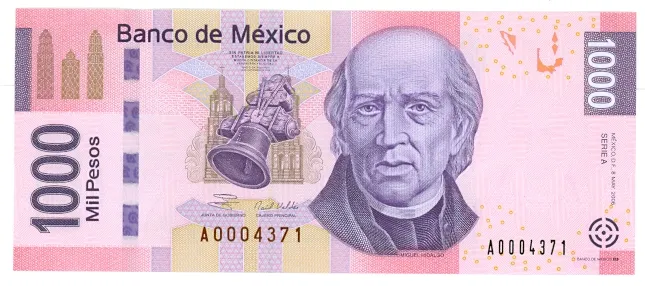
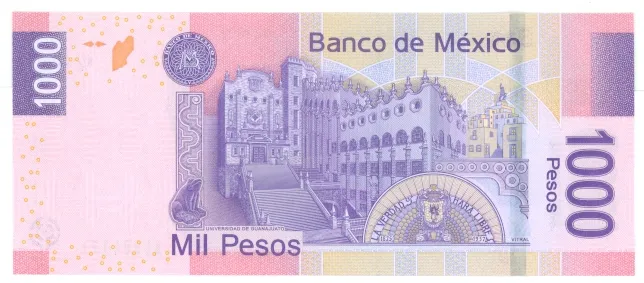
Design
Banxico
Obverse
Miguel Hidalgo
Portrait of Miguel Hidalgo with the Dolores bell and the two towers of his church
Reverse
The University of Guanajuato and the Dolores bell
About this banknote
If you inherited or found a Mexican 1,000-peso note showing Miguel Hidalgo (2006, Bank of Mexico Series F), here is the honest answer: a used one is worth its face value, roughly 50 to 55 US dollars at current exchange rates. A crisp uncirculated example, a low or repeating serial number, or a genuine printing error can push it to several times that. Rarity and condition decide everything.
This is the highest denomination of the Series F family (in Spanish, familia F). After 14 years in circulation the Bank of Mexico (Banco de México, or Banxico) placed it in withdrawal, which is exactly when collectors start hunting clean, unfolded examples.
What it looks like
The front shows Miguel Hidalgo y Costilla, the priest who launched Mexico's War of Independence in 1810, alongside the bell of Dolores and the church towers, a reference to the "Grito" (the call to arms). The back features the University of Guanajuato with its stepped facade, an interior stained-glass window, and a small frog, the symbol of the city of Guanajuato.
What it's actually worth in 2026
Be realistic. A circulated 1,000-peso Series F note is worth face value: around 50 to 55 US dollars, no premium. It is not old, not scarce, and hundreds of millions were printed. "Old peso note equals fortune" is a myth that other sites keep alive.
The value jumps only in three specific cases:
- Uncirculated condition. A note with no folds, no stains, sharp corners and full crispness. Notaphily buyers pay for grade. An uncirculated example in a graded holder can bring a modest premium over face.
- Special serial numbers. A low serial (like 0000012), a solid or repeating serial, or a radar/palindrome number (reads the same forwards and backwards). Collectors of "fancy serials" are an active English-language market and will pay several times face for the right number.
- Genuine printing errors. Misaligned cuts, ink smears, factory folds, missing or shifted printing. A confirmed error turns a common note into a true rarity worth multiples of face.
Everything else is face value. Normal wear and handling damage is not an error, and it does not add value. When a denomination starts being withdrawn, that is the moment clean and uncirculated examples become collectible, so a pristine one you set aside now is worth watching.
For context, see why the 20-peso note is leaving circulation and the most counterfeited banknotes in Mexico.
Value at a glance
| Condition / feature | What it means | Approx. value |
|---|---|---|
| Circulated, no special features | Everyday used note | Face value (about 50-55 USD) |
| Uncirculated (crisp, unfolded) | Bank-fresh, sharp corners | Small premium over face |
| Fancy serial (low / radar / solid) | Sought-after serial number | Several times face |
| Genuine printing error | Factory defect, confirmed | Multiples of face, case by case |
How to tell if yours is genuine
Check the built-in security features:
- Watermark: hold it to the light. A real watermark is part of the paper, not printed on top.
- Security thread: an embedded strip visible against light.
- Microprinting: tiny text that stays sharp under magnification.
- Raised print (intaglio): you should feel relief when you run a finger over the main portrait and figures.
A counterfeit usually feels smooth and flat, with a watermark that is printed instead of embedded in the paper. If you are unsure, post clear photos of both sides in the Pesoteca forum and the community will check it.
Where to sell it
To sell a 1,000-peso Miguel Hidalgo note safely, use a verified numismatic shop from the Pesoteca directory, which can appraise it on the spot, or the Pesoteca buy-and-sell forum among collectors. Photograph both sides in good light and check whether the serial is low, a palindrome, or shows any error, since those raise the price. Do not dump it on social media to the first bidder before you know what you have.
Got one with an unusual serial or a possible error? Post it in the forum and let's take a look together.
Fun fact
Its reverse features the University of Guanajuato and a frog, a symbol of the city. After 14 years, Banxico began withdrawing it from circulation.
Historical context
This 1,000-peso note of 2006 honors Miguel Hidalgo y Costilla, known as the Father of the Nation. Parish priest of Dolores and an enlightened reader of the ideas of his time, in 1810 he led the uprising that began the War of Independence. At the head of an improvised army he advanced through the Bajío, taking cities such as Guanajuato and Guadalajara, where he decreed the abolition of slavery, before being captured and executed in Chihuahua in 1811.
On the highest denomination of Family F, Hidalgo's presence underscores his founding place in national history: he is the starting point of independent Mexico. Unlike the commemorative 200-peso note, where he appears with the insurgent banner, here he leads the series as the figure of highest rank in circulation.
Released in 2006, this piece was part of the comprehensive overhaul with which the Banco de México modernized its notes, strengthening security and updating the tribute to the heroes of Independence.
Frequently asked questions
How much is the 1,000-peso Miguel Hidalgo note (2006) worth?
A circulated example is worth its face value, roughly 50 to 55 US dollars at current exchange rates. As a collectible, an uncirculated note, one with a special serial number, or one with a genuine printing error can be worth several times more. Condition and rarity decide the price.
Is the 1,000-peso Miguel Hidalgo note rare?
Not on its own. It is the highest denomination of the Bank of Mexico Series F and was printed in large numbers, so a used one is common and trades at face value. What is scarce is a crisp uncirculated example, a fancy serial number (low, solid, or palindrome), or a confirmed printing error.
Where can I sell my 1,000-peso Miguel Hidalgo note?
The safest options are a [verified numismatic shop in the Pesoteca directory](/tiendas), which can appraise and buy on the spot, or the [Pesoteca buy-and-sell forum](/foro/compra-venta) among collectors. Photograph both sides clearly and note any low or repeating serial, which raises value.
How do I know if my 1,000-peso note is genuine?
Check the security features: an embedded watermark visible against light, a security thread, microprinting, and raised intaglio print you can feel on the portrait. A fake usually feels flat and smooth with a printed watermark instead of one built into the paper. When in doubt, post photos in the [Pesoteca forum](/foro).
Familia F
This banknote belongs to the BIL-F family within the Sistema PSM . Explore all the banknotes that share origin, era and design with this piece.
Ver todos los billetes de la familia F →