
Mexico 200 Pesos Banknote (2000): Value & How to Sell
Familia D · algodón
Period: México Contemporáneo
Design
Banxico
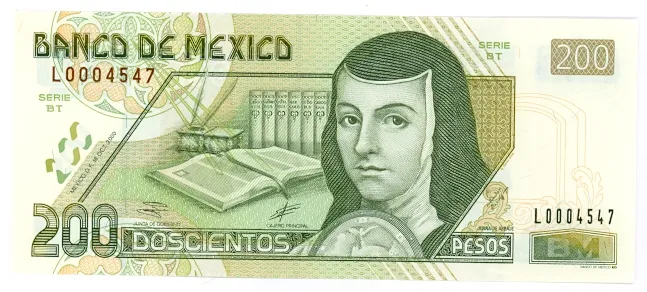
Obverse
Sor Juana Inés de la Cruz
Portrait of Sor Juana Inés de la Cruz
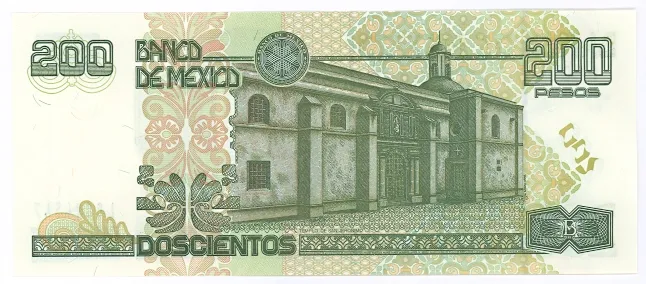
Reverse
The Panoayan hacienda
About this banknote
Most circulated Mexican 200-peso notes from 2000 are worth close to face value, around 10 to 12 US dollars at the current exchange rate. The pieces that bring more are uncirculated notes, notes with a special serial number, and the commemorative variant for the Banco de México 75th anniversary. Here is how to tell which one you have.
This is the 200 pesos from Family D (the "familia D" series, a labeling system the Banco de México uses to group note designs by generation). It features Sor Juana Inés de la Cruz, the 17th-century poet and scholar known as the Tenth Muse, and it is the paper version that came before the newer Family F design. The back shows the Hacienda de Panoaya, the estate where Sor Juana spent her childhood. The note is out of circulation now, which is exactly why collectors have started to look for clean examples.
What it's worth in 2026
If a note like this were still spendable, it would be worth its 200 pesos face value, roughly 10 to 12 US dollars depending on the exchange rate. As a collectible, the price only jumps for three specific reasons:
- Condition. An uncirculated note (crisp, no folds, no stains, no soft corners) is worth several times a worn one. Circulated paper money almost always trades near face.
- Serial number. A low serial (like 0000123), a radar/palindrome serial (reads the same both ways, such as 1234321), or a repeated/solid serial makes a common note desirable to specialists.
- Printing error. A misaligned cut, ink smear, factory fold, or off-center serial turns an ordinary note into a genuine rarity worth several times face.
Outside of those, a used Family D 200-peso note is worth its face value and nothing more. There is no hidden fortune in a well-handled example. Demand for these notes rose once the denomination began leaving circulation, which is the normal pattern in world paper money: collectors chase the clean, uncirculated survivors after a design is retired.
To see how this plays out with other Mexican denominations, read why the 20-peso note is leaving circulation and the most counterfeited banknotes in Mexico.
The commemorative variant: Banco de México 75th anniversary
The most collectible version of this note is the commemorative variant for the 75th anniversary of the Banco de México (1925 to 2000). It is not a different design. It is the same Family D 200-peso note with an added commemorative legend, printed on cotton paper. The Banco de México did the same thing across several denominations from that period.
For collectors, the 75th-anniversary variant is more sought after than the standard note of the same year. If you have one, check carefully for the commemorative legend, because it can make a real difference in value. Not sure which one you have? Post it in the forum and we'll take a look.
Quick value reference
| Note | Year | Typical value | Notes |
|---|---|---|---|
| 200 pesos, Family D, circulated | 2000 | ~10 to 12 USD (face) | Worn examples trade near face value |
| 200 pesos, Family D, uncirculated | 2000 | Several times face | Crisp, no folds, clean corners |
| 200 pesos, 75th anniversary variant | 2000 | Premium over standard | Look for the commemorative legend |
| 200 pesos with rare serial or error | 2000 | Several times face and up | Radar, low, solid serials; printing errors |
Values shift with condition and the peso-to-dollar rate. Treat these as guidance, not fixed prices.
How to tell if yours is genuine
Check the security features before you pay or sell:
- Watermark: hold it to the light and look for the portrait watermark.
- Security thread: an embedded strip visible against light.
- Microprinting: tiny text that stays sharp under magnification.
- Raised print: you should feel texture on the main design and denomination.
For an older note like this, compare the design, paper feel, and signatures against official Banco de México images. Reproductions tend to have smooth paper and flat, lifeless colors. If anything looks off, post clear photos of both sides in the forum and the community will help you check.
Where to sell it
To sell the 200-peso note safely, use a verified coin and currency shop from the Pesoteca shop directory, which can appraise it on the spot, or the Pesoteca buy-and-sell forum among collectors. Photograph both faces in good light and note whether the serial is low, a palindrome, or shows any error, since those raise the value. Avoid dumping it on Facebook to the first bidder who offers something.
Got a 200-peso note with an unusual serial or a possible printing error? Post it in the forum and let's figure out what it's worth together.
Fun fact
There is a commemorative variant of this note for the 75th anniversary of the Banco de México (1925-2000): the same design with a special legend added. Collectors seek it out more than the ordinary note.
Historical context
This 200-peso note of Family D carries on its obverse Sor Juana Inés de la Cruz, the Tenth Muse, a Hieronymite nun and the highest voice in the letters of viceregal Mexico, author of a poetic and philosophical body of work still read centuries later.
The reverse presents the Panoayan hacienda, at the foot of the volcanoes, in the Amecameca region where the childhood of Juana de Asbaje unfolded before she entered conventual life. The scene connects the writer with the landscape that saw her grow up.
The piece corresponds to the series that circulated between 1996 and 2006, with the peso consolidated without the N$. Including a woman and a seventeenth-century intellectual on the paper money was a notable choice within a gallery dominated by military and political heroes.
Frequently asked questions
How much is the Mexico 200 pesos (2000) note worth?
A circulated example is worth its face value, roughly 10 to 12 US dollars at current exchange rates. As a collectible, an uncirculated note, one with a special serial number, or one with a printing error can be worth several times more. Condition and rarity drive the price.
Is the 200 pesos (2000) note rare?
The standard note is common and trades near face value. What's rare and valuable is a crisp uncirculated example, a note with a low or palindrome serial number, a printing error, or the 75th-anniversary commemorative variant of the Banco de México, which carries an added legend and is more sought after than the regular note.
Where can I sell my 200 pesos (2000) note?
The safest options are a verified shop from the [Pesoteca shop directory](/tiendas), which can appraise it in person, or the [Pesoteca buy-and-sell forum](/foro/compra-venta) among collectors. Photograph both sides in good light and check the serial number and condition first, since those affect what buyers will pay.
How do I tell if my 200 pesos (2000) note is genuine?
Check the security features: the watermark against light, the embedded security thread, microprinting, and the raised texture of the print. Compare the design, paper, and signatures to official Banco de México images. Fakes usually have smooth paper and flat colors. When in doubt, post photos in the [forum](/foro).
Familia D
This banknote belongs to the BIL-D family within the Sistema PSM . Explore all the banknotes that share origin, era and design with this piece.
Ver todos los billetes de la familia D →