
Mexican 50 Pesos Banknote (1994) Value
Familia AA · algodón
Period: México Contemporáneo
Design
Banxico
Obverse
José María Morelos
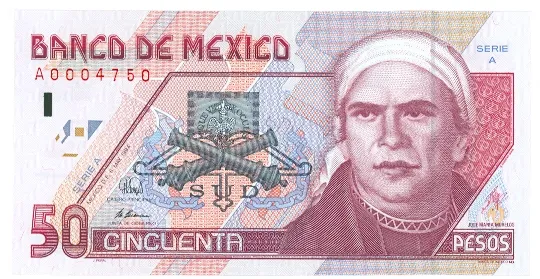
Portrait of José María Morelos and crossed swords
Reverse
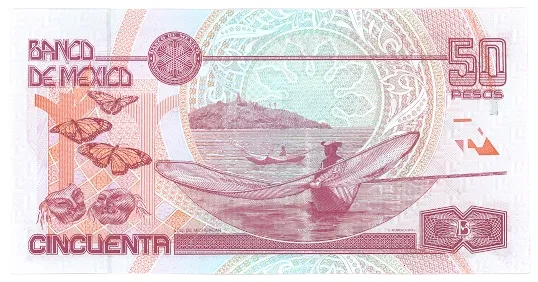
A fisherman with a net and monarch butterflies
About this banknote
Most 1994 Mexican 50 pesos banknotes are worth a few US dollars, not a fortune. This note left circulation years ago, so its value comes from collectors, not spending power. A well-worn example trades for roughly 2 to 5 USD, while a crisp uncirculated note with a low or radar serial number can bring 15 to 40 USD or more. Genuine printing errors are where the real money is.
This is the Banco de México Series AA 50 pesos featuring José María Morelos y Pavón, one of the leaders of Mexico's War of Independence. Morelos is shown alongside crossed swords, a nod to his role as a military general ("generalísimo").
The reverse shows a fisherman with a net and monarch butterflies, a design later inherited by the pink Series F 50 pesos note. The monarch butterfly is a pre-Hispanic symbol of Michoacán, the region Morelos came from.
What it's actually worth
Because this note is no longer legal tender for everyday use, you can't spend it at face value the way you could a current note. Its worth is entirely a collector's question, and condition drives almost everything.
| Condition | What it looks like | Approx. value (USD) |
|---|---|---|
| Circulated (worn) | Folds, soft corners, light stains | 2 to 5 |
| Very fine | Light handling, no major folds | 5 to 12 |
| Uncirculated | Crisp, sharp corners, no folds | 15 to 40 |
| Special serial or error | Low serial, radar, misprint | 40 and up |
These are collector-market ranges, not guaranteed offers. Prices online are often inflated, so treat listing prices as asking prices, not real sale prices.
What makes one worth more
Three things separate a common note from one collectors chase:
- Uncirculated condition. No folds, no stains, corners still sharp. A crisp note can be worth several times a worn one of the same date.
- Special serial numbers. A low serial (early in the print run), a radar/palindrome number (reads the same forwards and backwards, like 1234321), or a solid/repeating serial all add a premium.
- Genuine printing errors. Misaligned cuts, ink smears, factory folds, missing print, or off-center serials can turn a common note into a genuine rarity worth many times face. Normal wear and use damage is not an error.
How to tell if yours is genuine
Check the built-in security features: hold it to the light for the watermark, look for the security thread running through the paper, feel for raised intaglio printing on the portrait, and use a loupe to find microprinting. Compare the paper, colors, and signatures against official Banco de México reference images. Reproductions usually have smooth, flat paper and dull, printed-on colors instead of true intaglio relief.
If you want a second opinion, post clear photos of both sides in the Pesoteca forum.
Where to sell it
World paper money (notaphily) is an active English-language collecting field, so there are real buyers. Your best options:
- A verified numismatic dealer from the Pesoteca shop directory, who can appraise it in person.
- The Pesoteca buy-and-sell forum, where you deal directly with collectors.
- For higher-value notes, submission to a grading service like PMG can add trust and value before sale.
Always photograph both faces in good light and note the serial number before you sell. Don't dump it on social media at the first offer, especially if it has a special serial or a possible error.
Want a sanity check on your note? See which Mexican banknotes are faked most often, then post your serial and photos in the forum so the community can weigh in on what yours is really worth.
Historical context
This 50-peso note is part of Family AA, the first series of the new pesos put into circulation by the monetary reform in force since January 1993, when three zeros were removed from the currency and the N$ symbol these pieces display was adopted.
On the obverse appears José María Morelos y Pavón, generalísimo of Independence, accompanied by crossed swords that allude to his military role in the insurgency.
The reverse offers a different image from that of later series: a fisherman with a net and monarch butterflies, a clear reference to Michoacán, land of Morelos and sanctuary of the butterfly that migrates to its forests each winter. This design precedes that of Family D, which would swap the Michoacán reverse for the aqueduct of Morelia.
Frequently asked questions
How much is the 1994 Mexican 50 pesos note worth?
A circulated example typically sells for about 2 to 5 USD, since it's no longer legal tender and holds only collector value. An uncirculated note with sharp corners and no folds can bring 15 to 40 USD, and notes with special serial numbers or genuine printing errors go higher. Condition and rarity decide the price.
Is the 1994 Series AA 50 pesos note rare?
In ordinary circulated condition, no, plenty of these still survive and they're common. What's rare is a genuinely uncirculated note, a low or radar serial number, or a factory printing error. Any one of those turns a common note into something collectors actively want.
Where can I sell my 1994 Mexican 50 pesos banknote?
The safest routes are a verified dealer from the [Pesoteca shop directory](/tiendas), who can value it on the spot, or the [Pesoteca buy-and-sell forum](/foro/compra-venta) among collectors. Photograph both sides in good light and check for a low serial, radar number, or error, all of which raise the value. Avoid selling to the first offer on social media.
How do I know if my 50 pesos note is genuine?
Check the security features: hold it to the light for the watermark, look for the embedded security thread, feel for raised intaglio printing on Morelos's portrait, and use a loupe for microprinting. Compare the paper, colors, and signatures with official Banco de México images. Fakes usually have smooth, flat paper and dull printed colors. When in doubt, post photos in the [Pesoteca forum](/foro).
Familia AA
This banknote belongs to the BIL-AA family within the Sistema PSM . Explore all the banknotes that share origin, era and design with this piece.
Ver todos los billetes de la familia AA →