
Mexican 50 Pesos Banknote (1972, Ignacio Allende)
Familia A · algodón
Period: México Contemporáneo
Design
Banxico
Obverse
Ignacio Allende
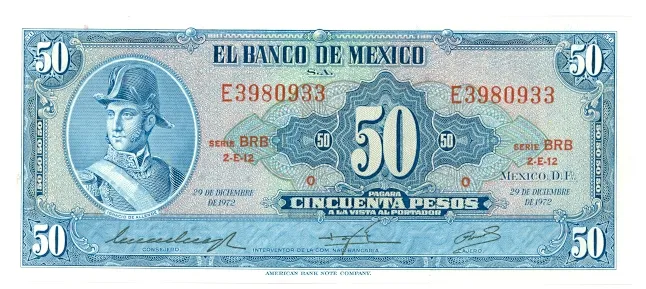
Portrait of General Ignacio Allende in military uniform
Reverse
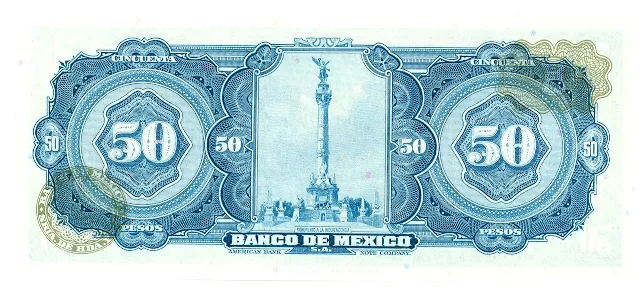
The Angel of Independence
About this banknote
Most 1972 Mexican 50-peso notes are worth a few US dollars, not a fortune. The blue Ignacio Allende note from the Banco de México "Familia A" series is a common note, and circulated examples trade in the low single digits in USD. The real money is in crisp uncirculated notes, low or radar serial numbers, and genuine printing errors.
If you inherited a stack of old Mexican paper money and this blue note is in it, this page tells you exactly what it is, what it's worth in 2026, and how to spot the version that's actually collectible.
What this note is
The front shows Ignacio Allende, a criollo military officer who was the armed leader of the Mexican War of Independence alongside Miguel Hidalgo. He appears in uniform, marking his role as a captain in the insurgent army. It's a blue-toned note that many people who lived in Mexico in the 1970s remember from everyday use.
The back shows El Ángel de la Independencia (the Angel of Independence), the gold-winged victory monument on Paseo de la Reforma in Mexico City.
This note belongs to the Banco de México "Familia A" series, the first modern family of Mexican banknote designs. "Familia A" is simply the series letter used to organize designs, roughly the way US collectors talk about a note's series year.
How much a 1972 50-peso note is worth
This note is out of circulation, so its value is collector value, not face value. Condition drives everything.
- Circulated (folds, soft corners, handling): a few US dollars. These are common.
- Uncirculated (crisp, no folds, sharp corners, no stains): worth several times a circulated example, but still modest for a common variety.
- Special serial numbers or errors: this is where prices jump.
Be skeptical of the inflated listings you see online. Most "Familia A" notes are genuinely common. A typical example is worth the equivalent of a few hundred Mexican pesos, which is a small figure in USD. Sellers who price a worn, folded note like a rarity are counting on a buyer who hasn't checked.
| Feature | Effect on value |
|---|---|
| Heavy circulation, folds, stains | Face-of-collectible only, a few USD |
| Uncirculated, crisp | Several times a circulated note |
| Low serial number (e.g. 00000123) | Premium, sought by collectors |
| Radar / palindrome serial (e.g. 1234321) | Premium |
| Genuine printing error | Multiplies value, can reach several times face |
What makes yours worth more
Check three things:
- Condition. No folds, no writing, no tears, corners intact. Uncirculated (UNC) notes are the ones dealers and graders want.
- Serial number. Low numbers, radar/palindrome numbers, or solid digits (all the same number) are prized in world paper money collecting.
- Printing errors. Misaligned cuts, ink smears, factory folds, missing print, or off-center serials turn a common note into a rarity. Normal wear is not an error.
For serious value, the note should be authenticated and graded. Third-party grading services like PMG (Paper Money Guaranty) encapsulate world notes and assign a numeric grade, which is what buyers in the international market pay attention to.
The overhyped versions
The myth is that any old Mexican banknote is worth a fortune. It isn't. The plain, circulated 50-peso Allende note is one of the most available Familia A notes there is. If a listing claims a worn, folded example is worth hundreds of dollars, treat it as clickbait pricing. The premium lives in genuine uncirculated condition, special serials, and verified errors, not in age alone.
How to tell if yours is genuine
For a note this old, focus on the paper and the printing:
- Watermark: hold it to the light and look for a watermark image, not a printed-on imitation.
- Security thread: an embedded thread, not a printed line.
- Intaglio feel: genuine notes have raised ink you can feel on the portrait and lettering. Reproductions feel flat and smooth.
- Color and paper: authentic notes use textured banknote paper. Photocopies and reproductions show flat colors and smooth, plain paper.
- Compare to official images: match the design, signatures, and serial format against Banco de México reference images.
If you're unsure, post clear photos of both sides in the Pesoteca forum and the community will help you check it.
Where to sell it
To sell a 1972 50-peso note safely:
- A verified numismatic dealer from the Pesoteca shop directory can appraise it in person and pay fair market value.
- The Pesoteca buy-and-sell forum connects you directly with collectors.
- For higher-value uncirculated or error notes, consider getting it PMG graded first, then selling to the international world-paper-money market, where graded Mexican notes have steady demand.
Photograph both sides in good light, note the serial number, and be honest about condition. Don't dump it on the first social-media offer.
Want to know what actually gets faked in Mexican paper money? Read the most counterfeited banknotes in Mexico, by the numbers.
Got one with an odd serial number or something that looks like an error? Post it in the forum and let's figure out together what you're holding.
Historical context
The 1972 50-peso note features General Ignacio Allende in military uniform. A criollo soldier from San Miguel el Grande (today San Miguel de Allende), he was the military strategist of the first phase of Independence: alongside Hidalgo he led the 1810 movement until both were captured and executed in 1811. His military training gave the insurgency its first discipline of arms.
The reverse shows the Ángel de la Independencia, the column crowned by the Winged Victory on Paseo de la Reforma, a monument that sums up the struggle Allende helped begin.
The note belongs to family A of the "old pesos," predating the 1993 reform. In 1972 a fifty-peso note was a high denomination for everyday use; the astronomical figures of thousands and tens of thousands would arrive with the inflation of the 1980s.
Frequently asked questions
How much is the 1972 Mexican 50-peso banknote worth?
A circulated example is worth only a few US dollars, since it's a common Familia A note. An uncirculated note, or one with a low or radar serial number or a genuine printing error, can be worth several times that. Condition and rarity decide the price, not age alone.
Is the 1972 50-peso Allende note rare?
No, the standard circulated version is one of the more common Familia A notes. What's rare, and worth a premium, are truly uncirculated examples, special serial numbers (low, radar, or solid digits), and genuine factory printing errors.
Where can I sell my 1972 50-peso note?
The safest options are a verified dealer from the Pesoteca shop directory, who can appraise it on the spot, or the Pesoteca buy-and-sell forum among collectors. For an uncirculated or error note, consider PMG grading first, then sell into the international world-paper-money market.
How do I know if my 1972 50-peso note is genuine?
Check the watermark against the light, the embedded security thread, and the raised intaglio ink you can feel on the portrait. Genuine notes use textured banknote paper with sharp color. Reproductions have flat colors and smooth paper. Compare to official Banco de México images, and if unsure, ask in the Pesoteca forum.
Características Banxico
2-E-12
Familia A
This banknote belongs to the BIL-A family within the Sistema PSM . Explore all the banknotes that share origin, era and design with this piece.
Ver todos los billetes de la familia A →