
En resumen
The 200-peso Hidalgo note (Independence Bicentennial) and the 100-peso locomotive note (Revolution Centennial) form a commemorative pair. Here's which is which and what they're actually worth.
Most Mexican banknotes from the last 20 years are worth exactly their face value. But two commemorative bills released in 2009 trade above that when they meet the right conditions: the 200-peso note with Miguel Hidalgo and the 100-peso note with a locomotive. In 2026, a clean uncirculated pair is what collectors chase, and a note with a low serial number or a printing error can bring several times its face value.
Here is what you have, how to spot the commemorative from the common bill, and what actually drives the price.
Quick answer: what are these notes worth?
These are not million-dollar rarities. They are modern commemoratives with limited print runs, which puts them above ordinary circulating notes but not into fortune territory. A worn example is worth little more than face. An uncirculated note with a low serial (starting A0000...), a palindrome serial, or a genuine printing error is where the real money sits, and the complete pair (200 plus 100) in uncirculated condition is the most sought-after combination.
| Note | Year issued | Commemorates | What lifts the value |
|---|---|---|---|
| 200 pesos, Hidalgo | 2009 | Independence Bicentennial (1810-2010) | Uncirculated grade, low or palindrome serial, printing error |
| 100 pesos, locomotive | 2009 | Revolution Centennial (1910-2010) | Uncirculated grade, low or palindrome serial, printing error |
The two form a set. Both entered circulation on September 23, 2009, and collectors of Mexican commemoratives want them together.
The 200-peso Independence Bicentennial note

The 200-peso commemorative note shows Miguel Hidalgo y Costilla holding the insurgent banner, the scene of the start of the War of Independence. The image is based on a painting by Jesús Enrique Emilio de la Helguera. The reverse features the Ángel de la Independencia (the Angel of Independence), the gold column monument on Mexico City's Paseo de la Reforma, with a stylized Phrygian cap symbolizing liberty.
This is a commemorative, not the everyday 200-peso note of that era, which featured the poet Sor Juana Inés de la Cruz. It went into circulation on September 23, 2009, printed on cotton paper.
The Hidalgo image is not a generic portrait. It comes from Jesús Helguera's work "Don Miguel Hidalgo," the same artist behind the calendars that hung in countless Mexican kitchens and workshops through the 20th century. That image of Hidalgo carrying the banner of the Virgin of Guadalupe at the head of the uprising is, for most Mexicans, the mental picture of the founding father. Banxico (the Bank of Mexico) picked it precisely because it is the most recognizable image of the start of independence.
The 100-peso Revolution Centennial note
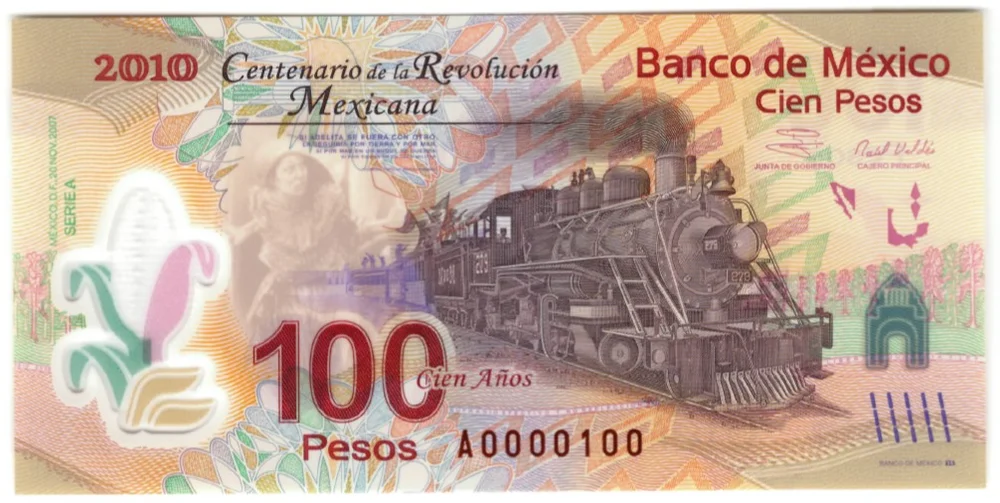
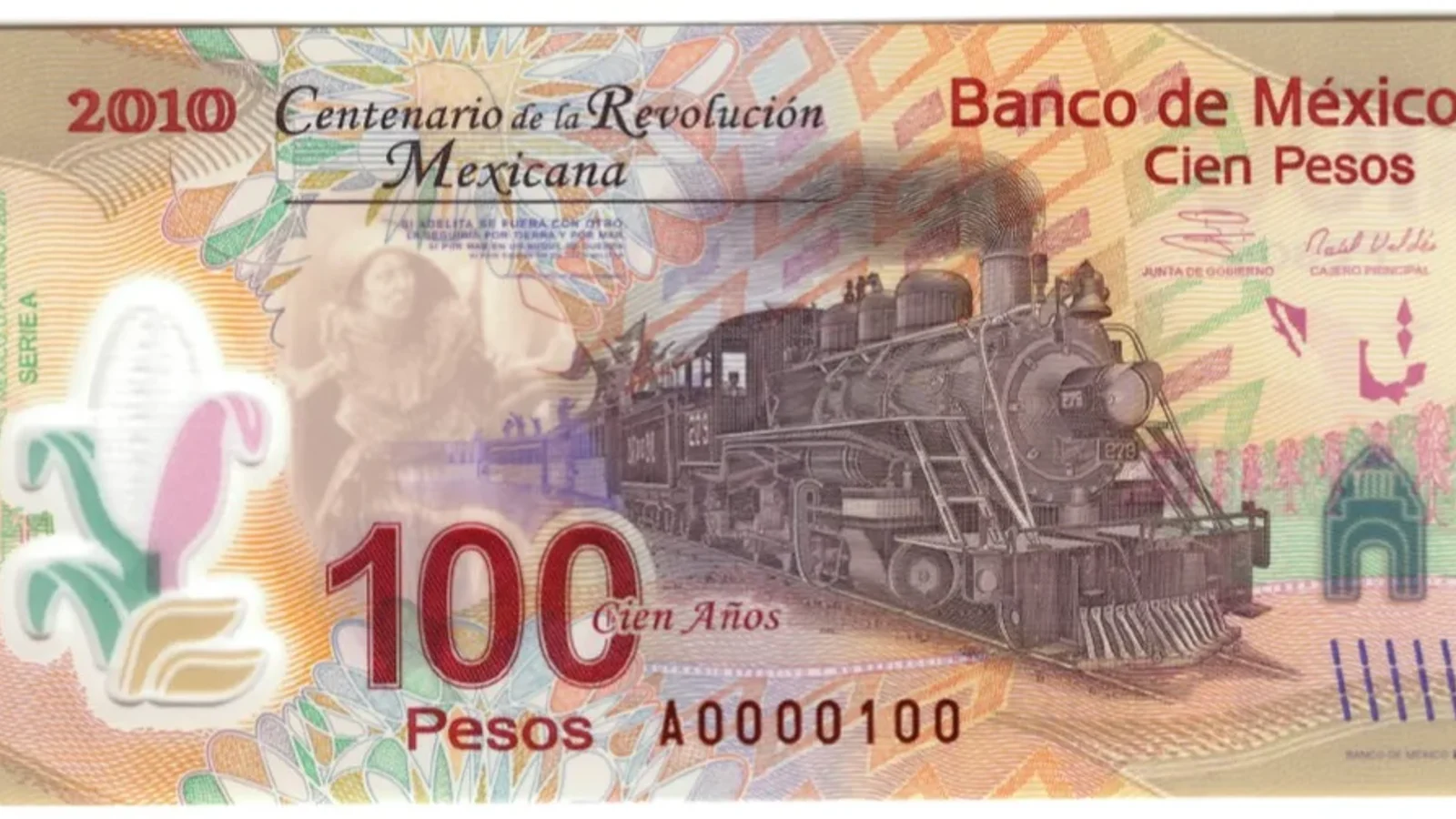
Its partner is the 100-peso Revolution commemorative note, one of the most loved designs among collectors. The front shows a locomotive loaded with revolutionary troops alongside a soldadera (a female soldier of the Revolution, known as an Adelita), based on a historic photograph from the Casasola Archive. The train was the great mover of the Revolution, which makes this one of the most symbolic images of the period.
The reverse reproduces a section of David Alfaro Siqueiros's mural "Del Porfirismo a la Revolución" (From the Porfiriato to the Revolution), kept at Chapultepec Castle. This note is printed on polymer and also entered circulation on September 23, 2009.
Do not confuse it with the common bill: the everyday 100-peso note of that era featured Nezahualcóyotl, the poet-king. The commemorative is the one with the locomotive, and it had a limited print run.
Why this pair matters to collectors
The two notes form a set. They were issued together, they mark the two movements that shaped modern Mexico, and many collectors want them as a pair. Being commemoratives with a limited print run, they trade differently from ordinary notes of the same denomination.
As always, condition rules the price:
- An uncirculated note with a low serial, a palindrome serial, or a printing error is worth several times its face value.
- A worn, common example is worth far less than inflated internet listings claim.
- The complete pair (200 plus 100) in uncirculated condition is the target for commemorative collectors.
To estimate what yours is worth, use our banknote value tool. If you have one with an unusual detail, post it to the forum and the community will help you identify it.
How to tell yours apart and avoid mistakes
The most common error is assuming any 100 or 200-peso note from that era is the commemorative. It usually is not. Here is the quick guide:
- The 100 commemorative has the locomotive and reads "Centenario de la Revolución Mexicana." The common 100 of those years is the Nezahualcóyotl note, with the Templo Mayor on the back. No locomotive means it is the common bill.
- The 200 commemorative shows Hidalgo with the banner and reads "Bicentenario de la Independencia de México 1810-2010." The common 200 of those years is the green Sor Juana note, with the Panoaya hacienda. If yours shows the nun rather than the priest, it is the common one.
Collectors also check the serial number. Low serials (starting A0000...) or palindromes command a premium. The note pictured in this article, for example, is serial A0000100, one of the first printed.
The history behind the designs
What makes these two notes stand out is that they tell a scene rather than showing a cold portrait. The Hidalgo note comes from Helguera's painting, the image of the hero everyone carries in their head. The locomotive note comes from a real photograph in the Casasola Archive, the great photographic record of the Revolution: that troop-loaded train and the Adelita in front are documented history, not invented illustration.
The reverse of the 100 is even more ambitious, reproducing a fragment of Siqueiros's mural "Del Porfirismo a la Revolución." A section of Mexico's great muralist tradition fits onto an everyday circulating note. Few countries put their muralists on daily currency.
Beyond market value, these notes hold up as objects: Mexico telling its own story on paper.
Keep reading
Mexico also commemorated the 1917 Constitution Centennial with a 100-peso Carranza note. For value, see the most valuable Mexican banknotes in 2026, and if you want to start collecting paper money, read our guide to Mexican banknote collecting.
Have a note with a strange serial or a printing quirk? Post a clear photo of the front and back on our forum and we will tell you what you are holding.

Loading comments…