
En resumen
The Mexican 50 pesos Centenario holds 1.2057 troy oz of gold and trades near melt. What it is worth in 2026 and how to buy it right.
A Mexican Centenario 50 pesos is worth its gold, not millions. Each coin holds 1.2057 troy ounces of pure gold, which puts its melt value around 5,150 USD in 2026 at a gold price near 4,895 USD per ounce. The common 1947 version trades close to that melt figure. Only a few early dates carry a real collector premium.
If you inherited one of these big yellow coins or you are thinking of buying gold, this is what the Centenario actually is, what it holds, and how not to overpay.
What a Centenario actually is
The Centenario is Mexico's 50 pesos gold coin, first struck in 1921 to mark 100 years of Mexican independence (that centennial is where the name comes from). The obverse shows the Angel of Independence, the Ángel de la Independencia, with the volcanoes Popocatépetl and Iztaccíhuatl in the background. It is one of the most recognized gold coins in the world and a standard way to hold physical gold.
Here are the hard specs, because every dollar of value flows from them:
- Total weight: 41.666 grams
- Pure gold content: 37.5 grams = 1.2057 troy ounces
- Purity: .900 fine (90% gold, 10% copper for durability)
- Original mint dates: 1921 through 1947
- Restrike: later production carrying the frozen date 1947, made as a bullion coin
The 10% copper is why the coin looks slightly reddish and is harder than pure gold. It does not reduce the gold content: you still own 37.5 grams of pure gold regardless of the alloy.
What your Centenario is worth in 2026
Value starts with melt. Multiply the gold content (1.2057 oz) by the current spot price of gold, and you have the floor. At a mid-2026 spot near 4,895 USD per ounce, that floor sits around 5,150 USD per coin. This number moves every day the gold market moves, up or down. There is no fixed price for a Centenario, and any site quoting one flat figure is out of date.
On top of melt, two things can add a premium:
- The date. The 1921 first-year strike and the genuinely scarce original dates (pre-1947) carry a modest collector premium above melt. The common 1947 restrike does not.
- Condition and authenticity. A certified, uncirculated original date is worth more than a scuffed one, but for a bullion coin these differences stay small.
| Coin | Date / type | What it's worth | Basis |
|---|---|---|---|
| Centenario 50 pesos | 1947 restrike (common) | Near melt, around 5,150 USD | Pure gold value at 2026 spot |
| Centenario 50 pesos | Original 1921-1947 dates | Melt plus a small collector premium | Scarcer, dated production |
| Centenario 50 pesos | 1921 first year | Highest premium of the series | First-year, sought by collectors |
The takeaway: the metal drives almost the entire value. The 1947 restrike is a straight bullion play. Only original dates give you any collector upside, and it is a small one.
Why the Centenario is a smart way to buy gold
Among Mexican gold coins, the Centenario gives you the best value per ounce. It is known for low premiums, meaning the price over melt that a dealer charges is thin compared with many other gold coins. If your goal is to own physical gold rather than a numismatic rarity, a common-date Centenario delivers roughly 1.2 ounces of gold in a single trusted coin, at a price that stays close to the metal.
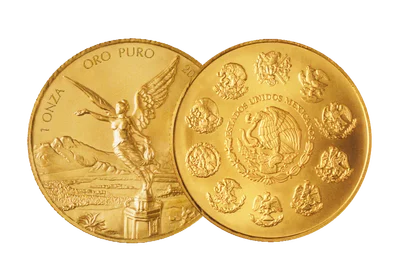
Compare that with the Onza Libertad, Mexico's 1-ounce silver and gold bullion series, or with fractional gold pesos. The Centenario's large size means you pay one premium for 1.2 ounces instead of stacking premiums across smaller coins.
The myth: "Grandpa's gold coin is worth a fortune"
No. A Centenario is not worth millions, and it is not a hidden rarity. It is worth its gold, roughly 1.2 ounces, plus a small premium on the right dates. Millions of these coins exist because Mexico kept restriking them as bullion for decades. Scarcity is what makes coins expensive, and the common Centenario is the opposite of scarce.
Two mistakes cost people real money here:
- Overpaying a dealer. If someone tries to sell you a common 1947 restrike far above melt, walk away. The premium on this coin should be modest. Check the live gold price, do the math (spot times 1.2057), and you know the floor.
- Underselling to a pawn shop. On the other side, a pawn shop may offer you well below melt. Your coin holds real gold value. Know the melt figure before you accept any offer.
The coins that genuinely command five- and six-figure prices in Mexican numismatics are colonial rarities and low-survival pieces, not standard-issue bullion. If you want to see which Mexican coins actually break records, we cover them in our guide to the most valuable Mexican coins.
How to check what yours is worth
1. Read the date. Look at the reverse. A 1947 is almost certainly a restrike and prices as bullion. An original pre-1947 date (especially 1921) may carry a collector premium, so it is worth verifying.
2. Weigh it. A genuine Centenario weighs 41.666 grams. A cheap scale that reads well off that figure is a red flag for a fake. Counterfeit Centenarios exist, and gold's high value makes verification essential.
3. Calculate the melt. Take today's gold spot price per ounce and multiply by 1.2057. That is your floor before any premium.
4. Authenticate before you sell. For a common date, a reputable coin dealer can verify it quickly. For an original date you believe carries a premium, third-party grading (NGC or PCGS, the two major US grading services) confirms authenticity and condition and makes the coin easier to sell.
5. Sell through the right channel. For bullion-grade coins, established gold dealers and reputable online bullion buyers pay close to melt. For a genuine early date with numismatic value, an auction house or a dealer who specializes in Mexican gold will get you a better result than a generic gold buyer who only pays melt.
Bottom line before you buy or sell
Buying: aim to pay a small premium over melt for a common Centenario. Anything well above that, and you are overpaying for standard bullion.
Selling: know your melt value first (spot times 1.2057). Do not let a buyer talk your 1.2 ounces of gold down to a fraction of what the metal is worth.
Not sure whether the date on yours is a common restrike or an original worth grading? Post the year and a clear photo of both sides in the Pesoteca forum and we will help you tell a bullion coin from a collectible one before you make a move.
Loading comments…