
1 Peso 1998 (Mexico, Bimetallic): What It's Worth
Prices updated: August 2026
Circulating coin EUM 1998, bimetallic, satin finish.
Circulating coin EUM 1998, bimetallic, satin finish.
Design
Banxico
Reverse
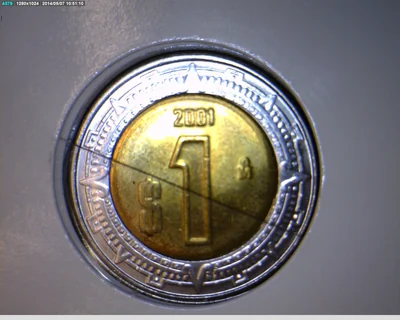
Reverse with the face value "1" prominent at the center, legend "ESTADOS UNIDOS MEXICANOS" in an upper arc, minting year 1998, and mint mark Mo of the Mexico City Mint.
Obverse
Obverse with the Mexican National Coat of Arms (eagle devouring a serpent atop a nopal cactus) in high relief at the center, legend "ESTADOS UNIDOS MEXICANOS" in an upper arc. The canonical design of post-1996-reform circulation.
How much is the 1 Peso 1998 (Mexico, Bimetallic): What It's Worth worth?
The market value of the 1 Peso 1998 (Mexico, Bimetallic): What It's Worth is not yet documented with enough data to give a firm range. Weigh and measure your piece, compare it against the specifications, and check the forum for a second opinion.
The real price depends on four factors: the grade of preservation (a circulated piece is worth the low end of the range; an uncirculated one, or one still in its official blister pack, the high end), the finish (satin vs mirror/proof), the rarity within the series based on the mintage, and the metal spot price on the day of the deal when the piece is silver or gold. Check the value-by-grade table above and compare with equivalent pieces before buying or selling.
Where to buy or sell this coin?
Browse the national directory of numismatic shops or the community forum to trade directly with other collectors.
Description
If you inherited or found a 1998 Mexican 1 peso coin, here is the honest answer: in circulated condition it's worth face value, roughly 5 to 10 US cents. A crisp uncirculated example might bring a dollar or two from a collector. This is a common circulating coin, not a rarity, and no version of it is secretly worth thousands.
That said, condition and mint errors can change the picture, and there are a few things worth checking before you spend it or toss it in a jar. Here's what you have and what drives its value.
What this coin actually is
This is a bimetallic 1 peso coin from Mexico, struck in 1998 at the Casa de Moneda de México (the Mexican Mint, mint mark "Mo"). Bimetallic means it has two metals: a stainless steel ring around an aluminum-bronze center, similar in construction to a US Sacagawea dollar or a euro coin. It weighs 3.95 grams and measures 21 millimeters across, with a reeded (grooved) edge.
It belongs to the current New Pesos era. Mexico revalued its currency in 1993 and adjusted the design after 1996, so this coin uses the standard modern layout that's still in circulation today.
- Front (obverse): The Mexican coat of arms, an eagle devouring a serpent while perched on a cactus, in high relief at the center. The legend "ESTADOS UNIDOS MEXICANOS" (United Mexican States, the country's official name) arcs across the top.
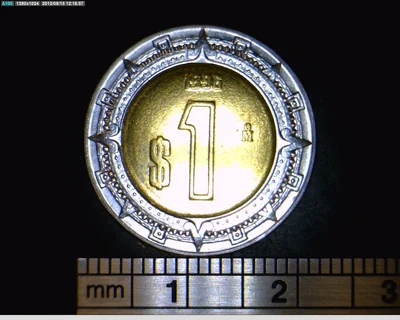
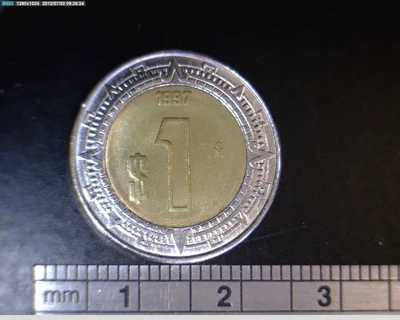
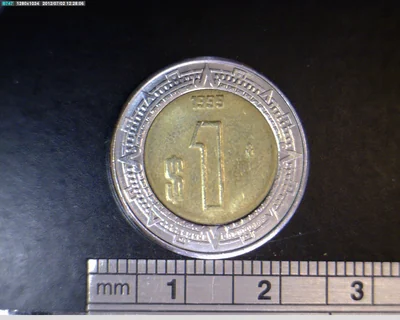
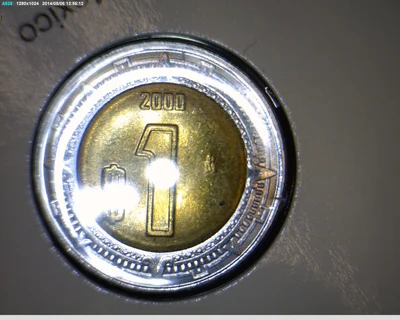
- Back (reverse): A large "1" for the denomination at center, the year 1998, and the "Mo" mint mark.
How much is a 1998 1 peso worth?
Be realistic. This coin was produced for everyday spending, so millions exist and most show wear. Value depends almost entirely on condition and whether it's a certified high grade or a verified mint error.
| Condition | Realistic value (USD) |
|---|---|
| Circulated (worn, everyday) | 5 to 15 cents (face value) |
| Uncirculated (no wear, original luster) | 1 to 3 dollars |
| Certified MS-66 or higher (NGC/PCGS) | 10 to 40 dollars, depending on demand |
| Verified genuine mint error | Varies; potentially much higher |
The metal itself has no meaningful melt value. Unlike Mexican silver coins such as the Onza Libertad (a 1 troy ounce .999 silver bullion coin) or the gold Centenario (a 50 peso coin holding 37.5 grams of pure gold), this 1 peso is base metal with a floor at face value.
If you're holding older or precious-metal Mexican pieces alongside this one, those are where real money can hide. See our guide to the most valuable Mexican coins to compare.
The one thing that can make it worth more: errors
Genuine minting errors (off-center strikes, die rotation, double strikes, or documented die varieties) can multiply the value of an otherwise common coin. This is the only realistic path to real money with a 1998 1 peso.
Here's the catch: most "errors" people post online are post-mint damage. A coin that was dinged, scratched, corroded, or squeezed in a vending machine is not a mint error and adds no value. A true error happened at the moment of striking. If you think you have one, don't guess. Post clear photos of the front, back, and edge to the Pesoteca forum and let collectors weigh in before you get excited or sell.
How to tell if yours is genuine
Counterfeits of a low-value circulating coin are uncommon, but it's easy to verify:
- Weigh it. A genuine coin weighs 3.95 grams. Use a jewelry scale.
- Measure it. The diameter should be 21 millimeters. Use calipers.
- Check the strike. Real coins have sharp, high-relief detail on the eagle. Fakes tend to look flat or mushy.
- Look at the two metals. The steel ring and bronze center should be cleanly separated with correct coloring. Poor color blending or a loose center is a red flag.
Most problems people find are wear or damage, not fraud.
Where to sell it
If your coin is ordinary circulated grade, honestly, it's spending money. But if it's a pristine uncirculated example or a suspected error, here are safe options:
- A verified coin shop from the Pesoteca dealer directory. They can appraise and grade it on the spot without overcharging you.
- The Pesoteca buy/sell forum, where you deal directly with collectors who actually want the piece.
Before you sell, photograph the coin (front, back, and edge) and compare it against the value ranges above. Don't dump it on the first Facebook offer. And if it's just a worn everyday coin, remember you can always exchange it at a Mexican bank at face value.
Before deciding what grade yours falls into, run it through our coin grading guide so you're comparing apples to apples.
Got a 1998 peso that looks off-center or unusual? Post your photos in the Pesoteca forum and we'll help you tell a real error from ordinary damage.
Historical context
When Banxico dropped the N$ prefix from the peso starting in 1996, the circulating pieces kept the same physical format as their Nuevos Pesos equivalents from the decree of June 22, 1992. This 1-peso bimetallic coin struck in 1998 is part of that continuity: same technical specifications, same base design with the National Coat of Arms on the obverse; only the face value visible on the reverse changed. That is why when you line up the dates you see long sequences with very little variation.
For the Mexican collector building a collection by year, these pieces are the ones that fill the basic gaps before hunting down the rare commemorative versions. Banxico has documented mintages in its Monetary Circular CM10 since the year 2000, so for 1998 it is possible to verify the exact mintage against that source. Pesoteca catalogs each year as a distinct physical piece in the PSM System family C, following our convention of one ID per collectible piece, not per shared design.
This piece belongs to the era
Nuevos Pesos y actualidad →Explore all the Mexican coins of this era, their historical context and how they connect to the monetary system of the period.
Value range of this piece
Value range without enough data for this piece.
See the full breakdown by grade (VG, F, VF, EF, AU, MS-60, MS-63, MS-65) for the whole series →
Same denomination, other years
1 peso Bimetálica · 1 Pesos Bimetálica
Frequently asked questions
How much is a 1998 Mexican 1 peso coin worth?
In circulated condition, it's worth face value, about 5 to 15 US cents. A true uncirculated example brings 1 to 3 dollars from collectors, and a certified high grade (MS-66 or better) can reach 10 to 40 dollars. Only a verified mint error would be worth substantially more.
Is the 1998 1 peso coin rare?
No. It's a common modern circulating coin produced in large numbers and still found in change in Mexico. It has no precious-metal content, so it isn't valuable for its metal either. Value only rises with top-tier certified grade or a genuine, verified minting error.
Where can I sell a 1998 Mexican 1 peso?
For an ordinary coin, it's face value, so a Mexican bank will exchange it. For an uncirculated piece or suspected error, use a verified shop from the Pesoteca dealer directory, which appraises on the spot, or the Pesoteca buy/sell forum with collectors. Photograph the front, back, and edge first, and avoid taking the first offer on social media.
How can I tell if my 1998 1 peso is genuine?
Weigh it (should be 3.95 grams) and measure it (21 millimeters diameter) with a jewelry scale and calipers, then compare to the specs above. Genuine coins have sharp high-relief detail on the eagle and clean separation between the steel ring and bronze center. Wrong weight, flat relief, or muddy metal coloring point to a fake.
Conversation
0 comments
Sources
- Ejemplar de la Coleccion Numismatica Banco de Mexico . inv. 20184
- Ejemplar de la Coleccion Numismatica Banco de Mexico . inv. 20185
- Ejemplar de la Coleccion Numismatica Banco de Mexico . inv. 20186
- Ejemplar de la Coleccion Numismatica Banco de Mexico . inv. 20187
- Ejemplar de la Coleccion Numismatica Banco de Mexico . inv. 20188
Images for informational and educational purposes, attributed to their original source. Reference values; the real price depends on the grade, the specific variant and demand.
Loading comments…