
10 Centavos 1995 (Stainless Steel): Value Guide
Prices updated: August 2026
Centavos stainless steel 1995.
Centavos stainless steel 1995.
Design
Banxico
Reverse
Reverse of the 10-centavo Stainless Steel 1995 piece. Detail of the die cataloged by Banxico in its Numismatic Collection.
Obverse
Obverse with the Mexican National Coat of Arms and the legend "ESTADOS UNIDOS MEXICANOS" per official convention. Struck by the Mexican Mint under Banxico decree.
How much is the 10 Centavos 1995 (Stainless Steel): Value Guide worth?
The market value of the 10 Centavos 1995 (Stainless Steel): Value Guide is not yet documented with enough data to give a firm range. Weigh and measure your piece, compare it against the specifications, and check the forum for a second opinion.
The real price depends on four factors: the grade of preservation (a circulated piece is worth the low end of the range; an uncirculated one, or one still in its official blister pack, the high end), the finish (satin vs mirror/proof), the rarity within the series based on the mintage, and the metal spot price on the day of the deal when the piece is silver or gold. Check the value-by-grade table above and compare with equivalent pieces before buying or selling.
Where to buy or sell this coin?
Browse the national directory of numismatic shops or the community forum to trade directly with other collectors.
Description
If you inherited or found a 1995 Mexican 10 centavos coin (the small silver-colored one), the honest answer is this: a worn example is worth its face value, essentially a few US cents. Mexico struck these in huge numbers. Only pristine, uncirculated pieces carry any collector premium, and even then it is modest, usually a couple of dollars at most.
So before you get your hopes up: this is not a rare coin, and no legitimate auction has ever paid a fortune for a common 1995 10 centavos. The value story here is short, and grade is the whole story.
What this coin actually is
The 10 centavos is a fractional coin, one tenth of a Mexican peso ("centavos" means cents). The 1995 version was struck by the Casa de Moneda de México, the Mexican national mint, in stainless steel. Specifications, which matter if you want to confirm you have the right coin:
- Weight: 2.08 grams
- Diameter: 17 mm
- Edge: smooth (plain)
- Composition: stainless steel (silver-gray, magnetic)
- Obverse: the Mexican coat of arms with the legend "Estados Unidos Mexicanos" (the official name of Mexico)
- Reverse: the value "10" with the wheat-spike (espiga) design used across this fractional series
The one thing that makes it interesting: the metal change
The 10 centavos denomination launched in 1992 struck in aluminum-bronze, giving it a gold-like color. Around the middle of the decade the mint switched to stainless steel, which looks more silvery and holds up better in circulation. 1995 sits in that transition, which is why you can find 10 centavos of the same denomination in two different metals.
For collectors building a complete set of the modern fractional coins, telling the gold-toned aluminum-bronze pieces apart from the silver-gray steel pieces is part of the appeal. The steel version is magnetic; a small magnet is the fastest way to confirm which alloy you have.
What it is worth in 2026
Value lives entirely in condition. These circulated by the millions, so the reality is:
| Condition | What it looks like | Approximate value (USD) |
|---|---|---|
| Circulated | Worn, dull, everyday wear | Face value only, a few cents |
| Uncirculated | Full original steel luster, clean fields | Roughly 1 to 3 dollars |
| Certified high grade (MS graded) | Slabbed by NGC/PCGS, top grade | A few dollars, occasionally more |
There is no bullion floor here. Unlike a silver Onza Libertad or a gold Centenario, stainless steel has no melt value worth chasing. Nobody buys these for the metal.
Don't confuse this with a valuable Mexican coin
Searches for "old Mexican coins worth money" pull up this kind of piece all the time, and people assume any coin from the 1990s might be rare. It isn't. If you want the coins that actually command real money at auction, those are the silver and gold pieces, not the modern fractional circulation coins. This 10 centavos is a set-filler, valuable to someone completing a run of modern coinage, not an investment.
How to check what yours is worth
- Confirm the coin. Weigh it (2.08 g) and measure the diameter (17 mm) with a jeweler's scale and a caliper. If the numbers are off, you may have a different year or a damaged piece.
- Grade the surface. Look at the fields (the flat background) under good light. Original steel luster with no scratches, spots, or rim dings is what separates a face-value coin from a small premium.
- Watch for real mint errors. Genuine, verifiable errors (off-center strikes, die rotation, double strikes) can multiply the value. But most "errors" posted online are post-mint damage: corrosion, scratches, or hits from circulation, not factory defects. Those add nothing.
- Authenticity. Fakes of a coin this cheap are rare because there is no profit in it, but if you're unsure, wrong weight or diameter, flat relief, or odd coloring are the giveaways.
Where to sell it
If yours is a nice uncirculated example and you want to sell, the safest routes are a verified numismatic shop from the Pesoteca directory, where you get an on-the-spot appraisal, or the Pesoteca buy-and-sell forum among collectors. Photograph the obverse, reverse, and edge in good light before offering it. For a circulated coin, honestly, it's spending money.
Not sure whether your 1995 10 centavos is truly uncirculated or just lightly worn? Post clear photos in the Pesoteca forum and let collectors weigh in before you sell.
Historical context
This 1995 10-centavo piece belongs to Family B with the N$ (Nuevo Peso) symbol issued by Banxico. The 10 centavos is the most-used fractional denomination in Mexico. It shows up when paying cash bills with odd amounts and as change in supermarkets, tortilla shops, and pharmacies. Its national eagle + denomination + year face is one of the most familiar to the everyday Mexican.
Stainless steel made it corrosion-resistant and cheap to strike. The piece replaced the copper-nickel used by earlier generations in the old peso system.
In 1995, annual inflation closed at 52.0% according to INEGI, and the average exchange rate was 6.42 pesos per dollar according to Banxico's FIX. It was the year of the Clinton bailout and the adjustment program with the IMF. Annual inflation closed at 52% and GDP fell 6.2%. Fractional coins had their toughest year: the purchasing power of a centavo was practically zero. The country was under the presidency of Ernesto Zedillo Ponce de León (PRI).
Catalog reference: KM#547. The piece is part of the official Banxico Numismatic Collection catalog and follows the convention of the PSM System, one ID per distinct physical piece, not per design shared with other years of the same series.
This piece belongs to the era
Nuevos Pesos y actualidad →Explore all the Mexican coins of this era, their historical context and how they connect to the monetary system of the period.
Value range of this piece
Value range without enough data for this piece.
See the full breakdown by grade (VG, F, VF, EF, AU, MS-60, MS-63, MS-65) for the whole series →
Same denomination, other years
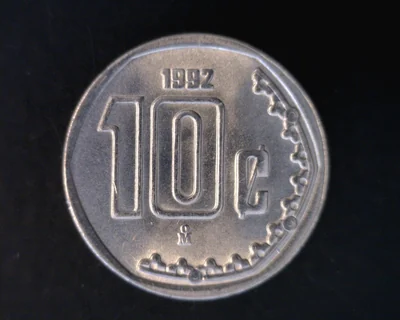
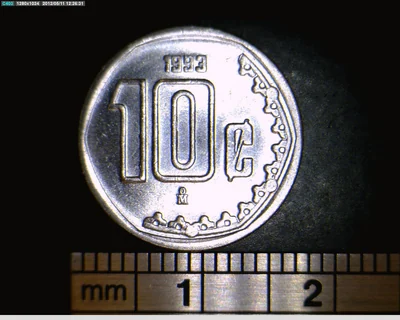
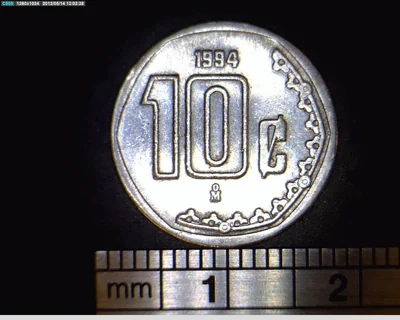
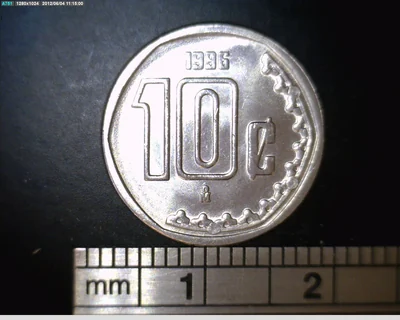
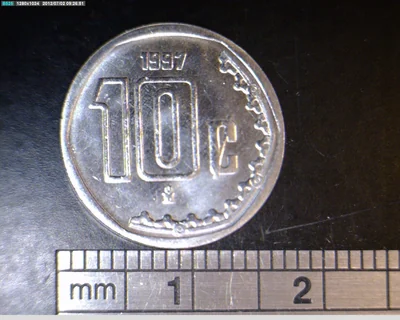
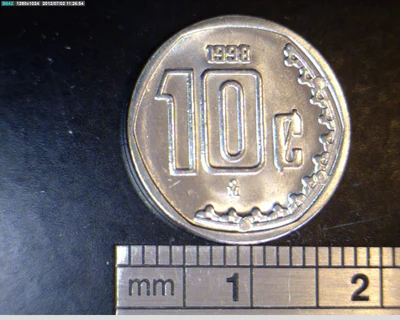
10 centavos Acero inoxidable · 10 Centavos Acero Inoxidable
Frequently asked questions
How much is a 1995 Mexican 10 centavos worth?
A circulated, worn example is worth its face value, only a few US cents. An uncirculated piece with full original steel luster and clean surfaces brings a modest premium, roughly 1 to 3 dollars. Grade is the entire value story for this coin.
Is the 1995 10 centavos rare?
No. It was struck by the millions and circulated widely, so worn examples are extremely common. The only versions with any collector interest are pristine uncirculated pieces, and even those carry a small premium. It is a set-filler, not a rare or investment-grade coin.
Where can I sell a 1995 10 centavos coin?
For an uncirculated example, use a verified numismatic shop from the Pesoteca directory for an on-the-spot appraisal, or the Pesoteca buy-and-sell forum among collectors. Photograph the obverse, reverse, and edge first and check the value range above. A circulated coin is essentially just spending money.
How do I tell if my 1995 10 centavos is genuine?
Weigh it (should be 2.08 grams) and measure the diameter (17 mm) with a jeweler's scale and a caliper, then compare to the specifications above. The stainless steel version is magnetic. Fakes usually have the wrong weight or diameter, flat relief, or off coloring, though counterfeits of a coin this inexpensive are rare because there's no profit in it.
Conversation
0 comments
Sources
- Ejemplar de la Coleccion Numismatica Banco de Mexico . inv. 19007
- Ejemplar de la Coleccion Numismatica Banco de Mexico . inv. 19005
- Ejemplar de la Coleccion Numismatica Banco de Mexico . inv. 19006
- Ejemplar de la Coleccion Numismatica Banco de Mexico . inv. 19008
- Ejemplar de la Coleccion Numismatica Banco de Mexico . inv. 19009
Images for informational and educational purposes, attributed to their original source. Reference values; the real price depends on the grade, the specific variant and demand.
Loading comments…