
Mexico 10 Centavos 1998 (Stainless Steel): Value & Facts
Prices updated: August 2026
Centavos stainless steel 1998.
Centavos stainless steel 1998.
Design
Banxico
Reverse
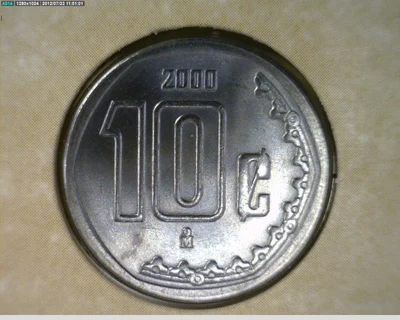
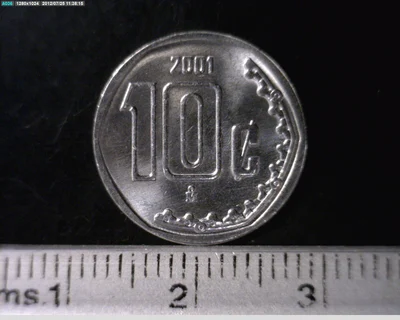
Value "10¢" within a hexagonal field, with the year at the top and the mint mark "Mo" below, surrounded by a partial border of stylized sun rays from the Ring of Sacrifice of the Sun Stone (Aztec Calendar).
Obverse
Obverse with the Mexican National Coat of Arms and the legend "ESTADOS UNIDOS MEXICANOS" per official convention. Struck by the Mexican Mint under Banxico decree.
How much is the Mexico 10 Centavos 1998 (Stainless Steel): Value & Facts worth?
The market value of the Mexico 10 Centavos 1998 (Stainless Steel): Value & Facts is not yet documented with enough data to give a firm range. Weigh and measure your piece, compare it against the specifications, and check the forum for a second opinion.
The real price depends on four factors: the grade of preservation (a circulated piece is worth the low end of the range; an uncirculated one, or one still in its official blister pack, the high end), the finish (satin vs mirror/proof), the rarity within the series based on the mintage, and the metal spot price on the day of the deal when the piece is silver or gold. Check the value-by-grade table above and compare with equivalent pieces before buying or selling.
Where to buy or sell this coin?
Browse the national directory of numismatic shops or the community forum to trade directly with other collectors.
Description
If you found a Mexican 10 centavos dated 1998, the honest answer is that a circulated one is worth face value, roughly a few US cents. Mexico struck 602,667,000 of them, so it is one of the most common coins you can pull out of a change jar. In 2026, the only versions worth more than pocket change are uncirculated pieces or coins with a genuine mint error.
What this coin actually is
This is a stainless steel 10 centavos from Mexico's "nuevos pesos" system, struck at the Casa de Moneda de México (the Mexican Mint). You will see a small "Mo" mark on it, which is the mint mark, not a date or denomination.
Specifications, exactly as issued:
- Metal: stainless steel (no silver, no gold)
- Weight: 2.08 grams
- Diameter: 17 mm
- Edge: plain (smooth)
- Years of the type: 1992 to 2009
The front (obverse) carries the Mexican coat of arms, an eagle on a cactus eating a snake, with the legend ESTADOS UNIDOS MEXICANOS (the official name of Mexico, "United Mexican States"). The back (reverse) shows the value "10¢" inside a hexagonal panel, the year above and the "Mo" mint mark below, framed by the stylized sun rays from the Aztec Sun Stone (the piece often called the Aztec calendar). It is the same design across the whole stainless steel 10 centavos series.
How much is it worth?
Stainless steel has no bullion value, so there is no metal floor propping up the price. Whatever this coin is worth is purely numismatic, and for a coin this common that means very little.
| Condition | Approximate value |
|---|---|
| Worn / circulated | Face value (a few US cents) |
| Lightly circulated | Under 25 US cents |
| Uncirculated (UNC) | Roughly 50 to 75 US cents |
Numista lists the 1998 in a range of about 1 to 13.50 Mexican pesos depending on grade, which converts to just a few US cents up to under a dollar. A normal circulated example is worth its face value and nothing more. The only way this coin pays off is if it is fully uncirculated or carries a mint error.
Is it rare? No.
Mintage for 1998 was 602,667,000 pieces, and every year of the 1992 to 2009 series ran into the hundreds of millions. Numista scores it 4 out of 100 on its rarity index, meaning it is about as common as circulating coins get. Age is not rarity, and a coin from 1998 with 600 million siblings is not going to fund anything.
What could make yours worth more
Two things, and only two:
- True uncirculated grade. A coin with full original luster and no wear can bring a small premium over face, but you are still talking about under a dollar for a piece this common.
- A genuine mint error. Off-center strikes, doubled dies, or a coin struck on the wrong planchet (blank) are the only thing that can lift a common circulation coin into interesting money. Check the reverse and the edge with a loupe. If something looks clearly wrong, document it with clear photos before selling.
Most "errors" people spot are actually post-mint damage, which adds nothing. A real error is repeatable and struck into the coin, not scratched onto it.
How to tell if yours is genuine
Circulating coins of this era are almost never counterfeited, because there is no money in faking a coin worth a nickel. Still, a quick check:
- Weight should be 2.08 grams and diameter 17 mm.
- The low-alloy stainless steel usually reacts to a magnet.
- It must carry the "Mo" mint mark and the Mexican coat of arms on the obverse.
If your numbers match, it is genuine.
Where to sell it
Because it is so common, this coin trades in bulk lots of circulated Mexican coinage rather than as a single valuable piece. Do not expect a standalone buyer for one worn 10 centavos. If you have a jar of them or want to check whether one is uncirculated or an error, compare buyers first through the Pesoteca store directory before accepting any offer.
If you also inherited older or larger silver Mexican coins, those are a different story. Read our guide to the most valuable Mexican coins to see which ones actually command real prices.
Have a 10 centavos that looks off-center or doubled? Post clear photos of both sides in the Pesoteca forum and we will tell you whether it is a real error or just wear.
Historical context
This 10-centavo piece from 1998 belongs to family B without the N$ prefix issued by Banxico. The 10 centavos are the most-used fractional step in Mexico. They appear when paying cash bills with an odd price and as change in supermarkets, tortilla shops, and pharmacies. Its face of national eagle + denomination + year is among the most familiar to the ordinary Mexican.
Stainless steel made it resistant to corrosion and cheap to mint. The piece replaced the copper-nickel that earlier generations had in the old peso system.
In 1998 annual inflation closed at 18.6% according to INEGI and the average exchange rate was 9.14 pesos per dollar according to Banxico's FIX. It was the contagion of the Russian and Asian crises. The peso jumped from seven to more than nine per dollar in the second half of the year. Fobaproa became the political debate of the year. The country was under the presidency of Ernesto Zedillo Ponce de León (PRI).
Catalog reference: KM#547. The piece is part of the official Banxico Numismatic Collection catalog and follows the convention of the PSM System, one ID per distinct physical piece, not per design shared with other years of the same series.
This piece belongs to the era
Nuevos Pesos y actualidad →Explore all the Mexican coins of this era, their historical context and how they connect to the monetary system of the period.
Value range of this piece
Value range without enough data for this piece.
See the full breakdown by grade (VG, F, VF, EF, AU, MS-60, MS-63, MS-65) for the whole series →
Same denomination, other years
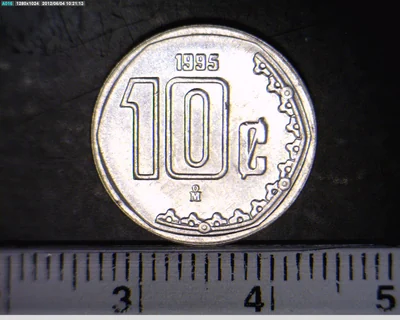
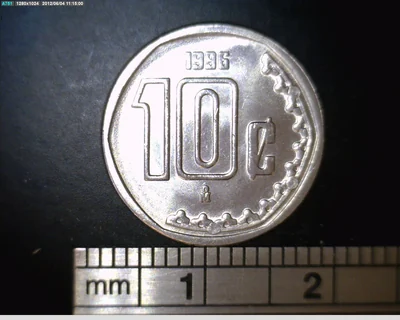
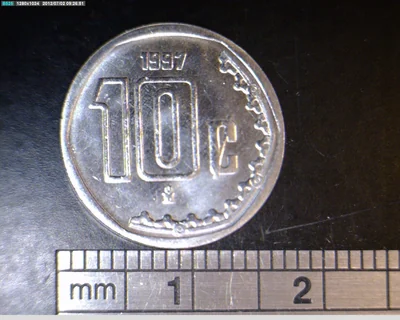
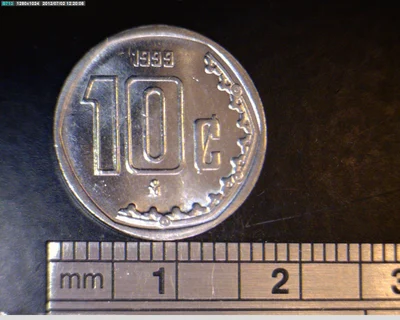
10 centavos Acero inoxidable · 10 Centavos Acero Inoxidable
Frequently asked questions
How much is a 1998 Mexican 10 centavos worth?
Very little. A circulated example is worth face value, a few US cents. Uncirculated pieces run roughly 50 to 75 US cents. Numista lists a range of about 1 to 13.50 Mexican pesos by grade. It only brings more if it is uncirculated or has a genuine mint error.
Is the 1998 Mexican 10 centavos rare?
No. Mexico struck 602,667,000 of them in 1998, and the entire 1992 to 2009 series ran into the hundreds of millions per year. Numista rates it 4 out of 100 on rarity, making it one of the most common coins you will find.
Is the 1998 Mexican 10 centavos silver?
No. It is stainless steel, with no silver or gold content. That means it has no bullion value, so any worth is purely numismatic and depends only on its condition and whether it has a mint error.
How can I tell if my 1998 10 centavos is genuine?
It should weigh 2.08 grams, measure 17 mm across, and usually reacts to a magnet since it is low-alloy stainless steel. It must carry the Mo mint mark and the Mexican coat of arms on the front. Coins this low in value are almost never counterfeited.
Conversation
0 comments
Loading comments…